
Double the support for foreign pupils to tackle learning gaps in the classroom
The 30 per cent threshold for students from abroad is in addition to the 20 per cent for new arrivals. Pupils from migrant backgrounds lag behind by up to two years in the Invalsi or PISA tests

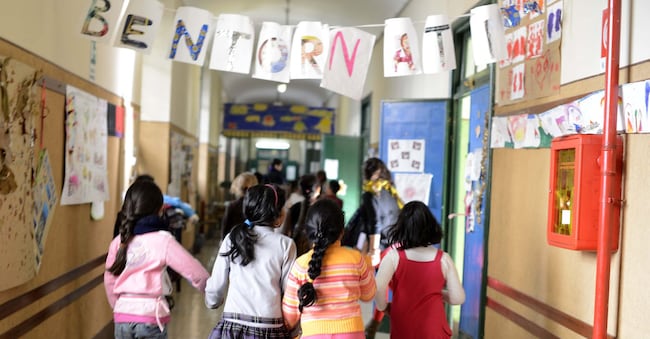
Pupils from migrant backgrounds leave lower secondary school with a gap of around two years in their Italian language skills, which falls to one year if they are second-generation migrants. It is against this backdrop that the decision contained in the latest education decree (Decree-Law 170/2026) to introduce, from the 2027/28 academic year – subject to a number of exceptions – a 30 per cent cap on the number of pupils from abroad in future Year 7 classes. This measure, in fact, has already been in force since 2026/27 for any new arrivals and comes on top of another initiative introduced by Minister Giuseppe Valditara some two years ago: strengthening language support in classrooms with more than 20 per cent of pupils who are new arrivals from abroad.
As the bill prepares to take its first steps in the Senate with a view to its conversion into law, it may be useful to explain how the two limits coexist.In a context which, as we highlighted in *Il Sole 24 Ore* on 2 October, has seen the number of foreign pupils in Italian schools rise by 8.3 per cent between 2019/20 and 2020/24, whilst the number of Italian pupils, over the same period, fell by 10 per cent.
The new 30 per cent cap
Let us start with the new 30 per cent cap as the general criterion for the formation of first-year classes. For primary schools, the limit applies to pupils who are not Italian citizens and who meet at least one of the following two conditions: they were not born in Italia, or they have not attended at least two years of nursery school. At lower secondary and upper secondary level, the 30 per cent limit applies only to students who are not Italian citizens and who have not successfully attended a state or state-recognised school for at least three academic years. These requirements therefore differ because, as the explanatory report accompanying the Decree-Law explains, account is taken not only of citizenship but also of ‘the educational and academic pathway actually followed by the pupil and the degree of familiarity they have acquired with the Italian education and training system’.
With this in mind, the Regional School Offices (USR) and headteachers will implement organisational measures to ensure a ‘balanced’ distribution of new enrolments amongst ‘neighbouring’ schools. In practice, this will involve adhering to the principle of proximity to the pupil’s home, taking into account the geographical distribution of schools across the area. Furthermore, consideration must be given to other ‘special family circumstances relating to the need to care for people with severe disabilities’ and also to ‘other exceptional and documented circumstances, assessed by the local education authorities, which make alternative solutions impossible’. In the case of enrolments during the school year into Year 1, or at the start of or during the school year into subsequent years, pupils must, with immediate effect, be placed in classes where the proportion of foreign pupils does not exceed 30 per cent.
The pre-existing 20 per cent threshold
Should it not be possible to meet this target, the schools concerned will have 3.4 million available in 2027 and 14.1 from 2028 to fund extracurricular activities aimed at strengthening Italian language skills, including through partnerships with CPIA and third-sector organisations. As is, in fact, already the case today, in classes where more than 20 per cent of pupils are new arrivals in Italia (NAI). In this instance, from the 2025/26 academic year, around a thousand teachers have been brought in to strengthen Italian language teaching. These additional teachers are provided even if the foreign pupils do not possess basic language skills (at least equivalent to level A2). In other words, where the proportion of Nai pupils exceeds 20 per cent, an extra Italian teacher is provided, and if the figure exceeds 30 per cent, additional funding is available for language enhancement courses.


Brand connect


Newsletter Scuola+
La newsletter premium dedicata al mondo della scuola con approfondimenti normativi, analisi e guide operative
Abbonati