
Sales fall in Germany, cash claims double
Manufacture. Companies working as subcontractors for the German automotive industry are in serious trouble as are textiles, footwear and furniture. Jump in shock absorbers in Padua (+66%), Venice (+45%), Treviso (+44%)

3' min read
3' min read
The economic crisis in Germany is leaving its mark in the North East. In July, industrial production in Berlin fell by 2.4% compared to June and 5.3% year-on-year, according to data released by the German federal statistics office, Destatis. Veneto, the area's main partner region, suffered the consequences of the drop in orders, which was reflected in a sharp fall in exports, at least in some key sectors such as engineering, footwear, and textiles and clothing. The picture emerges from the latest elaborations by Unioncamere del Veneto on Istat data. In the first half of the year, regional sales on the German market were down by -8.7% on the same period in 2023, amounting to EUR 5.4 billion and a loss of EUR 524.3 million. Friuli Venezia Giulia's balance sheet is even worse: the volume of business developed with Germany is down by double digits (-12.6%), despite a general increase in imports of +3.7%, to 9.9 billion euros, mainly attributable to shipbuilding.
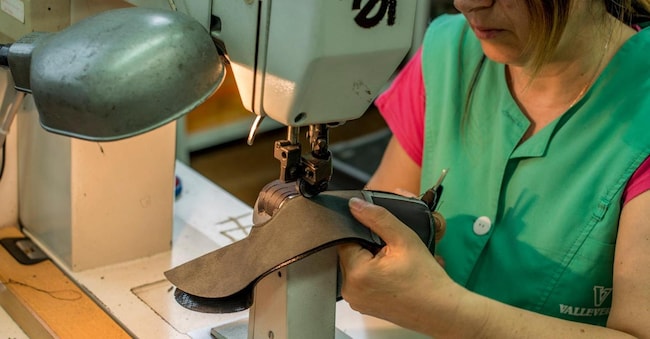
The many manufacturing companies in the Triveneto macro-area, which work as subcontractors in the production of sub-supplies for the Teutonic automotive industry, in serious difficulty, are forced to send their workers out on lay-off. The EU-backed transition to green and electric engines has frozen the automotive sector, which accounts for more than 20 per cent of German manufacturing value added. The Cgia di Mestre put it in black and white. "There is an important part of our engineering sector," pointed out the association's research office, "that works for Germany and has been affected by the country's difficulties for at least a year and a half. Most of the imported cars traditionally transit the Interporto Quadrante Europa of Verona, where traffic is expected to drop by about 10% already in 2023. However, this result is better than in other national freight villages. Metallurgical products (-20.5%), machinery and equipment (-10.7%) and metal articles (-16.9%) recorded double-digit drops. Down are motor vehicles (-20.7%). Footwear, leather accessories (-17%) and textiles (-21.8%) also fell. The Germans, aware of the recession they are facing, are not spending except on strictly necessary goods. Furniture is also in the red (-12.8%). The balance for chemical products is negative (-10%). On the contrary, the plus sign continues for beverages (mainly wines, ndr) at +5.3% and food at +3%.
"The weakness of international demand is reflected in the regional commercial interchange, down by -3.5% from January to June 2023 - comments Mario Pozza, president of the Chamber of Commerce of Treviso and Belluno|Dolomiti, as well as of Assocamerestero - The crisis of the German market is particularly heavy, which in the Treviso area alone absorbs 10.5% less, in absolute value more than 125 million (especially footwear, metal carpentry, furniture, textiles and clothing, and automotive components) of lower sales". The picture is also confirmed by the latest Intesa Sanpaolo Production Districts monitor, which, however, refers to the first quarter of 2024, and which certifies the drop in sales to Germany of the productions of the main clusters: instrumental mechanics of Vicenza, thermo-mechanics of Verona and Padua, which lose 12.7% of exports from Berlin. An outlet on which the main clusters of fashion and home system are also struggling, from Treviso's textile and clothing to the glass products of Venice and Padua.
"The German crisis," observes Alessandro Leone, General Director of Cna Veneto Ovest (Verona and Vicenza), "has had a significant impact on our economy, considering that Germany absorbs 14% of exports in crucial sectors, but many observers expect a rebound in the second half of the year. While waiting for better times, meanwhile, at Marmomac in Verona, the International Exhibition of Marble and Natural Stone, which has just come to a close, the more than 400 companies of the Veneto district, the most important in the Boot, complained on several occasions about the distress in which one of the main destinations of Made in Italy finds itself.
The repercussions can also be read in the increasing numbers of lay-off funds authorised (but not necessarily used, ndr) to companies in the Veneto region from January to July. According to the latest Uil report on social shock absorbers compiled by processing Inps data, the hours granted in Veneto amounted to approximately 40.5 million against 27.5 million in the first seven months of 2023 (+47.2%). Things went better in Friuli Venezia Giulia, where the percentage change was small (+24.7%) and even more so in Trentino Alto Adige, a region in which the demand to use social shock absorbers even dropped (-6.4%). Among the provinces, the most considerable jumps concerned Padua (+66.3%), Vicenza (from 7 to 11.2 million hours; +57.9%), Venice (from 2.5 to 3.6 million hours; +45.4%) and Treviso (from 6.5 to 9.5 million; +44.5%).

