
DPFP, Bank of Italy: a more favourable outlook than forecast
‘Do not let your guard down regarding the exit from the excessive deficit procedure’

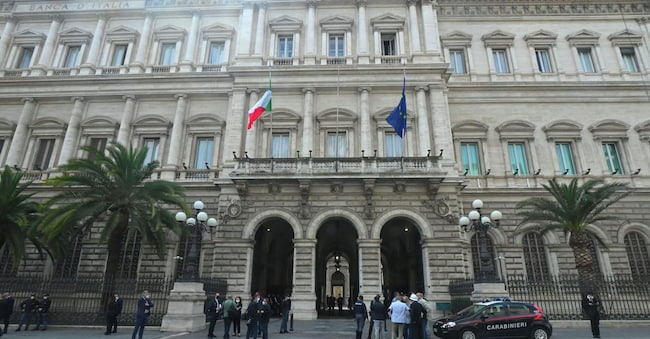
The economic climate in which the public finance document is being presented appears more favourable than might have been expected a few months ago. The Bank of Italia’s hearing before the joint Budget Committees reveals cautious optimism but at the same time contains a call not to let our guard down on containing public spending and to remain steadfast in the objective of exiting the excessive deficit procedure, even though this objective has now been postponed until next year.
A more favourable picture than forecast
“Overall, the economic outlook appears more favourable than expected in June. The medium-term outlook is being affected by rising inflation and tighter financial conditions, which are likely to lead to a temporary slowdown in domestic demand.” said Andrea Brandolini, Head of the Economics and Statistics Department at the Bank of Italia, during a hearing on the Dpfp, adding that “economic activity should, however, begin to strengthen again from the second half of 2027, as inflationary pressures ease. The developments outlined in the Dpfp are consistent with this picture, both in the baseline projections – which put growth at 1.0 per cent this year, 0.6 per cent next year and 0.8 per cent in 2028, and in the programme projections, where growth is expected to be 0.3 percentage points higher in the 2027–28 period thanks to increased spending on defence and energy security.”
Keep an eye on the deficit trend at the end of the year
According to Brandolini, “it remains necessary to monitor developments in the latter part of the year, so as to address any deviations promptly, given the narrow margin in the DPFP’s estimates relative to the 3.0 per cent threshold. Compared with the projections set out in last April’s Public Finance Document (DFP), the deficit would remain broadly unchanged. Higher total revenue (around 0.2 percentage points of GDP) would be offset by higher interest and primary expenditure (around 0.1 percentage points of GDP each)”. The Bank of Italia representative stated that “net expenditure, the key aggregate for monitoring public finances under the new European rules, is set to rise by 1.6 per cent this year, in line with both the spring forecast and the targets of the Medium-Term Structural Budget Plan; the cumulative growth rate from 2024 onwards would stand at 1.2 per cent, 0.3 percentage points higher than the figure agreed with the Commission and the Council in January 2025, but within the tolerance margins provided for by the new rules. The growth rate of net expenditure in the current year is lower than that of primary expenditure (2.6 per cent). The difference is mainly due to the increase in expenditure financed by European Union transfers (which are set to rise to 0.9 percentage points of GDP, up from 0.6 in 2025). The DPFP does not specify either the nature or the amount of individual discretionary revenues.”
Inflation rises due to higher energy prices, but the impact is more limited than in 2022
“Inflation has risen in recent months, mainly due to higher energy prices. Core inflation remains broadly stable. Compared with the energy crisis of 2021–22, the rise in energy prices has so far been much more moderate, and there are no signs of a significant pass-through to other price components,” continued Brandolini. “In Italia, economic activity continued to expand in the first half of the year: GDP rose by 0.9 per cent compared with the same period in 2025. Growth was driven by domestic demand and, in particular, by household consumption, which was also supported by strong trends in employment and disposable income. The implementation of the National Recovery and Resilience Plan (PNRR) continued to fuel spending on public works and non-residential construction. Driven by the digital transition, the accumulation of intangible assets continued. The available data suggest that growth is likely to have continued into the third quarter.”
Uncertainty remains very high
“Uncertainty remains very high. The outlook for the global economy is heavily dependent on how the conflict in the Middle East unfolds and its repercussions on global supply chains and commodity prices. Further risks stem from the possibility of a deterioration in financial conditions following further rises in long-term yields globally or potential corrections in equity markets, particularly in the technology sector,” warned Brandolini


