
Driverless trucking: 86,000 drivers leaving in the next five years
Transpotec opens at the Fiera di Milano: spotlight on staff shortage

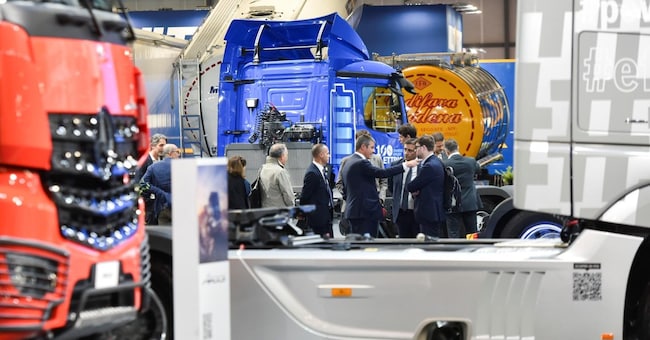
A new driver alarm is sounding in the road haulage industry. In the next five years it is estimated that 86,244 drivers, currently in service, will retire. That is 28% of the current workforce. An enormous void, which if not filled in time will risk compromising the functioning of the supply chains themselves, given that in Italia over 90% of goods travel by road, transported by trucks. This is what emerges from the fifth edition of '100 numeri per capire l'autotrasporto' (100 numbers to understand road transport), published by Federtrasporti (Federservice) and edited by Uomini e Trasporti. The volume will be presented during Transpotec Logitec in Milan, the goods transport and logistics fair that opened on Wednesday 13 May in the halls of Rho-Pero. The exhibition, with over 500 exhibitors, will close on Saturday 16 May.
The driver emergency, however, is not only Italian. In Europe, there are currently 500,000 vacancies, set to become one million in the next three to five years, net of any corrective measures. The average age of truck drivers in Italy today is 50: this is higher than that of their European colleagues, which stands at 47. In addition to the 86 thousand professional drivers set to leave the wheel to retire, there are almost 25 thousand drivers between the ages of 30 and 50 who have left the profession in the last two years. More than 17 thousand new drivers would be needed every year to compensate for the retirements, but in the last two years the number of young people behind the wheel of a truck has increased by only 2 thousand.
What keeps people away from this profession? It is not just a question of wages. The main problems indicated by more than 90% of truck drivers concern: access to parking areas (desolate and unsafe car parks), the treatment received at delivery points (increasingly stressful delivery times), the long waits and the distance from home and loved ones. The European Commission points to the use of non-EU personnel as a possible way out. Currently, however, only Morocco, by virtue of the professional qualification certificates it issues to its drivers, would have requirements and training content largely comparable to European ones.
Federtrasporti's research also clearly shows that road haulage in Italia is changing radically, with the gradual disappearance of 'padroncini', i.e. single-vehicle companies (one person, one vehicle). Today, 1.08% of the companies registered in the road haulage register (as at 31 March 2026 there were 98,585 active companies) own 32.5% of the vehicle fleet and produce around 29% of the turnover of the entire sector. And the owner-operators appear to be increasingly weak: more than 20,000 sole proprietorships have closed their doors in the last ten years, a reduction of 40% also in the wake of increasingly difficult generational change.
But there are more than just numbers. High diesel prices and the road haulage stoppage, proclaimed by Unatras from 25 to 29 May, are holding court on the opening day of Transpotec. Among the operators there is disappointment at the absence of government representatives at the fair. The only exception is a video-message by the Deputy Minister of Transport, Edoardo Rixi, broadcast at the opening of the Fiap Logistic Village. Says Alessandro Peron, secretary general of Fiap (Italian Federation of Professional Hauliers): 'At a time like this it would have been important for the government to put its face to it. Also because at other trade fairs, such as Vinitaly and the Furniture Show, we have seen the presence of authoritative representatives of the executive. Now we receive the news that next week the MIT should be convened with the categories to discuss emergency measures against high diesel prices and in view of the shutdown proclaimed for the end of the month. We,' Peron continues, 'have always been open to discussion, but the moment the hauliers are going through is very delicate. We hope that this lack of attention at the inauguration of Transpotec will be compensated for by adequate support measures for the sector'.


