
Drones, all ongoing experiments from agriculture to pharmaceuticals
Amazon Prime Air commercial services could start in Italian cities in 2026

Even the early days of December confirmed how drones are now an indispensable element in warfare missions, in Europe as in the rest of the world. Having come onto the scene in the Russian-Ukrainian conflict at the beginning of 2023, these low-cost intelligent drones are fuelling a ballet of figures (in the millions) on who has produced the most Fpv combat drones, an acronym for first person view, in the last 24 months. There is, however, another side to the 'drone phenomenon' and that is their use in the civil sphere, which our legislator is also looking at with great interest.
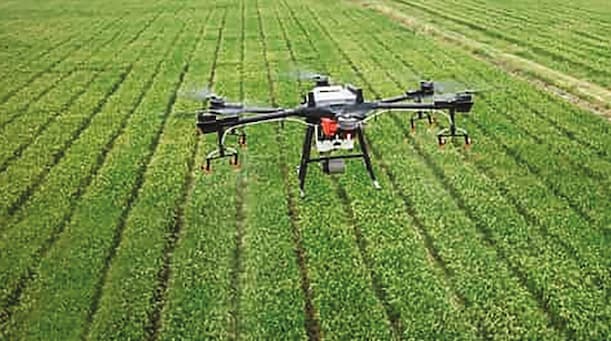
Plant Protection Treatment
With the recent approval in the Senate of the Simplification Bill, Italy is in fact introducing a three-year trial on the use of these aircraft for phytosanitary treatments, paving the way for a model of precision agriculture that is expected to be more efficient and sustainable, as well as safer, than interventions carried out with planes and helicopters. Specifically, we are talking about activities that include land mapping and targeted fertilisation with less dispersion, even in complex contexts such as vineyards and hilly olive groves, and that should have concrete spin-offs in terms of optimising resources, reducing environmental impacts and, last but not least, developing new professional skills. It is estimated that more than 5 thousand specialised figures will be needed in the next few years, with the 'agricultural dronist' elected as one of the key profiles.
Transport of drugs
Marco Silanos, Enac's Director of Regulation and Innovative Mobility Research, put a positive spin on the bill that aims to make the use of drones in agriculture easier, pointing out that the implementing decrees of the ministries concerned and the appropriate authorisations signed by the Italian Civil Aviation Authority will now be needed. "This is certainly another small aid to the development of this sector," he explained to Il Sole 24 Ore, "and in general we can confirm great interest in these remote piloting systems, especially for transporting chemotherapy or life-saving drugs in emergencies or in situations where the time factor is a discriminating factor, such as organ transplants. Thanks to ultra-high resolution cameras and thermal sensors, a drone can also improve the monitoring of critical infrastructure, such as bridges on the motorway network, greatly increasing the capacity for preventive maintenance'.
Experimentation in progress
Innovation and the regulatory framework are therefore proceeding at the same pace, even if the former, as Silanos observes, runs faster than the latter and only in part due to the siphoning off of technology from equipment used in the military field, where it is only recently that it is mainly used to offend thanks to highly advanced visual contact systems that are also powered by artificial intelligence (think of spy drones). 'Today,' the Enac manager goes on to emphasise, 'there is greater awareness of the importance of this technology, with the health sector leading the way for all the others. However, we are still in an experimental phase, especially for flight in urban areas, because we still lack the systems to meet all the safety and accident prevention requirements. And even the technology itself is not yet fully mature'.
Enac, it should be recalled, launched the 'Sandbox' regulation for drone experiments in 2024 and places Italy at the forefront in this field, demonstrating how these applications are absolutely possible in compliance with the parameters that refer to the so-called 'standard scenarios' (the characteristics of the flying vehicle, the operating conditions for its use) for the use of these devices.

