The warning

Drones and hybrid warfare, Danish Prime Minister Frederiksen's speech

In a speech to the nation, Frederiksen raises the alarm: Denmark is in the crosshairs of Russian drones, hackers and saboteurs. Extraordinary countermeasures and close cooperation with NATO and the EU announced

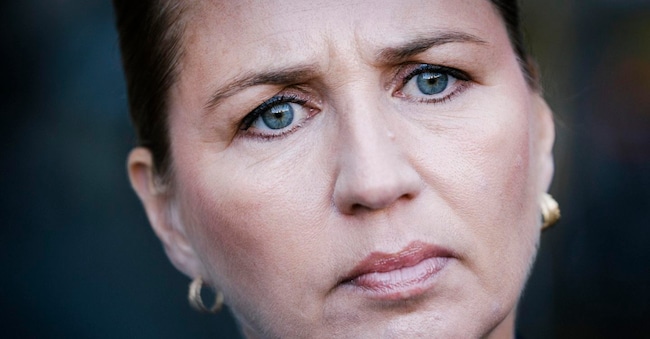
La premier danese Mette Frederiksen

5' min read

5' min read

On 25 September, Danish Prime Minister Mette Frederiksen delivered a speech to the nation marking a turning point in Copenhagen's security policy. She denounced an increasing series of hybrid attacks directed against civil and military infrastructure and warned that 'we are not facing a future risk: war is already underway, it just doesn't look like the one we knew'.

Below is the full speech:

Loading...

"Dear all, Denmark has been exposed to hybrid attacks in recent days. Drones have been spotted in several places against critical infrastructure, military and civilian. These are attacks we have to expect, there may be more in the future. They have exposed vulnerabilities, they aim to create insecurity and division. These attacks should shake us as people and as a society. I understand that the situation raises many questions:why weren't the drones shot down? Why were they not discovered sooner? There will come a time when we will have to look back at the events of the past few days and learn from them. But here and now we - the government and the authorities - have a fundamental task: to take care of Denmark. And make ourselves better able to counter hybrid attacks as quickly as possible.

Where are we? First of all, the authorities have raised the alert level and are preparing for different scenarios. This means, among other things, that both the Danish Armed Forces and the police will, in the near future, have an increased presence with anti-drone capabilities around critical infrastructure. At the same time, the authorities are in close contact with our allies in order to rapidly strengthen our capabilities to detect and combat drones.

Secondly, our authorities have the mandate to shoot down enemy drones. But, of course, it is the responsible authorities who must make the operational assessment in the specific situation, including the security risks.

Thirdly, over the last few days I have been in contact with several of my European colleagues. I have spoken with the German Chancellor, the British Prime Minister, the Prime Ministers of our neighbouring countries, Sweden and Norway, and the Finnish President. I also had a close dialogue with the Secretary General of NATO. And we are now in direct discussion with NATO allies onhow they can assist Denmark in the current situation, so that we can protect and defend our airspace.

Hybrid attacks have not only affected Denmark. There have also been recent incidents in Poland, Estonia and Romania. Hybrid warfare is not a war in the traditional sense of the term.The hybrid attacks aim to confuse us, to make us insecure. And they come from a cowardly enemy that dares not make itself known. One time it could be drones, another time cyber attacks. It could be what we call 'disinformation', it could be influencing electoral processes, conspiracy theories you read on the internet.

But regardless of the method, the aim is the same: they want to destabilise our society, they want us to stop trusting our authorities. And all this underlines that the threat to Europe's security is serious and real. This is why we have massively rearmed Danish defence in recent years. That is why we continue to support Ukraine. I think it can help us in this situation: if anyone has the knowledge to fight drones, it is our friends in Ukraine. And that is why, of course, we are also talking to them.

I must then say that it takes time to restore the Danish defence. I am not asking for patience in this regard because I myself have none, but we are busy. And I ask for understanding that, even if we had it, such a thing cannot be done overnight or from one year to the next. I must add, and this applies especially to certain parties in the Danish parliament, that the aim of hybrid attacks is not only to test our authorities or our preparedness: as I said, it is also to see how we react as a society and politically.

We have to be vigilant. And if something does not work, then it must be corrected, which we are doing. But we must also remain calm: this is not the time for hasty announcements, political exaggerations or statements of distrust in the authorities or the police because no responsible politician can guarantee the Danish population that there will be no hybrid attacks. By the way, this cannot be guaranteed in any country, in fact, it is probably more the opposite. We will see more sabotage, more hacker attacks, even more drones, destroyed submarine cables, direct attacks on European democracies, as we are seeing in the small country of Moldova.

I consider it a new reality that Denmark and Europe are subjected to more violent and frequent hybrid attacks. Next week, all European heads of state and government will meet here in Copenhagen. We will discuss European defence and security, including the establishment of a real wall against drones. In other words: Europe must arm itself. We must arm ourselves. And we must never let ourselves be threatened because that is not how we Danes are made. And that is not how we can be citizens of the European Union.

In these hours and days, we are in what can be called the initial phase of immediate crisis management. We have already tried this in other situations, and what I say now I have said before: in the management of any serious crisis, there is a risk of making mistakes. And we cannot always quickly give good answers to the questions that arise. But, as a government, we will endeavour to tell the public what we can. The authorities will do the same, with consideration, of course. That is, those who wish us ill will listen to all the discussions we have with each other. And even if the authorities cannot find out who is behind the hybrid attacks on our airports and other critical infrastructure, we can at least say that there is mainly one country that poses a threat to Europe's security: Russia.

Finally, an important point: there is no European state that can defend itself against Russia. Not even Ukraine, which has been fighting bravely for over three years. And that is why we have our NATO alliance, why we are expanding the European defence industry, why we are implementing historic rearmament in Denmark. The events of the last few days only underline how important it is to act. But to act together with others. In Europe and in NATO. Thank you for listening."

Copyright reserved ©
Loading...

Brand connect

Loading...

Newsletter

Notizie e approfondimenti sugli avvenimenti politici, economici e finanziari.

Iscriviti