
Droughts and hailstorms: 70 per cent of farms have suffered damage over the last three years
The results of a survey of over 3,800 businesses carried out as part of the sixth edition of AGRIcoltura100, an initiative by Reale Mutua and Confagricoltura: risk awareness is on the rise, but remains insufficient – only 24 per cent are insured

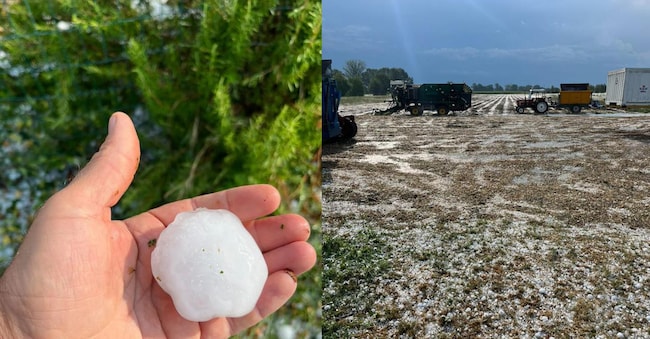
Over the last three years, between 2023 and 2025, almost seven in ten farms (67.6 per cent) have suffered at least one instance of damage caused by adverse and extreme weather events. However, ‘despite a growing level of awareness, there is still a significant proportion of businesses that pay less attention to their exposure to climate risks’. In a nutshell, this is the picture that emerges from research carried out on over 3,800 businesses as part of the sixth edition of AGRIcoltura100, the initiative by Reale Mutua in collaboration with Confagricoltura, in the 2026 Report produced by Mbs Consulting (Cerved Group).
In particular, over the last three years, the events that have had the greatest impact on businesses have been “rainfall, hail and storms” on the one hand and “extreme heat” on the other: both of these phenomena have caused damage to over 40 per cent of businesses, with 24.6 per cent of cases involving significant damage. These are followed by “floods and overflowing rivers”, affecting 17% of businesses; frost and hoarfrost (15.2%); tornadoes and hurricanes (10.4%); and finally, landslides and mudslides (7.7%).
Almost all of the affected businesses (92%) reported damage to crops, whilst a significant proportion reported damage to farm infrastructure (23.4%), water stress (12.4%) and soil erosion (10.1%). The impacts of these events not only reduce production margins in the short term, but also jeopardise the economic stability of businesses in the medium term.
Going on to analyse business leaders’ perceptions of exposure to natural events, the research highlighted that one in two agricultural businesses (51 per cent) considers itself exposed to precipitation such as hail and storms. Of these, around a quarter (25.9%) believe that the risk has increased due to climate change. 32.4 per cent consider themselves exposed to the risk of flooding (and only 16.5 per cent consider themselves more exposed than in the past), around 30 per cent to frost or hoarfrost, and almost 24 per cent to landslides or mudslides.
The survey also highlights how it is direct experience of damage that shapes awareness. Among businesses affected by these phenomena over the last three years, in fact, more than 70 per cent – and in some cases 80 per cent – consider themselves at risk from most natural events. Among companies that have not suffered any damage, however, the proportion of firms that consider themselves exposed falls to 30 per cent for rainfall, and to around 20 per cent for almost all other events.


