
DS No. 7: what the French SUV built in Italia is like and how it performs
On the roads of Provence with a model offering a mild hybrid (perhaps a little too mild) and three electric versions, featuring Parisian-style interiors and a level of comfort worthy of the tradition

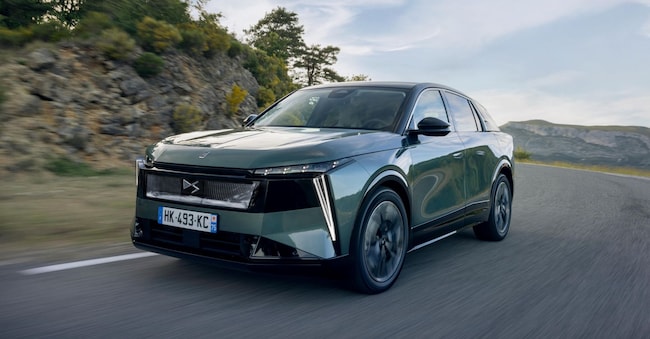
Premium, French-style. It’s no easy feat, but DS remains committed to the idea with the DS N°7, which is built at the Italian plant in Melfi (PZ), offering its take on French refinement in this new SUV that succeeds the DS7 and is positioned dimensionally straddling the C and D segments. It is in fact 4.66 metres long (+7 cm), whilst retaining the same width of 1.63 and height of 1.90, but with a wheelbase extended to 2.79 (+7 cm) to provide more space for both passengers and the battery in the electric version. The STLA Medium platform also allows for a 48-volt hybrid version. The styling is distinctive, drawing directly on the Aero Sport Lounge concept unveiled in 2020, enhanced by an illuminated grille and a hint of fins at the rear, and is also aerodynamically efficient, with a drag coefficient (Cx) of 0.26.
The interior space has increased and the flat floor allows rear passengers to move their legs more freely, but for a car in this class we would have expected a seatback high enough that you wouldn’t have to raise the headrest to avoid it pressing against your shoulder blades. The rear window area has increased by 30 per cent and the panoramic roof by 40 per cent; thanks to a special treatment, the roof no longer requires either a sunblind or a sunshade, freeing up 50 mm of headroom. The boot capacity ranges from 560 to 1,570 litres, reduced to 500–1,525 litres respectively for the all-wheel-drive electric version.
The interiors are characterised by a typically French aesthetic, emphasised by ‘guilloche’ patterns inspired by the world of watchmaking, Clou de Paris embossing and pearl-stitch detailing, not to mention the focus on environmental sustainability, as demonstrated by the Nappa leather tanned using substances derived from olive leaves, the Alcantara made from 68 per cent recycled material, and other fabrics and components made wholly or partly from recycled materials. Of particular note is the elimination of chrome finishes and the use of aluminium, brushed steel and genuine ash wood components. There is plenty of storage space in the drawers, pockets and compartments along the centre console, which also includes a refrigerated compartment.
The dashboard is fully digital, featuring a 10-inch instrument cluster, a head-up display and a 16-inch cantilevered central screen with an Android Automotive-based system and a voice assistant linked to ChatGPT. Digital, yes, but without the excesses seen in Chinese or American designs, so there are also dials and buttons, some made of transparent material. The interior rear-view mirror offers a choice between a digital or real-world view. The cameras that power the driver-assistance systems also feed the night-vision system, capable of detecting pedestrians or animals in the dark at distances of up to 300 metres, the predictive adjustment of the electronically controlled shock absorbers, and the adjustment of the beam pattern of the LED matrix headlights, extending it, if necessary, up to 520 metres.
Another standout feature is the audio system, which includes a 690-watt Class D amplifier with 97 per cent energy efficiency, 14 speakers across 7 channels, active crossovers and a weight reduction of 2 kg thanks to solutions such as the use of an oval-shaped subwoofer. The MyDs app allows you to interact with the car remotely, controlling the climate, charging and other functions. The front seats naturally offer every kind of electric adjustment and every comfort (including neck heating, ventilation and massage), whilst the 4-spoke X-shaped steering wheel does not make it easy to find the best hand position, and the positioning of the side mirrors – combined with the wide base of the A-pillars – does not facilitate visibility over the front three-quarters.

