Middle East

Dubai–Tel Aviv flight: from hijacking to a dispute between pilots – all the theories behind the narrowly averted air disaster

4' min read

Translated by AI
Versione italiana

4' min read

Translated by AI
Versione italiana

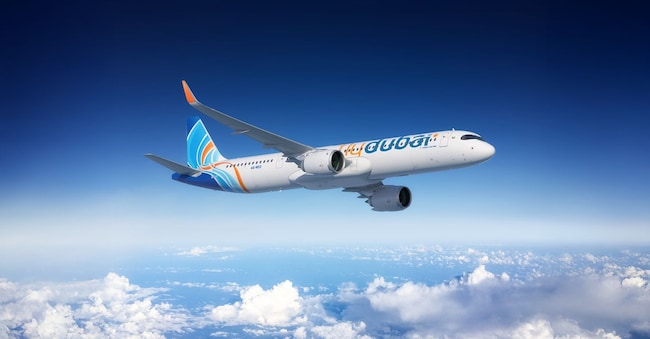
Two off-duty pilots, travelling as passengers on board the Flydubai Boeing 737 Max 8 flying from Dubai to Tel Aviv, are said to have helped regain control of the aircraft and enabled it to land at Tabuk Airport in Saudi Arabia. This is one of the latest developments to emerge in the incident, the circumstances of which are still under investigation by the authorities.

According to initial reports, the incident could have turned into a tragedy following an altercation in the cockpit between the captain and the co-pilot, who some sources have identified as being of Indian and Omani origin respectively.
However, this information has not yet been officially confirmed.

Loading...

One of the pilots is also said to have activated code 7500 on the aircraft’s transponder, the signal used to indicate a possible hijacking. The alert is said to have prompted Israel to activate its surveillance systems and scramble several fighter jets, fearing that the aircraft had been hijacked. Israeli military aircraft are said to have been able to approach the Boeing and assess the situation.

The altercation in the cabin

Initial reports from the Israeli media, citing security sources, suggest that the emergency may have been caused by an altercation between the two pilots in the cockpit. The reasons for the altercation are not yet known.

Some passengers told Israeli television channels that they had heard screams coming from the front of the aircraft and had felt a sudden descent before the flight was diverted to Saudi Arabia.

The screams were reportedly heard by the flight attendants as well, although they were apparently unable to gain immediate access to the cockpit, the flight deck. Access to the cockpit is, in fact, governed by security procedures and the reinforced door, the opening mechanism of which requires theuse of a code by authorised personnel.

According to an initial, as yet unofficial, account, it was the pilot who was attacked who, in an attempt to regain control of the situation, opened the door and allowed the two off-duty pilots on board to enter. The latter are said to have then helped to subdue the attacker and regain control of the aircraft, enabling it to be diverted to Tabuk.

Tabuk

In Arabia Saudita. Tabuk dista circa 206 km in linea d’aria dal punto più vicino del confine con Israele, situato nella zona di Eilat e del Golfo di Aqaba.

Google maps

The alert in Israel

The aircraft’s unusual flight path, and the distress signal it transmitted, initially raised fears of a more serious situation. Israel therefore activated its surveillance systems and scrambled a number of fighter jets, fearing that the Boeing might have been hijacked.

Subsequently, the office of Israeli Prime Minister Benjamin Netanyahu announced that the situation was under control and that the authorities were working to ensure the emergency was managed and the passengers could return home.

The incident initially appeared to be a possible hijacking, not least because Code 7500 had been activated. Subsequent reports have played down this possibility, whilst leaving a number of questions unanswered regarding the nature of the incident.

Loading...

Flydubai’s position

Flydubai, a low-cost airline based in Dubai, has confirmed that the flight to Tel Aviv had experienced an operational incident and that the landing in Tabuk had taken place safely.

The company has stated that it is in contact with the relevant authorities and intends to provide further information as soon as verified details become available.

The situation is therefore still developing. The sources who provided information about the incident spoke on condition of anonymity, precisely because the investigation is still ongoing.

Hypotheses yet to be verified

Some aspects of the account remain unclear, particularly regarding the nationalities of the pilots and the nature of the altercation. The Israeli authorities are reportedly also considering the possibility of a terrorist attack, whilst other sources describe the incident as a scuffle between the two pilots.

At present, these are merely investigative hypotheses that cannot be regarded as proven.

The exact sequence of events therefore remains to be clarified. Among the details that have emerged are the transmission of emergency codes, the sudden change in altitude, the diversion to Tabuk and the safe landing. However, the circumstances of the altercation in the cockpit, the cause of the assault and the role played by those who intervened during the emergency still need to be established.

Previous entries

Incidents of physical violence between crew members in the cockpit are extremely rare, but they have occurred in the past.

In 2022, two Air France pilots were suspended following a scuffle that took place during a flight between Geneva and Paris. On that occasion, the aircraft continued its journey as normal and landed without further incident.

A far more serious precedent is that of the Germanwings flight 9525 in 2015. In that case, the co-pilot, Andreas Lubitz, was left alone in the cockpit and deliberately crashed the Airbus A320 into a mountain in the French Alps. The crash resulted in the deaths of all 150 people on board.

The Flydubai incident is still being investigated, but it has already triggered emergency alerts, a significant change in flight altitude, a warning of a possible hijacking and the subsequent diversion of the aircraft to another country.

It will now be up to the investigations carried out by the relevant authorities to establish what actually happened in the cockpit and what sequence of actions enabled the Boeing to reach Tabuk and land safely.

Copyright reserved ©
Loading...

Brand connect

Loading...

Newsletter

Notizie e approfondimenti sugli avvenimenti politici, economici e finanziari.

Iscriviti