
Dublin is stepping up efforts to reform EU market supervision
The Irish Presidency of the European Union intends to stick to the timetable agreed by the 27 Member States and thus reach an agreement by the end of the year
from our correspondent Beda Romano
 Aggiungi Il Sole 24 Ore
ai preferiti su Google
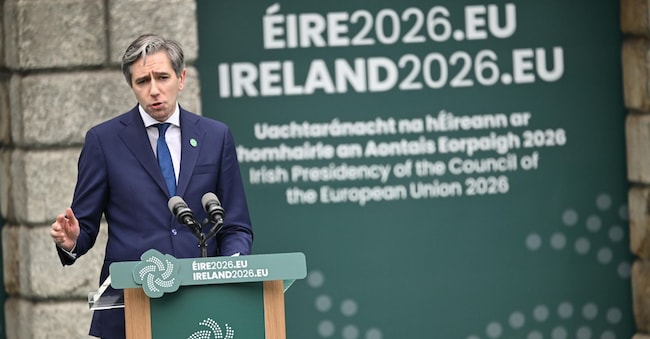
DUBLIN – The Irish Presidency of the European Union intends to adhere to the timetable recently agreed by the 27 Member States and thus reach an agreement on market supervision reform by the end of the year. There is a high risk of a compromise that falls short of expectations. At the same time, there is a recognition of the need to accelerate financial integration in Europe. During this six-month term, Dublin will also be tasked with reaching an agreement on the 2028–2034 budget.
“If not now, when?”, asked Finance Minister Simon Harris yesterday at a press conference with a group of Brussels-based journalists visiting Dublin to mark Ireland’s EU Presidency. “The 27 Member States have drawn up a roadmap to complete the integration of the single market. I will focus on market supervision, with the aim of reaching an agreement by the end of the year (…) A breakthrough is emerging. I am cautiously optimistic.”
The issue is politically sensitive. So far, member states have been reluctant to agree to centralise the supervision of stock exchanges, which remains strictly a national matter almost thirty years after the introduction of the euro. At the same time, there is a growing realisation that financial markets need to be more closely integrated in order to attract investment from third countries. It is now well known that a significant proportion of European savings is channelled towards the United States (around 300 billion euros a year).
In its proposal, presented in December, the European Commission proposes to simplify supervisory processes ‘by extending ESMA’s direct supervision to certain significant cross-border entities in the trading and post-trading sectors’. The adjective significant is not trivial and is subject to negotiation. Currently, the Paris-based authority acts merely as a hub facilitating cooperation between Member States.
The joint position of six countries
In recent weeks, six member states – Germany, France, Italia, Spain, the Netherlands and Poland – have drawn up and published a common position. Beyond their desire to reach a swift agreement on a single supervisory framework for financial markets – strengthening, in particular, the role of ESMA – the six countries have set out certain conditions. For example, with regard to asset management firms, they propose coordination between national authorities.


