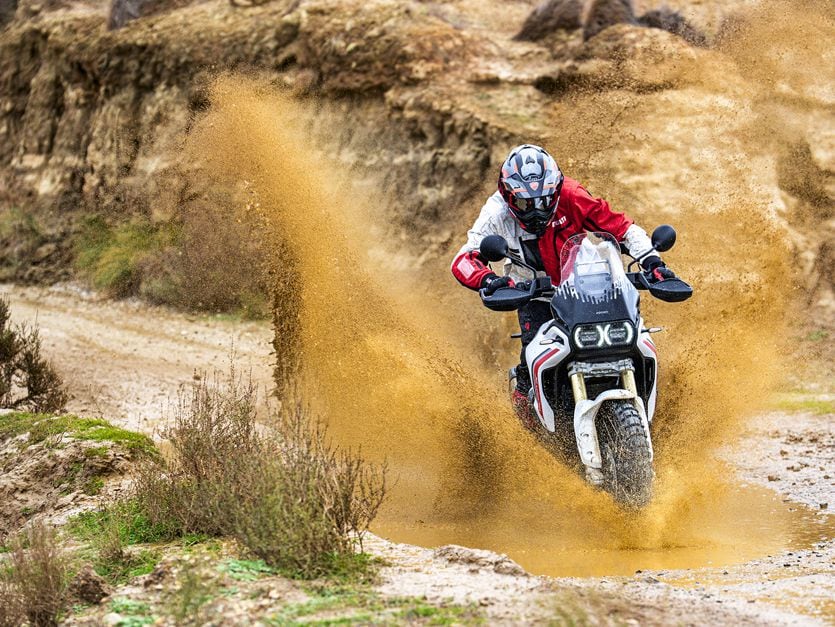
Ducati DesertX my2026, what the second generation of the travel enduro looks like
Ducati has completely redesigned the DesertX around the new V2 engine and monocoque frame. New suspension and electronics suite coming soon

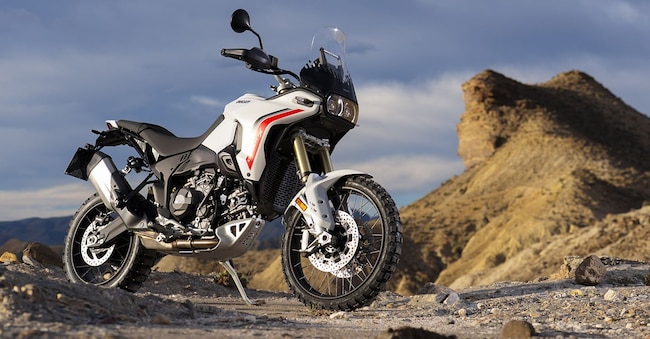
In a new stage of the World Première 2026, Ducati presented the second generation of the DesertX, the model with a 21" front wheel with which the Borgo Panigale company entered the world of off-road racing in 2021. The objective of the second generation, due to arrive in April and developed with the experience gained in the 1,500 km of desert of the Norra Mexican 1000 Rally: to improve off-road efficiency without sacrificing the pleasure of riding on the road typical of Ducati, creating a bike that is easy for beginners and, at the same time, performs well in the hands of professionals.
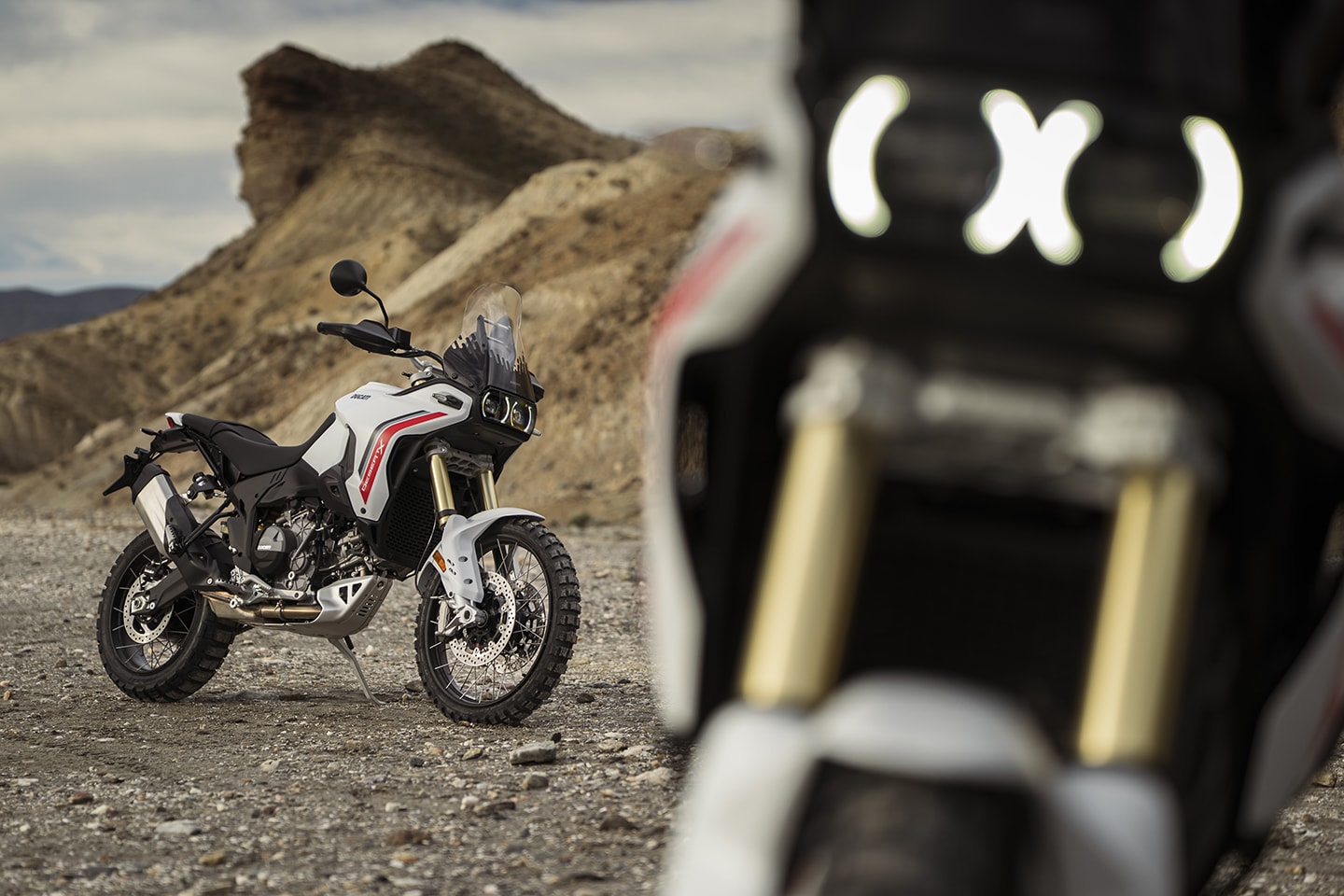
All new
The DesertX has been redesigned from the ground up, starting from the new Ducati V2 engine of 890 cc and 110 hp, the lightest four-valve per cylinder twin-cylinder ever produced by Ducati; thanks to the IVT variable intake valve timing system, unique in the segment, it has a generous delivery over the entire range of use, with a prompt response at every opening of the throttle: in fact, the maximum torque curve (92 Nm) is more sustained than on the previous model: 70 per cent is available as early as 3,000 rpm, guaranteeing promptness of response and great acceleration coming out of bends. The ratio defined specifically for the DesertX offers the first four gears shorter to overcome even the most demanding obstacles, and a longer sixth gear to improve fuel economy and comfort in fast transfers.
The monocoque frame, unique in the segment and developed in a version specifically for the DesertX, uses the engine as a structural element and also acts as an airbox, ensuring maximum compactness and increased chassis rigidity for improved handling and intuitive handling. The aluminium swingarm was also developed specifically for the DesertX: it is coupled to a rear suspension with progressive linkage full-floater, a solution that improves both comfort and off-road behaviour, with a softer response in the first phase and more sustained when the stresses increase. Also new is the Kayaba fork, smoother and with independent hydraulic adjustment on both stanchions.
The new braking system is Brembo, with M4.32 monobloc calipers and new 305 mm discs, dedicated pads and an axial master cylinder with a newly designed lever, to offer the rider more modulability off-road and a better feel at the lever, while maintaining the right amount of braking power in road use.
New ergonomics
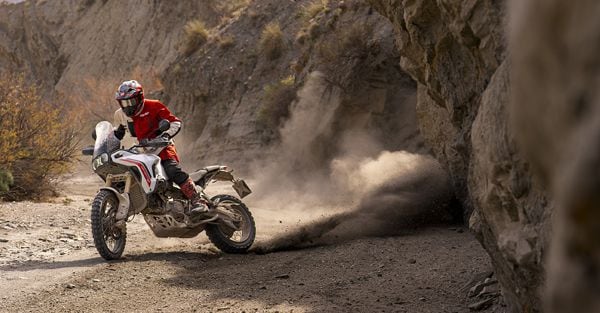
The specialised riding position also changes: the new saddle-handlebar-pedal triangle has been defined by moving the latter back and the saddle (set 880 mm from the ground) and handlebars forward, resulting in a less seated position for the rider to improve sporty riding on the road and motorbike control off-road.