Social Security

Pension fund reform: Durigon says, ‘I do not rule out an extension to the upcoming deadline of 31 October’

The Under-Secretary of State for Employment, Claudio Durigon, explains the reasons behind the reform and does not rule out a postponement of the deadlines for the portability of employers’ contributions
by Vitaliano D'Angerio

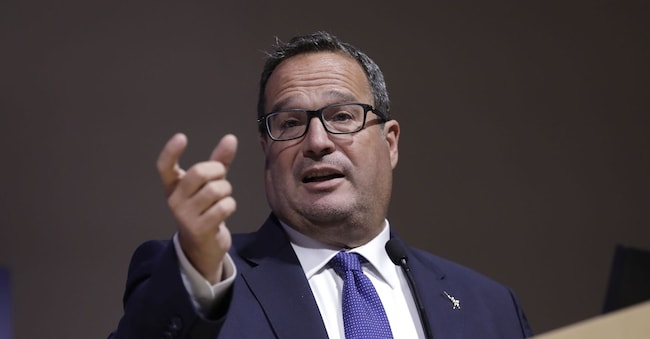
CLAUDIO DURIGON  IMAGOECONOMICA

3' min read

Translated by AI
Versione italiana

3' min read

Translated by AI
Versione italiana

He does not rule out a further extension to the pension fund regulations due to come into force on 31 October, and he has no objection to the ‘Swedish system’ provided that INPS plays a key role in the investments. Claudio Durigon, Undersecretary at the Ministry of Labour, explains his strategies in the supplementary pensions sector.

Senator Durigon, you are regarded as the architect of this ‘second reform’ of the pension funds, following Roberto Maroni’s reform twenty years ago. What prompted you to propose these changes, some of which come into effect on 1 July?

Loading...

The main impetus stems from the Dini reform, which made the contribution-based system the predominant method for calculating pensions. We must find alternative solutions to tackle the low pension incomes we will soon be seeing. INPS figures indicate that from 2035, pension values will fall precisely because the contributory system has become the predominant one, replacing the income-based system. We want to strengthen supplementary pension schemes to give people – especially young people – an extra opportunity to secure their future pension income.

How do you intend to improve this system for future pensioners?

For example, we need to provide incentives and tax relief for the annuity scheme, which is currently under-utilised by those retiring and who usually withdraw all the capital accumulated in the fund straight away. More generally, the idea is to bring about a cultural shift whereby pension funds can offer additional services. One such service, which we are considering for the future, is Long-Term Care (LTC). Without this vision and without providing tax incentives for such schemes, we would be doing a disservice to Italia’s future.

Criticism has been levelled by employers and trade unions regarding the portability of the employer’s contribution. There are fears that the second phase of the reform, scheduled for 31 October, could drain the funds of occupational pension schemes in favour of those managed by banks and insurance companies. What is your response?

I think it’s nonsense to think that one fund will undercut another; the market is so vast that there’s room for everyone. Our aim is to place the sector within a free and competitive market environment: if an insurance company offers a more expensive pension fund, the worker will simply not choose that product. Bringing more players into competition means providing workers with an additional service and a wider choice. If we see that any solution is detrimental to workers, we will intervene, but for now I can only see a positive impact.

Speaking of 31 October, are any further extensions planned?

Some political parties within the majority, as well as employers’ organisations and trade unions, have made requests to this effect. I am not ruling anything out, but my priority is workers’ freedom, not defending the exclusive positions of certain pension funds. We will see at the appropriate time whether an extension is necessary, but the aim remains to provide answers to the supplementary pension market.

With regard to the first pillar, there is talk of a possible ‘Swedish system’ whereby part of the pension contributions paid is invested in the market. Is this a viable option?

It is an idea that the president of INPS, Gabriele Fava, has put forward to us on several occasions and which we are currently considering. The idea is not a bad one: an account could be opened where a small percentage of contributions is invested by INPS to increase returns and, consequently, pensions. The key condition for me is that INPS acts as the intermediary and manages the investments, whilst safeguarding the first pillar as the central element.

Copyright reserved ©
Loading...

Brand connect

Loading...

Newsletter

Notizie e approfondimenti sugli avvenimenti politici, economici e finanziari.

Iscriviti