Venice Film Festival

'Duse', Valeria Bruni Tedeschi shines as the Divina

In competition, the new film by Pietro Marcello on the famous theatre actress performed in the last years of her life

3' min read

3' min read


Loading...


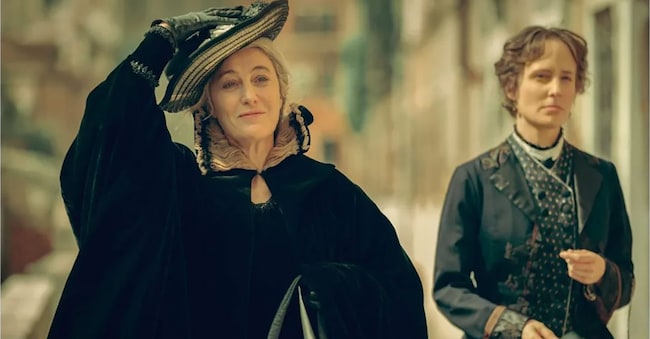
The greatest test of Valeria Bruni Tedeschi's career? It is not easy to say, given the filmography of the Turin-born, naturalised French actress and the many important roles she has played, but in the role of Eleonora Duse she really outdid herself.

One of the most eagerly awaited films in the Venetian competition, 'Duse' is the fourth fiction feature film by Pietro Marcello, a director who began his career by signing interesting documentaries such as 'Il passaggio della linea' and 'La bocca del lupo'.
Three years after 'The Scarlet Sails', presented at the Directors' Fortnight at the Cannes Film Festival, Marcello is back behind the camera to narrate the Divina, one of the most famous actresses in theatre history.

The film focuses on the last years of the life of Eleonora Duse who, in the times between the Great War and the rise of fascism, feels a call stronger than any resignation and returns to where her life began: on the stage.

It is not just the desire to act that drives her, but a deep-seated urgency: the need to reassert herself in a world that is inexorably changing and threatens to take everything away from her, even the independence she has won through her life's work.

In a film that is all about such an 'unwieldy' character, it is natural that one of the main aspects is the performance of the actress called upon to play her, and Bruni Tedeschi succeeds admirably in conveying her inner torments, frailties, but also her exceptional talent once she has returned to the stage. For these reasons we can truly say that she is one of the most serious candidates for the Coppa Volpi for best female performance.


The art that can save lives

.


There are several passages in 'Duse' in which reference is made to how art can be a form of salvation in the face of the world's misfortunes: it is no coincidence that after the opening credits there is immediately room for a moment in which Eleonora Duse goes to talk to soldiers at the front who only wish to return home.

Art as relief for the main character, but also for an entire society whose historical dynamics are emphasised by Pietro Marcello repeatedly, even with various archive images, characteristic of the style of the talented Italian director, but in this case quite superfluous.

Beyond these stock materials and some overly emphatic and forced passages, Marcello gives life to an elegant audiovisual symphony, well-directed in its editing times and accompanied by a remarkable soundtrack.

There is ambition in 'Duse' and, also for this reason, it is one of the most significant Italian titles at this year's Venice Film Festival.


Roqia


One of the most interesting surprises seen on the Lido this year came from SIC - International Critics' Week, where 'Roqia', an Algerian film by feature debutant Yanis Koussim, was screened.

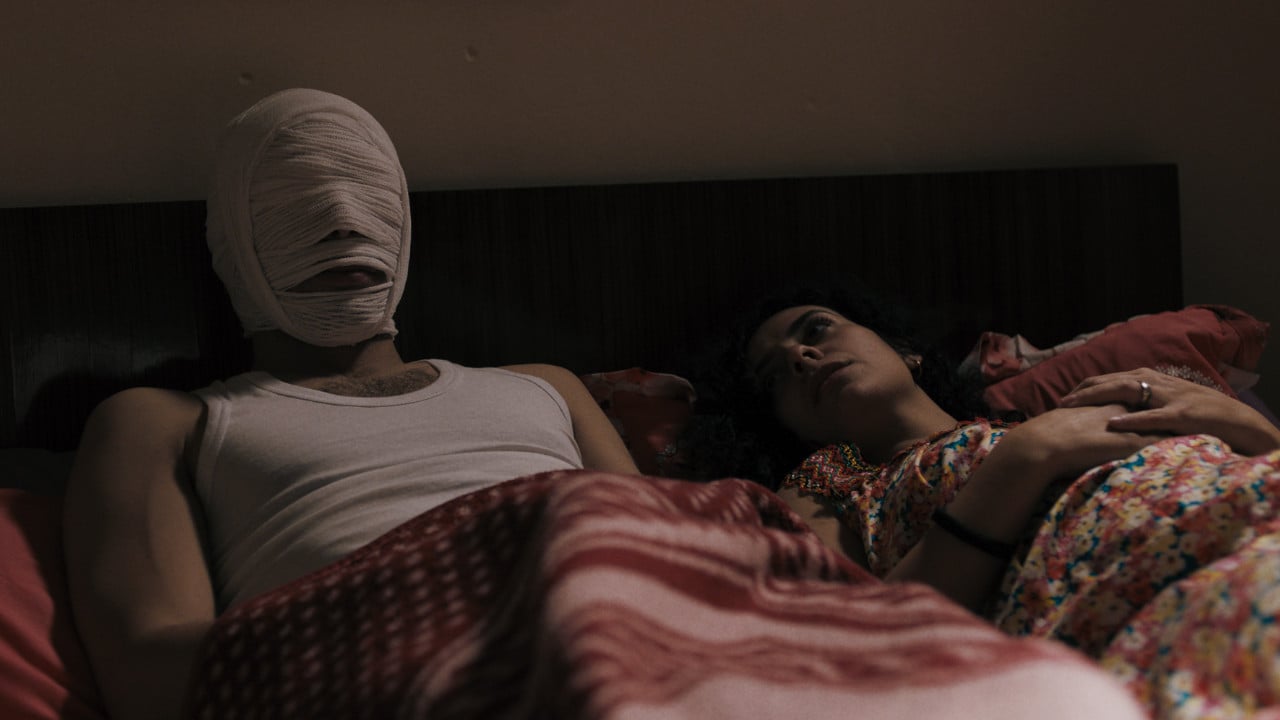
Set in 1993, the film tells of Ahmed who, following a car accident that caused him amnesia, returns to his home village where nothing seems familiar to him, neither his wife nor his children: the youngest even fears him, frightened by his bandaged face, while every night strange visitors torment Ahmed, whispering litanies in an unknown language.

There are not many genre films on the Venetian bill, and this title stands out as one of the most disturbing and intelligent horror films seen this entire year.

In addition to the strong emotions that the film provokes, 'Roqia' is also a powerful political feature, capable of using the theme of possession as a metaphor for religious fundamentalism.

Very impressive that this is a first work and yet another confirmation of the excellent programming of a section that is always too little talked about.

Copyright reserved ©
Loading...

Brand connect

Loading...

Newsletter

Notizie e approfondimenti sugli avvenimenti politici, economici e finanziari.

Iscriviti