The Netherlands

Dutch Design Week 2026: celebrating rebellious, authentic and imperfect ideas

In Eindhoven, 2,500 designers from around the world came together under the provocative theme R.A.W. (Rebel Authentic Worth). The interior design and the new look of the Van Abbemuseum

Punta sulla creatività più imperfetta, imprevedibile e autentica la Dutch Design Week 2026 di Eindhoven.

5' min read

Translated by AI
Versione italiana

5' min read

Translated by AI
Versione italiana

It focuses on creativity that is rebellious, unpredictable and authentic the Dutch Design Week 2026 in Eindhoven. The event, one of the most important in Northern Europe, brought together 2,500 designers from all over the world, spread across more than 100 venues in the Dutch tech capital.

The central theme is the acronym R.A.W. (Rebel, Authentic, Worth but also “raw”, meaning “unrefined”), in the spirit of experimentation, of bold ideas not yet “polished”, and of design as a continuous dialogue and a driving force for change.
Loading...

The countless surprises of Forward Furniture

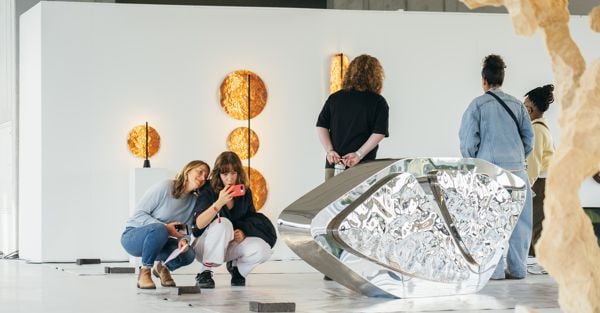
In terms of interior design itself, the centrepiece of the event was Forward Furniture: a major group exhibition, curated by Liv Vaisberg (co-founder and director of the Rotterdam Design Biennale), bringing together 80 emerging designers on the sixth floor of the Building TX, the former Philips factory, which offers a fantastic view of the city.
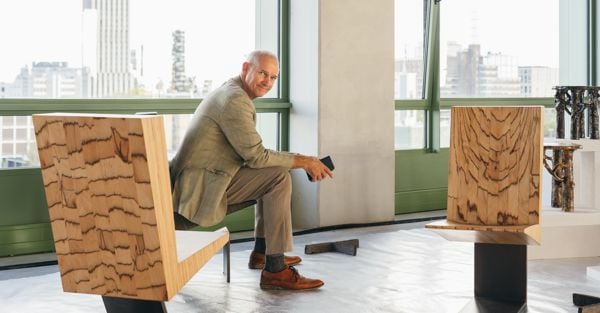
Il designer belga Gerard Kuijpers sulla sua collezione di sedie in legno con base di acciaio esposta a Forward Furniture.

Under the banner of Signature & Collectible Design, the exhibition straddles the boundary between fine craftsmanship, conceptual art and innovation in materials, following a very specific format: each designer must present a coherent collection comprising just three pieces of furniture.
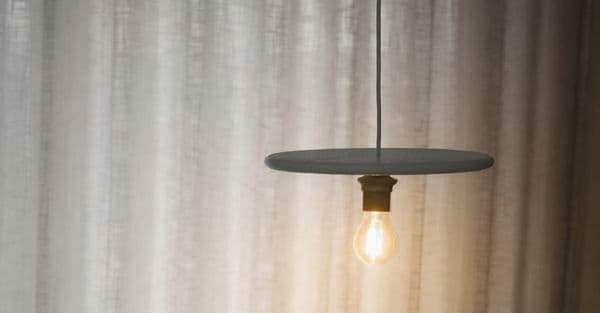
La Click Lamp dell’italiano Carmine Papa: un solido paralume in plastica riciclata che si monta direttamente intorno al cavo della lampadina con un semplice click (nel nome del social design).

The Click Lamp by the Italian designer Carmine Papa is intriguing: a sturdy lampshade made from recycled plastic that fits directly around the bulb’s lead.
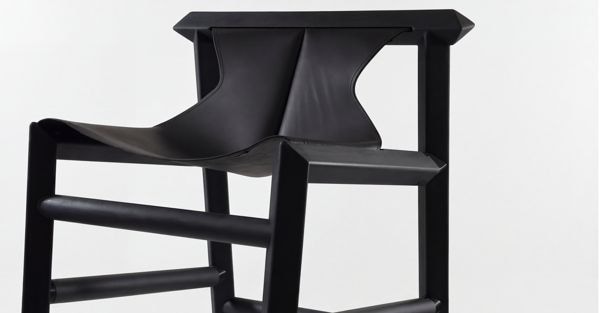
“It is made from a single semi-circular component, produced using 3D printing,” explains the designer. “Simply snap the two identical halves together and a complete circular lampshade is created in a matter of seconds.”

A fine example of social design – simple and functional – to add a splash of colour to the dangling light bulbs of our nomadic lives.

Un dettaglio della Sedia 1901 di Marcelo Rafael Orlievsky, in pregiato legno massello di lenga della Patagonia con cuoio finissimo e connettori 3D.

The work of the Argentine Marcelo Rafael Orlievsky, previously exhibited in Milan as well as at the ICFF in New York, at Made in São Paulo and at Brasília Design Week.

In Eindhoven, he is presenting Negro, a collection comprising three pieces that share the same formal and material language, based on the use of fine solid Patagonian lenga wood. ‘The Chair 1901 and the Armchair 1907 explore anatomy through sculptural wooden structures joined by 3D-printed connectors, with fine leather elements suspended within the frame that adapt to the shape of the body’, emphasises Marcelo.

The Patagonia pendant lamp is carved from a single block of lenga wood: sleek and sinuous.

Loading...

Lampara, opera dell’olandese Renate Vos in collaborazione con Het Lichtlab: sistemi di illuminazione base in lino pressato e paralumi in denim bianco riciclato (ricavato dai camici dismessi da medici e infermiere).

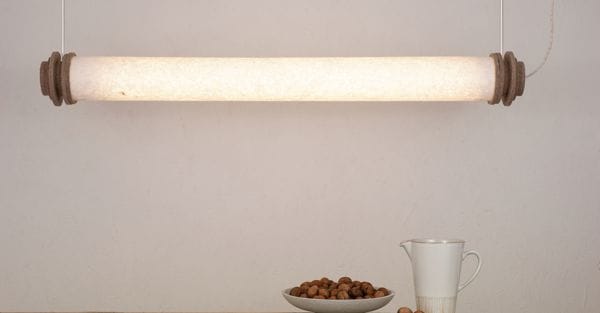
The Dutch designer Renate Vos, on the other hand, presents the elegant Lampara collection in collaboration with Het Lichtlab: lighting systems featuring a base with classic lines in pressed linen that ‘mimics’ marble and lampshades made from recycled white denim (made from discarded doctors’ and nurses’ uniforms) which soften the light.

“A meeting between the past and the future,” explains the designer, “is a contemporary lantern that pays homage to times long past, whilst looking towards a circular future.”

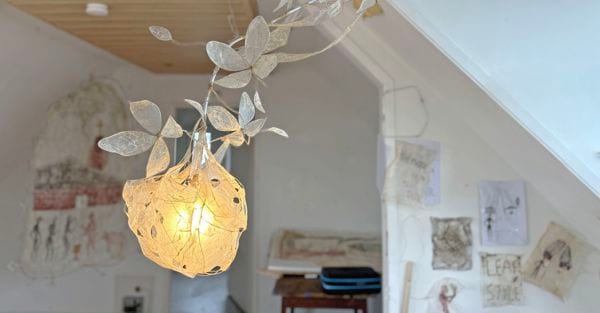
Fleurs Premières di Thibault Philip ammicca all’Art Nouveau ma conserva il suo approccio radicale sui materiali: i petali e i boccioli delle lampade sono realizzati con intestini animali essiccati.

The Fleurs Premières collection by Thibault Philip is both elegant and provocative; we saw his work last year in Eindhoven with the Louvanes chandelier. This time, the young French designer pays homage to Art Nouveau whilst retaining his radical approach to materials: the petals and buds of the lamps are made from dried animal intestines, offcuts recovered from the agri-food industry.

‘The framework of the lamps consists of a thin tubular aluminium structure reminiscent of the outline of branches, thorns or barbed wire,’ explains Thibault, ‘upon which the animal intestines are stretched and shaped: as they dry, the natural proteins bind spontaneously, creating translucent membranes similar to parchment, which visually transform into leaves, buds and delicate plant petals.”

The result is reminiscent of the famous mushroom-shaped lamps by Émile Gallé or the Paris Metro stations designed by Hector Guimard.

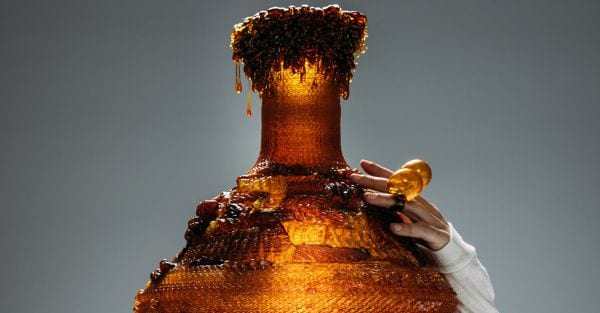
Un dettaglio di un vaso della collezione Woven Landscapes, opera dell’israeliana Ori Orisun Merhav: realizzata in resina dell’insetto Kerria Lacca e in tessuti in fibra di palma, ha vinto il premio Emerging Talent ai Dutch Design Awards.

Ori Merhav, insect resin and 3D printing

Don’t miss the collectable furniture by Ori Orisun Merhav, winner of the Emerging Talent award at the Dutch Design Awards. With Woven Landscapes, the Israeli designer and researcher has combined the amber-coloured, translucent resin of theKerria Lacca insect with palm-fibre fabrics hand-woven using ancestral techniques.

The result is a series of sculptures made from biomaterials and collectable furnishings that combine traditional craftsmanship with cutting-edge digital production technologies, such as large-scale 3D printing of biopolymers.

The Dutch Design Awards jury recognised her for her ‘unique ecological signature’ and for her ability to rethink design through the concept of peaceful coexistence between humans, technology and the animal world.

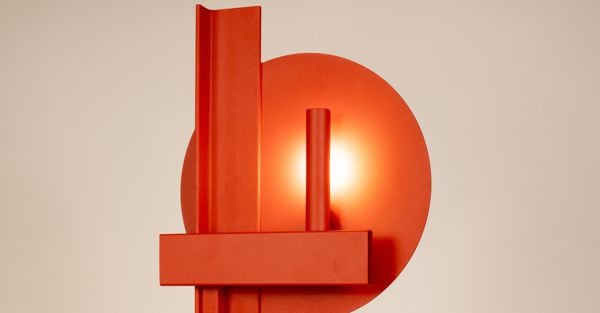
Dettaglio di una lampada da tavolo della collezione Reform di Joost van Bleiswijk: oggetti funzionali realizzati con elementi metallici trovati in laboratorio che vengono tagliati e saldati in modo intuitivo, senza un piano prestabilito.

We must not forget the Reform collection by Joost van Bleiswijk, founder of the Kiki&Joost studio in Eindhoven: functional objects crafted from metal elements found in the workshop. “‘Profiles and plates that are selected, cut, repositioned and welded intuitively, without a pre-existing design or predetermined outcome,’ explains the designer, ‘by reorganising what is already there, unexpected compositions and new functions emerge’.

It is the answer to a world driven by planning and optimisation: Reform, by contrast, is based on a casual approach in which possibilities are discovered along the way. A method that is very much in the spirit of Dutch Design Week.

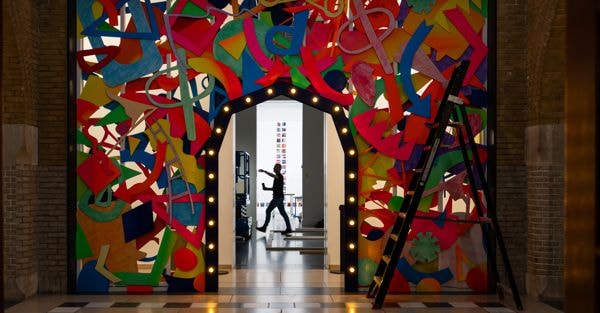
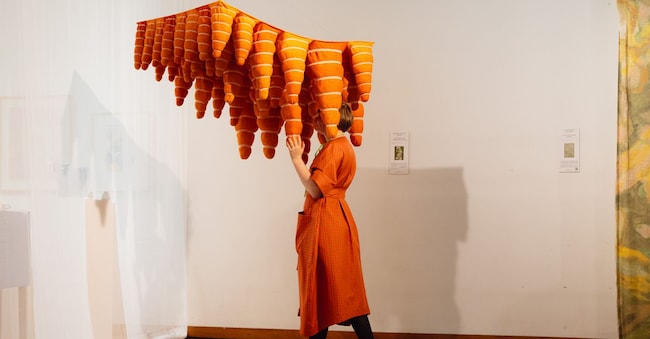
In «Museum as a Sundial», la grande mostra di Defne Ayas che trasforma il Museo Van Abbe in un’enorme meridiana, ecco il portale creato da Kiki & Joost e ispirato al mondo del circo (foto di Nick Bookelaar).

Van Abbe Museum, a sundial between sky and earth

Museum as a Sundial deserves a special mention (from 17 October 2026 to 21 February 2027), the exhibition which opened during Design Week at the Van Abbe Museum, which is celebrating its 90th anniversary this year. Under the dynamic leadership of the new director Defne Ayas, this surprising exhibition rediscovers the nature of the historic building, designed in close dialogue with the position and movements of the sun.

Ayas effectively transforms the entire structure into a gigantic sundial, a physical and conceptual tool for reflecting on humanity’s orientation between heaven and earth.

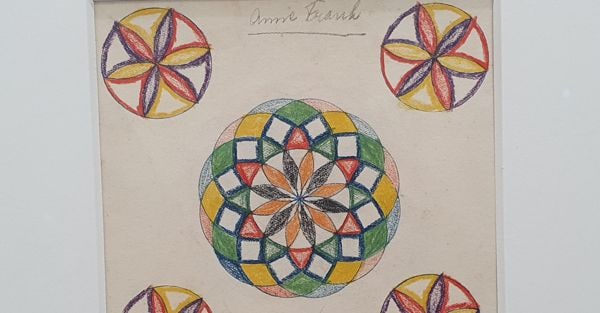
Una serie di Mandala disegnati da Anna Frank il 9 aprile 1941 ed esposti per la prima volta al Van Abbe.

Bringing together the works of eleven international artists and designers whose practice spans sculpture, film, architecture, video game design and live role-playing games, alongside special loans from sound archives and collections of drawings, the exhibition fosters a dialogue between vastly different eras.

Among the key contributions are the graphite drawings by Gala Porras-Kim, which recreate the night sky above the archaeological site of Göbekli Tepe, dating back 12,000 years, the mandalas created by Anne Frank at the age of twelve (never before exhibited) and lectures by contemporary scientists such as the cosmologist Chanda Prescod-Weinstein.

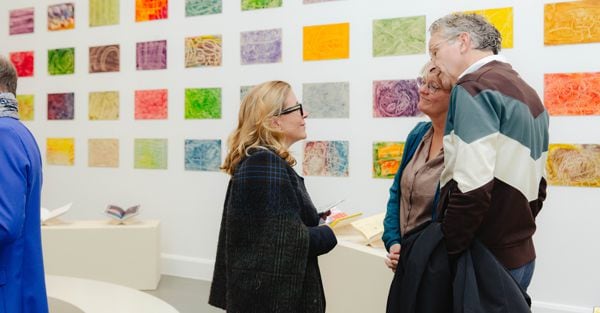
Defne Ayas con il sindaco di Eindhoven, Jeroen Dijsselbloem, davanti alla Rhoda Kellogg International Child Art Collection.

“Rather than looking solely inwards or forwards, together with a group of great artists and designers we are returning to one of humanity’s oldest technologies to find our way: the sun,” explains Ayas. ‘The sun is not only a measure of time and direction, but also a form of energy. A force that unites the celestial and the terrestrial.’

Spanning cosmology, archaeology and art: the Van Abbe’s approach, “under the guidance of Defne Ayas”, is exquisitely multidisciplinary and innovative. An approach that is Dutch Design Week through and through.

Copyright reserved ©
Loading...

Brand connect

Loading...

Newsletter RealEstate+

La newsletter premium dedicata al mondo del mercato immobiliare con inchieste esclusive, notizie, analisi ed approfondimenti

Abbonati