Objects of Desire

Dynamism and manoeuvrability: putting the new generation of hybrid SUV coupés to the test

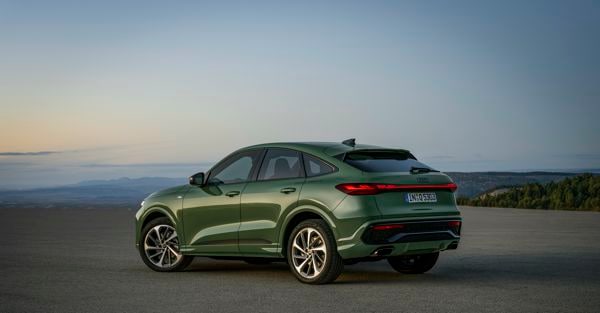
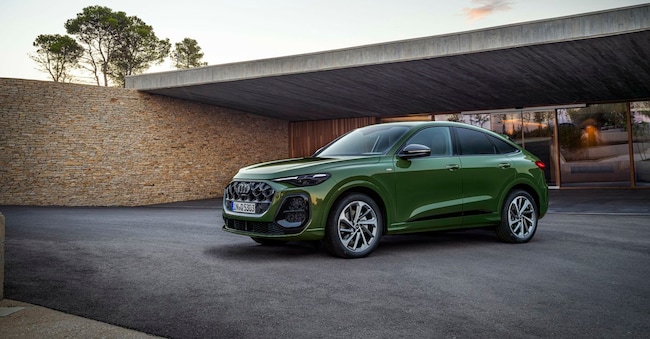
The second generation of the sporty Q5 completes the line-up of non-electric Audi Sportback models. Its sleek silhouette does not compromise on comfort or performance.

4' min read

Translated by AI
Versione italiana

4' min read

Translated by AI
Versione italiana

With a design inspired by that of the classic Q5, the new Sportback aims to build on – as it did with the first generation – the success of the entire Q5 range, which has so far topped Audi’s sales charts and captured the attention of SUV-coupé enthusiasts.

New platform and technologies

Loading...

Like the standard Q5, the Sportback also utilises the PPC architecture developed for models with petrol hybrid and turbo-diesel engines, which shares the electronic and digital platforms with those of Audi’s electric vehicles. These technologies significantly raise the bar in terms of on-road and off-road dynamism, driver assistance, digitalisation and efficiency. Indeed, they have enabled the adoption of new generations of hybrid technologies. The range starts with the 48 V Plus mild-hybrid system, which in certain situations provides the engine with an additional 24 cavalli and 230 Nm of torque and, during deceleration, recovers 25 kW of energy for the battery, thanks to the same technology used in Audi’s electric cars. Furthermore, at low speeds, it operates as a full hybrid, enabling the Q5 to travel short distances with zero emissions. This technology is applied to the 2-litre four-cylinder TFSI petrol and TDI turbodiesel engines – both producing 204 CV – and to the SQ5’s 3-litre turbocharged six-cylinder engine producing 367 CV. With the exception of the least powerful petrol engine – which is also available with front-wheel drive – the others are paired exclusively with the ‘quattro ultra’ all-wheel-drive system, which directs power to the rear axle only when necessary.
Next, the range moves on to the plug-in powertrains of the e-hybrid quattro models – a designation used for these variants, which are due to arrive in the coming months. They are powered by systems delivering 299 and 367 cavalli, comprising a 2-litre turbocharged petrol engine with a Miller cycle to optimise combustion – which, regardless of engine speed, keeps fuel consumption and emissions low – and an electric motor housed within the seven-speed dual-clutch gearbox. They utilise a high-energy-density 25.9 kWh cell-to-pack battery, which promises a zero-emission range of up to 105 kilometres and allows a top speed of 140 kilometres per hour. The battery can only be fully recharged using alternating current via charging points with a capacity of up to 11 kW in two and a half hours, but these Q5s also offer the Battery Charge function to recharge it whilst driving until it reaches 75 per cent capacity. Progressive steering comes as standard on all models, whilst adaptive air suspension is available as an option, with individual control of each shock absorber allowing the ride height to be adjusted by up to 60 mm. This feature optimises off-road performance alongside two off-road modes, which complement the standard road driving settings.
Sporty design, maximum efficiency
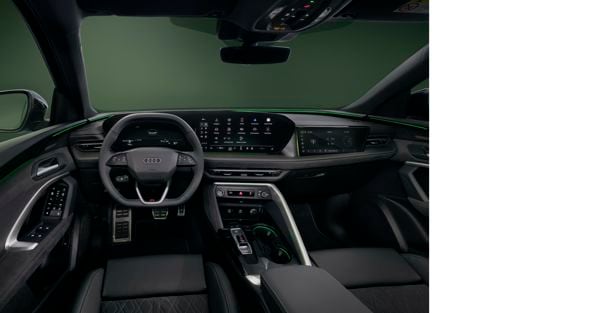
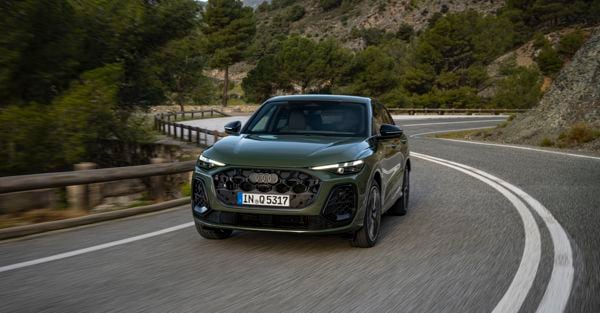
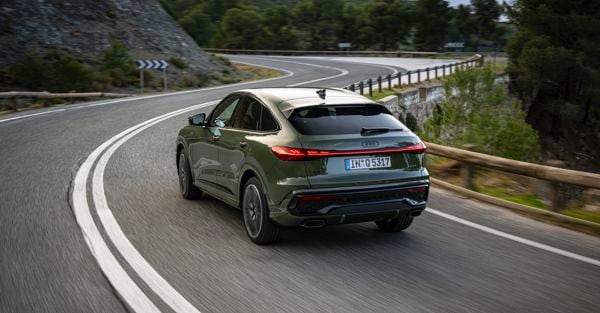
The new architecture has also inspired the design of the second-generation Q5 Sportback, which is characterised by the dynamic silhouette created by the sloping roofline, its muscular styling cues and proportions that give it a balanced appearance. Overall, the design retains the lower sections of the other Q5, from which the Sportback also retains the length of 4.72 metres, the width of 1.90 metres, a height of 1.64 metres and a wheelbase of 2.82 metres, whilst proving to be more aerodynamic than the previous Sportback, as confirmed by its drag coefficient (Cx) of 0.30. This figure, of course, has a positive impact on the overall efficiency of the SUV-coupé.

Spacious, high-tech interiors

Contrary to what the bodywork might suggest, the Sportback’s interior offers the same amount of space as the classic Q5, even in the rear. The radical evolution of this model is clearly evident inside as well. The interior, identical to that of the other Q5, is sophisticated and well-finished; opting for the display in front of the front passenger results in a dashboard that is a veritable digital stage featuring OLED screens, comprising as standard the combination of the configurable 11.9-inch cockpit (to which a large head-up display can also be added) and the 14.5-inch infotainment display. The digitalisation is based on the Android Automotive OS and five platforms that swiftly control all the car’s functions. For example, from ADAS to over-the-air (OTA) updates, from ChatGPT interacting with the voice assistant to the management of the OLED rear light clusters, which enhance the Car-to-X function, transforming the rear lights into a display that sends alerts to following vehicles when necessary. As for load capacity, the boot ranges from 515 to 1,415 litres in the case of the mild-hybrid Sportback models, but is slightly smaller in the SQ5 and e-hybrid variants.

How does the 2.0 TDI quattro mild hybrid perform?  

Capable of reaching 226 per hour and 100 per hour in 7.4 seconds, whilst achieving an average fuel consumption of 5.9 litres per 100 kilometres, the 2.0 TDI offers instinctive handling even through bends and a high level of comfort both on and off-road, particularly with the adaptive air suspension. This driving experience is underpinned not only by the reliable dynamism and manoeuvrability provided by the chassis and steering set-up, but also by the performance of the powertrain, which, alongside 204 cavalli of power, delivers 400 Nm of torque between 1,750 and 3,250 revs. In fact, the turbo-diesel engine offers a responsive, smooth power delivery and, when required, combines remarkable elasticity with a lively character, making its ‘voice’ heard only when the accelerator is pressed firmly to reach higher revs.

Loading...

Trim levels, variants and prices  

The Business Advanced and S line edition trim levels are available for the 48 V 2.0 TFSI mild-hybrid versions of the Q5 – both two- and four-wheel drive – as well as the 2.0 TDI quattro coupé variant. Prices start at €69,000 for the petrol variants and €73,000 for the turbodiesel. Meanwhile, the SQ5, with a starting price of €93,000, is available not only in its standard specification but also in the Sport Attitude trim, which brings the price up to €103,000. The price list for the e-hybrid versions, which are already available to order, starts at €75,000.

Copyright reserved ©
Loading...
Loading...

Newsletter

Notizie e approfondimenti sugli avvenimenti politici, economici e finanziari.

Iscriviti