Products

Dyson cleans your teeth too: after dust, air and hair, here comes the toothbrush with a camera

Dyson is entering the oral hygiene market for the first time with the CameraJet, a €479 toothbrush that combines a micro-camera, machine learning and a mouthwash jet to identify and clean the spaces between the teeth.

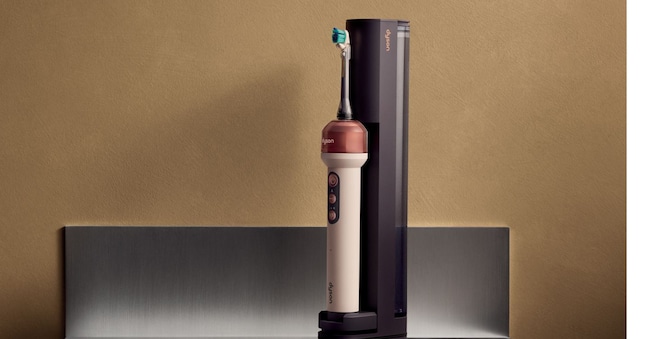
Dyson CameraJet in situ imagery, JPEG, PSD

4' min read

Translated by AI
Versione italiana

4' min read

Translated by AI
Versione italiana

It’s called CameraJet and costs 479 euros. It has a micro-camera, uses machine learning to detect the spaces between your teeth, and sprays a jet of mouthwash exactly where it’s needed. For Dyson, this marks its entry into a new market: oral care. It also marks a return to an old obsession: taking an object that seems to have already been perfected and complicating it enough to try and reinvent it.

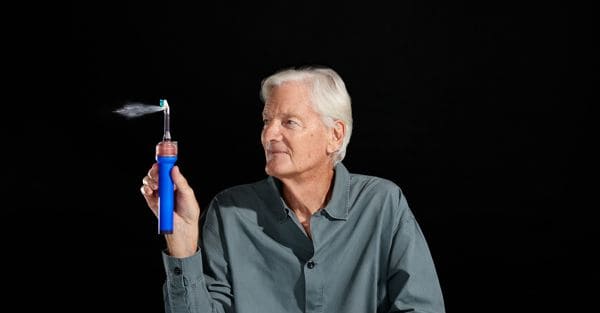
Inside a Dyson CameraJet toothbrush there is a 100,000-pixel camera, 16 million lines of code, a machine learning algorithm trained on 470,000 images of teeth, a pump, a small reservoir for mouthwash, a sonic motor, Wi-Fi, Bluetooth and even an RFID tag in the brush head. The only thing missing is perhaps a sat-nav.
Loading...

Why a toothbrush?

Dyson is entering the oral care market by doing what it has been doing for more than thirty years: taking a seemingly mundane household appliance, identifying a very real problem and building an almost disproportionate amount of engineering around it.

This time, the problem is the gaps between the teeth.

According to figures cited by the company, nine out of ten people do not floss as often as recommended, and the average time spent brushing is around 45 seconds, compared with the recommended two minutes. Dyson’s solution therefore involves combining three normally separate actions: brushing, cleaning between the teeth and using mouthwash.
A camera that scans for gaps between teeth

At the heart of the CameraJet is what Dyson calls ‘Gap Optical Targeting’.

A small video camera with a macro lens scans the surface of the teeth 28 times per second. The algorithm detects a gap between the teeth, calculates its position and, within 100 milliseconds, activates a jet of mouthwash. In effect, the toothbrush keeps an eye on where it’s going whilst we’re using it. It’s a sort of driver-assistance system applied to molars.

The car analogy isn’t actually that far-fetched. The software must constantly interpret changing images, predict where the target will be a split second later, and control an actuator. Speeds and the landscape change, of course: instead of a motorway, there are teeth and gums.

The water jet is another feature that Dyson places great emphasis on. Traditional water flossers often use a very narrow stream. According to the company’s tests, this can pierce through the layer of plaque without necessarily removing it completely. Dyson has therefore designed a wider, conical jet, intended to distribute the water over a larger surface area and operate at a lower pressure.

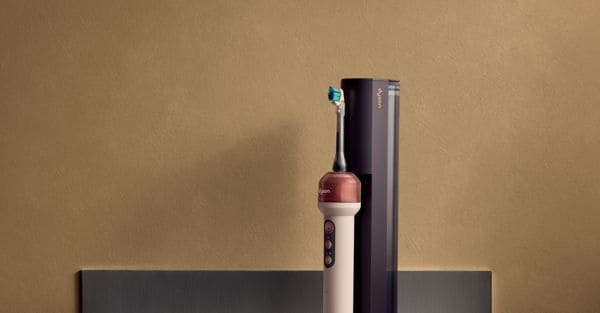
Dyson CameraJet in situ imagery, JPEG, PSD

How it was conceived

To study this, the company says it has developed, in collaboration with the Faculty of Dentistry at the National University of Singapore, a synthetic substance capable of mimicking plaque. The collaboration lasted five years. It’s very typical of Dyson: first they create the problem in the laboratory, then they spend years spraying it with water.

Loading...

The mouthwash is contained in a 12.5-millilitre reservoir. A diaphragm pump maintains a steady flow even when the toothbrush is tilted or held almost horizontally to reach the back teeth. The charging base refills the reservoir in around three seconds.

The brush head has also been redesigned. It features stiffer bristles towards the centre and softer ones closer to the gum line. The oscillation continuously changes angle to prevent individual bristles from remaining virtually stationary when pressed against the tooth. Dyson claims, based on laboratory tests, up to 69 per cent better plaque removal in hard-to-reach areas compared with certain competing premium electric toothbrushes.

Then there’s the MyDyson app. It allows you to view the inside of your mouth in real time, check your brushing coverage and receive guidance on technique. The company states that the camera images are neither recorded nor stored in the cloud.

To ensure the camera worked properly, Dyson even had to design special low-foaming toothpaste and mouthwash. Foam, which appears harmless, turns into a mist when captured by a micro-camera.

Dyson CameraJet, hero imagery, JPEG, PSD

It took six years of development, 661 engineers and 38 patents filed. The Dyson Dental System will go on sale on 1 September for 479 euros. The pack includes the CameraJet, a dock, a travel case, toothpaste and mouthwash.

The right to invent strange things

One might question the price of the CameraJet. One might doubt the need to watch one’s molars being cleaned via a live stream on a smartphone. And, above all, it remains to be seen – outside Dyson’s laboratories – to what extent the combination of camera, water jet and toothbrush actually improves oral hygiene in the long term. But there is one quality that is worth acknowledging.

Dyson continues to invest money and years of work in an attempt to create products that did not previously exist. They do not always work. Some go on to become industries. Others end up in warehouses. Still others resemble objects that have accidentally arrived from a poorly designed future. The point is that industrial innovation also needs this sort of determination.

Copyright reserved ©
  • Luca Tremolada

    Luca TremoladaGiornalista

    Luogo: Milano via Monte Rosa 91

    Lingue parlate: Inglese, Francese

    Argomenti: Tecnologia, scienza, finanza, startup, dati

    Premi: Premio Gabriele Lanfredini sull’informazione; Premio giornalistico State Street, categoria "Innovation"; DStars 2019, categoria journalism

Loading...

Brand connect

Loading...

Newsletter

Notizie e approfondimenti sugli avvenimenti politici, economici e finanziari.

Iscriviti