
E-Car, Micro-Car and K-Car, what they are and what the differences are
New compact electric cars are poised to usher in a new market niche. We discover the differences with Microcar and Japanese K-car

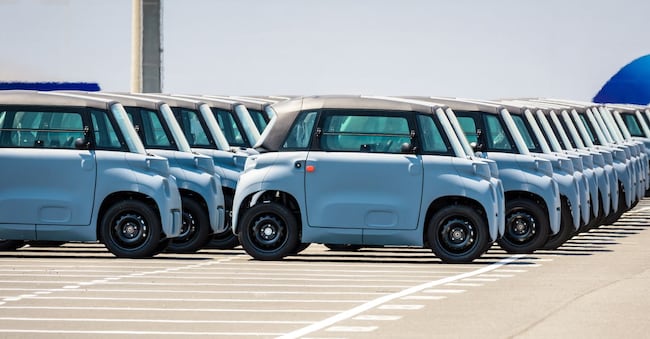
They are called E-Cars and translate into compact electric cars, produced in Europe and affordable. Christened Small Affordable Cars, they aim to offer a mobility solution at a competitive cost but above all to increase car production in the Old Continent. Not to be confused with micro-cars and the Japanese K-Cars, they will provide more safety than heavy quadricycles.
E-Car, what are they
While waiting to discover the first model produced by Stellantis, the E-Car will be a new vehicle category. The difference will not be so much about the product but about a change in the regulatory framework (Amendments to Regulation (EU) 2018/858 introducing a new sub-category of passenger cars, the small electric vehicles category M1 (M1E), based on a maximum length of 4.2 metres) and a series of benefits for motorists such as purchase bonuses, scrappage schemes, favourable parking conditions, toll exemptions or reductions and reduced charging rates. On top of this, a maximum price of approximately EUR 20,000 will be added.
Microcars, what they are
So-called microcars fall within the category of light quadricycles, where, according to the Italian Highway Code (Art. 53 h), they are comparable to a moped despite having four wheels and can be driven with an AM licence from the age of 14. Heavy quadricycles for passenger transport, on the other hand, must have an unladen mass with a maximum limit of 400 kg and a maximum load capacity of no more than 200 kg. For the transport of goods, the maximum limit is 550 kg, with a maximum load capacity of no more than 1000 kg. The calculation of mass does not include the weight of batteries for vehicles equipped with an electric motor. Heavy quadricycles with power up to 15 KW can be driven with a B1 driving licence.

