United States

Farewell to Edmund Phelps, father of neo-Keynesian theory and Nobel Prize winner for Economics

The US economist, honoured in 2006, revolutionised the understanding of short- and long-term economic policies.
Edmund Phelps

2' min read

Translated by AI
Versione italiana

2' min read

Translated by AI
Versione italiana

Edmund Phelps, the US economist considered to be the progenitor of the neo-Keynesians, has died at the age of 92. In 2006 he was awarded the Nobel Prize in economics - as the citation read - for 'clarifying the understanding of the relationships between the short- and long-term effects of economic policies'.

Academic career

Loading...

Edmund Phelps represents one of the most influential figures in economic thought of the last sixty years.

Born in Evanston, Illinois in 1933, he received his Ph.D. inEconomics from Yale University in 1959. After teaching at Yale, MIT (Massachusetts Institute of Technologies) and the University of Pennsylvania, he moved to Columbia as the Mc Vickar Professor of Economic Policy. He was a member of the Econometric Society (1966), Vice-President of the AEA (American EconomicAssociation) (1983), a member of the National Academy of Sciences; in 2000 he was named a Distinguished Fellow of the American Economic Association.

The areas of study

His studies initially addressed the theory of capital and economic growth. In them, Phelps discusses the ''golden rule of accumulation'', according to which the equality between the profit rate and the growth rate is the relevant efficiency criterion from the point of view of an economic system.A topic on which Phelps has made important contributions is the natural rate of unemployment hypothesis, according to which an economy is considered to have a ''natural'' rate of unemployment, at which expectations of changes in wages and prices are fully realised.

 The Nobel Prize

Phelps was awarded the 2006 Nobel Prize in Economics "for clarifying the understanding of the relationships between the short-term and long-term effects of economic policies".

Trento and Fitoussi

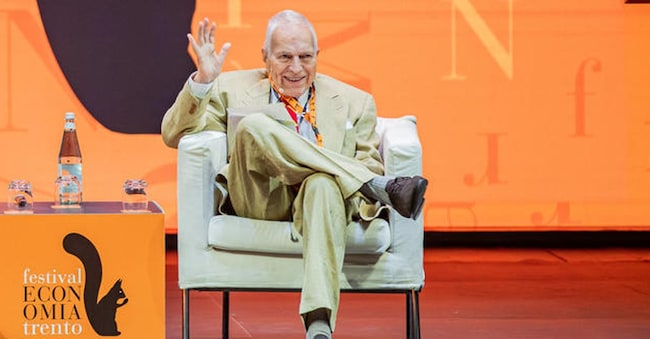
The Nobel Prize winner was a frequent guest at the Trento Festival of Economics: among other things, he gave a lecture in memory of his friend and economist Jean-Paul Fitoussi, describing him as a 'non-dogmatic' economist.

Copyright reserved ©

Brand connect

Loading...

Newsletter

Notizie e approfondimenti sugli avvenimenti politici, economici e finanziari.

Iscriviti