
Early elections are causing unrest within the majority; here are the scenarios on the table
An election in the autumn, at the end of the current term. Or an election day in the spring, combining the general and local elections (which must be held between 15 April and 15 June).
by the Editorial Team
 Aggiungi Il Sole 24 Ore
ai preferiti su Google
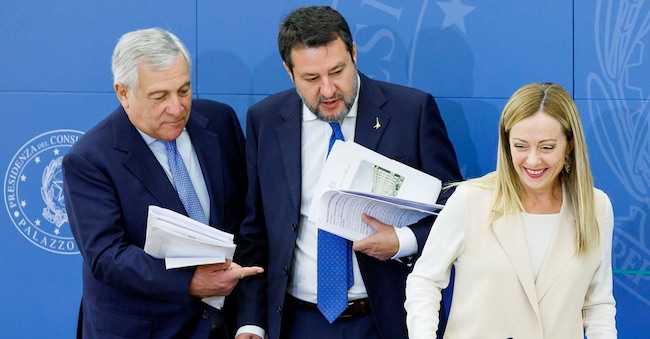
It is no secret that Prime Minister Giorgia Meloni is toying with the idea of bringing forward the general election to the spring. Having passed the milestone of the longest-serving government in the history of the Republic, the Prime Minister has no intention of letting herself be worn down now that the election campaign seems to have already got into full swing, with her allies ready to stake their claims ahead of the budget. It promises to be a bumpy ride. That is why, following the approval of the electoral law and the passing of the new budget, any date would, in theory, be suitable for going to the polls. Nor is the possibility of an election day coinciding with the spring local elections (which must be held between 15 April and 15 June) now being ruled out, when mayors of Italy’s major cities (Rome, Milan, Naples, Turin and Bologna) will be re-elected. This scenario had previously been set aside due to fears of a knock-on effect for the progressive camp that a vote in cities historically governed by the centre-left might have.
Salvini’s ‘no’ to an early election
The problem is that the coalition partners, the League and Forza Italia, do not agree and are aiming for an election in the autumn of next year, when the parliamentary term ends. Matteo Salvini is the most determined. ‘We are celebrating the longest-serving government in the history of the Republic, so why cut short the enormous amount of work we are all doing? The term runs until autumn 2027,’ the Lega leader states clearly. Separate general and local elections, then? “Of course,” he replies. “Local elections are normally held in the spring; many major cities are due to vote, from Milan to Rome, Bologna, Turin and Naples.” And he insists: “I have many projects to carry forward, and I would like to see them through until the very last possible day.” The League leader’s hope is that the ‘Vannacci phenomenon’ will fizzle out after the initial flurry of attention. And that the test of the local elections – when actual votes count rather than just the polls (which show Futuro Nazionale rising to 8 per cent) – will serve to put the General’s party into perspective. Not to mention that the early end to the parliamentary term would jeopardise the final approval of the agreements on differentiated autonomy, the League’s flagship policy.
Tajani’s doubts
The other Deputy Prime Minister, Antonio Tajani, also appears to be pushing for the elections to be held later, albeit with less emphasis. “I have no problem with voting one or two months earlier, but perhaps the right date is the end of the parliamentary term,” explains the leader of the Azzurri. The budget is also a topic of discussion amongst MPs: waiting until the autumn would allow the approved measures to ‘bear fruit’, as voters would have more time to benefit from tax cuts, bonuses and various incentives.
The crux of the electoral law
On the left, Giuseppe Conte appears to be rising to the challenge. “In the spring, or whenever it may be, we will always be ready. We will already have a shared programme by the autumn. We are by no means behind schedule,” he states clearly, postponing the leadership primaries to the next stage. The M5S president does not seem willing to endorse any other course of action: “It is perfectly legitimate for the secretary of the largest party, the PD, to aspire to be the prime ministerial candidate for the entire coalition. But bear in mind, this is the first time we’ve formed a coalition, and neither we – nor, I imagine, the other parties – can accept that this rule should be applied for the first time. We are in a completely different situation to that of the centre-right.” It will be the electoral law that decides whether the broad coalition will have to speed up proceedings or not. And, following the approval of the Stabilicum in its third reading in the Chamber of Deputies, the fate of the parliamentary term may also become clearer

