
Hunting: early start to the season in 16 out of 21 regions – a clash with environmentalists
Federcaccia: early operations should focus on critical species. WWF: we recognise the issues surrounding wildlife but dispute that hunting is the solution

Key points
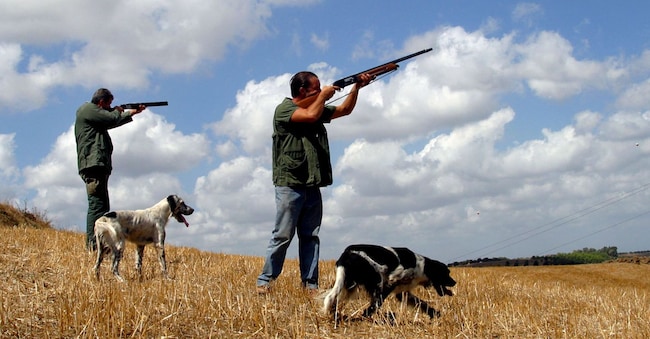
No fewer than sixteen out of 21 regions (including the Republic of San Marino) have brought forward and extended the hunting season. The season, which normally begins on the third Sunday in September and runs until 31 January, has in many cases – and for specific species – started earlier. In some cases, as early as 2 September. This extension of the hunting season has reignited the clash between hunters on the one hand and environmental organisations on the other. Farmers are also closely following the situation, as they are the ones who suffer the most damage from the proliferation of wildlife.
Federcaccia: early opening season focused on critical species
“The early opening,” comments Federcaccia president Massimo Buconi, “focuses primarily on critical species – that is, those that cause damage either to agricultural crops or to biodiversity itself. One need only think of wild boar (which are also the main carriers of African swine fever) or even the rock pigeon, which in the countryside feeds on grain and seeds, digging them out of the ground and causing damage to farms. Or the crow, which is a threat to biodiversity because it preys on the nests and eggs of other bird species. The early opening of the hunting season also applies to the wood pigeon, a species whose numbers have risen significantly in many regions, whilst the turtle dove and quail are almost entirely excluded. Quail are still hunted early, albeit under restrictive conditions.’
Advance payments and additional authorisations: the wild boar case
However, the extension of the hunting seasons does not merely refer to bringing the season forward, but also to additional authorisations for certain species that have a particularly significant impact. ‘From this perspective, the wild boar has become a real target species,’ continues Buconi. ‘In Italia, the population is estimated at nearly 2 million animals. There is an extraordinary culling plan aimed at reducing the population by 600,000 animals. However, this is a target that is difficult to achieve. In our view, unless management operations are extended to include protected areas as well, it will be difficult to bring the wild boar population in Italia under control.”
WWF: Early opening, once the exception, has become the rule
“We have a completely different view,” retorts Domenico Aiello, Head of Legal Protection of Nature at WWF Italia. “The early opening was an exception and has become a rule granted for many species, some of which are particularly vulnerable. Articles 9 and 41 of the Constitution aim to safeguard biodiversity, which is why we had requested that the start of the hunting season be postponed until October, whereas across Italia it was decided to bring it forward.”
In September, human activities have an impact on migratory species
According to the WWF, the start of operations immediately after the summer is also problematic because it affects species that are migrating, such as birds travelling from Northern Europe to Africa for the winter.


