Earth accelerates: the shortest days ever arrive
The shortest days of the century are expected in July and August, with minimal but significant effects on weather measurement

3' min read
3' min read
We may soon have the shortest days ever, forecasts indicate 9 or 22 July or even 5 August. This is according to the authoritative IERS, International Earth Rotation and Reference System Service, the international body responsible for monitoring the Earth's rotation since 1987.
As our measuring instrumentation becomes more precise and sophisticated, in fact, what seemed peacefully always equal to itself, such as the duration of a solar day, 86,400 seconds, creates non-trivial problems for us.
Infinite time differences
.These are no longer the days when one got up at dawn, went to work in the fields until sunset and then returned home, today life is frenetically very different and we are able to appreciate, with our instruments, infinitesimal differences in time for us. In the three days we have just mentioned, in fact, the day will be shorter than the canonical 86400 seconds by 1.5 or so milliseconds, thousandths of a second, a tiny amount of time that we cannot even imagine.
We might easily think we were being fooled, were it not for the fact that our present civilisation, which uses GPS signals for a host of important functions, from finding the restaurant we want with the map programme, to giving the precise location of a plane or ship, uses times that are spasmodically smaller and smaller and must be precise. Think, for example, of the quantity of orders to buy or sell shares, which run on fibre-optic cables to the world stock exchanges, and are all stamped with a time stamp indicating the exact moment when the value of the transaction has to be calculated.
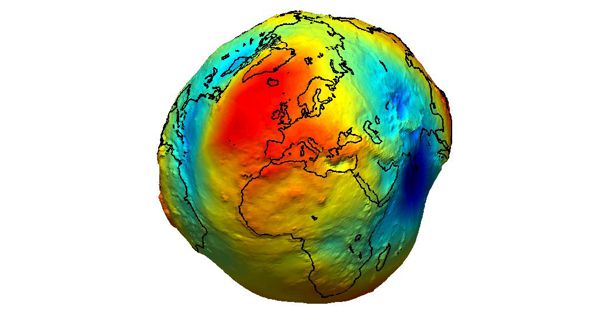
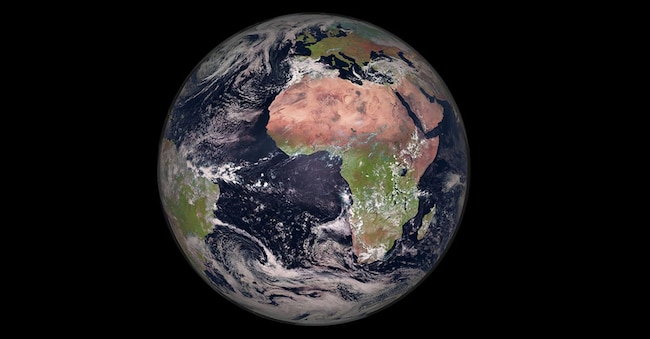
In short, why is this small but important shift from the average happening, we may ask. The fact is that the Earth rotates around its own, imaginary axis of rotation that does a bit of everything: it describes a cone in thousands of years, it oscillates even on the small scale and, since 2016, we have also noticed thanks to atomic clocks that the planet is accelerating its rotation.