
Earthquakes, the frontiers are sensor technology and satellites
Technologies are advancing, but 'the important thing is the design and execution according to earthquake-resistant standards,' recalls Pinho (University of Pavia)
3' min read
Key points
3' min read
Looking upwards and no longer downwards. To better protect ourselves from the more frequent and unforeseen risks of seismic movements, we will have to move our observation points from the earth to the sky, from matter to sensors. It may seem a paradox, but scientists and researchers have long been directing their efforts towards analysing and monitoring data, those that are read and translated by devices flying above our heads, drones or satellites. A way to prevent earthquake risks. This is how Modisat was born, a platform developed in the project funded by the Italian Space Agency and which exploits automated analysis methods using high-resolution sensors and satellite technologies to monitor infrastructures. But there is also Ainspect, an advanced system based on the adoption of drones with an artificial intelligence graft for building inspections. In short, to understand potential seismic risks we go from the physical space in which we live to the space of devices.
Pinho: 'Making Buildings and Communities Resilient'
.'The use of advanced technologies and smart sensor networks is definitely transforming the approach to preventing and monitoring earthquakes and the built environment. The goal is to make buildings and communities resilient with systems that promptly detect a seismic event and monitor its effects on structures, triggering any alarms or automatic interventions,' says Rui Pinho, professor of structural engineering at the University of Pavia and vice-president of the Eucentre Foundation. This centre was set up back in 2003 thanks to the Civil Protection, the University of Pavia, the National Institute of Geophysics and Volcanology (Ingv) and the Pavia University of Applied Sciences (Iuss). Here there are about a hundred researchers in the field of earthquake engineering. In the experimental laboratories there are unique vibrating tables.
Myanmar, power 44,000 times greater than the Campi Flegrei
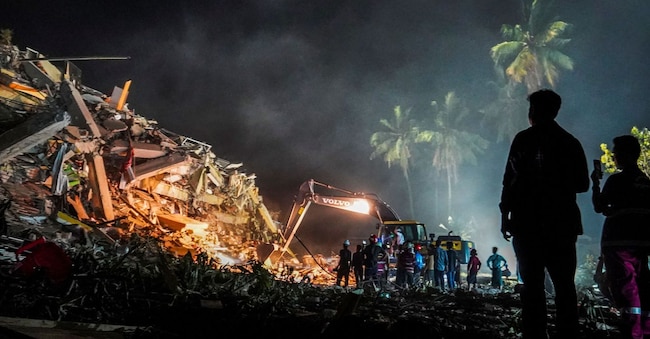
.On the other hand, the aspect of building monitoring - whether related to construction and reinforcement materials, or associated with hi-tech sensors - is back in the news at the moment. The 7.7 magnitude earthquake that struck Myanmar, in south-east Asia, was devastating and also had repercussions in neighbouring countries such as Thailand, China, India and Bangladesh. It was 44,000 times more powerful than the 4.6 magnitude earthquake that occurred on 13 March in the Campi Flegrei. In this case, the seismic swarm has ended, but people are still talking about it.
Thus, even in Italy, start-ups and university spinoffs for seismic protection and environmental emergencies are multiplying. "Research is focusing on the wide-ranging analysis of innovative materials that also take the environmental impact into account, but the most important thing is certainly adequate design and execution according to current and updated earthquake-proof standards," Pinho points out. The focus is on innovative, effective and affordable solutions. "One priority is the adaptation of the existing building stock with non-invasive technologies that can be installed without interrupting operations. In parallel, digitisation allows the use of artificial intelligence for monitoring, seismic analysis, damage recognition and optimised design. But two synergetic approaches are emerging: smart manufacturing improves the inherent resistance of buildings, while intelligent sensor technology is geared towards real-time monitoring. The first includes advanced digital and construction techniques such as prefabrication, 3D printing and on-site robotics, with benefits in terms of quality and safety, especially for new buildings. The second allows active risk management through sensors and alarm systems, even on existing buildings,' Pinho concludes. The challenge becomes systemic and prevention depends on teamwork and therefore on alliances between several players.
At Bologna workshop renovated after 2012 earthquake
From Pavia to Bologna. It was here that the university laboratory for structural and geotechnical engineering was founded in the 1970s and renovated after the earthquake in Emilia in 2012. 'Today we talk about data centres and the necessary IT security, but alongside this there must be another linked to earthquake-proof solutions. Technological infrastructures must also be preserved in their physicality,' says Claudio Mazzotti. For this professor of building technology at the University of Bologna, innovation must be made on that continuous line that holds material and digital technologies together. "With regard to new buildings, the research sector is developing innovative technologies that can optimise the seismic behaviour of structures. Low-damage systems are being studied where degradation is forced to concentrate in easily replaceable fusible zones, or technologies for active control of structural vibrations or structural components capable of dissipating large amounts of energy, mitigating damage to the structure'.

