
Eastern Europe, Slovenia and Hungary test for sovereignism
Two million Slovenians have to choose between the outgoing premier, the progressive Golob, and the leader of the Eurosceptics Jansa. In Hungary, Magyar is on the rise and can beat Orban, who, however, has the support of Trump and Putin on his side. There is a risk of an alliance of governments forming, similar to the Visegrad group, in and against the EU

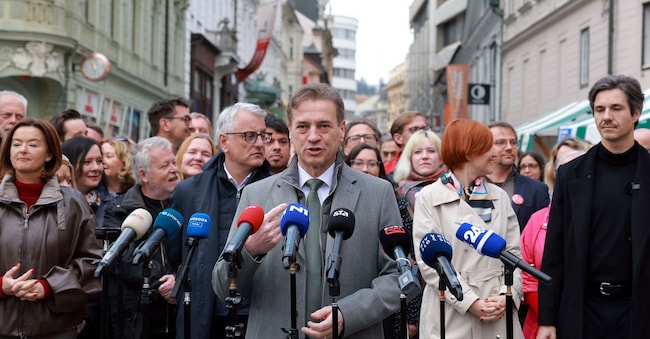
The polls are open in Slovenia for the election of the new parliament. The challenge is between the outgoing premier, the progressive Robert Golob, and the sovereignist Janez Jansa, who in the event of victory would be heading for his fourth term as prime minister. But the importance of these elections goes beyond the two million Slovenians called upon to choose a new government. The vote in Slovenia could serve as a test for two other upcoming elections: the one on 12 April in Hungary, where the populist Viktor Orban is vying for re-election; and the one on 19 April in Bulgaria, where street protests in December led to the resignation of the government accused of corruption.
But there is more: tomorrow's Slovenian ballot box will be a thermometer of how far the sovereignist fever can still spread in Central and Eastern Europe, and how much this contagion can give birth to a cohesive bloc of countries, a sort of Visegrad Group 2.0 able to put a spoke in the wheels of the European Union's political and economic choices. The Slovenian government's role in the European Union is to create a cohesive bloc of countries, a sort of Visegrad Group 2.0 able to put a spoke in the wheels of the European Union's political and economic choices
In Slovenia, the latest poll, from the Mediana agency, shows a slight advantage of the Movement for Freedom (Gs), the liberal-democratic and pro-European party of the outgoing Prime Minister Golob, which has reportedly recovered its initial lead over the Slovenian Democratic Party (Sds) led by the nationalist Jansa. But both formations are given between 18 and 19%, and neither of them alone will be able to aspire to reach the 46 seats in Parliament needed to govern. Much will therefore depend on the results of the smaller parties with which to build a coalition, and those able to pass the 4% threshold are five, from the left of Levica to the right of Resnica.
"The Golob government has done well from the economic point of view," explains Sorina Cristina Soare, professor of Political Science at the University of Florence and specialised in Eastern European countries, "the GDP last year grew by 1% and forecasts for 2026 are for a further increase. However, the outgoing Prime Minister is paying for the rise in inflation and the poor functioning of healthcare, with many doctors fleeing to Western Europe, in particular Austria, because of too low salaries.
Jansa, the challenger, is an old acquaintance of Slovenian illiberal nationalism: a great admirer of Donald Trump and his policies, starting with those on immigration, and a great friend of Orban. Should he win in Slovenia and Orban next month in Hungary, an iron alliance would form between them in the EU European Council.


