Health

Ebola, Pregliasco: there is no zero risk

For the virologist, 'the WHO's raising of the national risk level for the Bundibugyo Ebola virus is an important signal, especially in a context of political instability, violence, health difficulties and population movements'

aggiornato il 24 maggio 2026, ore 10:25

Aggiungi Il Sole 24 Ore
ai preferiti su Google
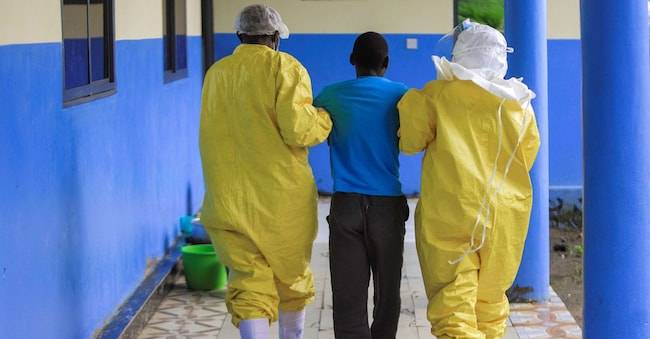
Il 21 maggio 2026, a Rwampara, nei pressi di Bunia, nella provincia di Ituri (Repubblica democratica del Congo), gli operatori sanitari congolesi accolgono un paziente all'Ospedale Generale di Rwampara, mentre le autorità intensificano gli sforzi per contenere un nuovo focolaio di Ebola causato dal ceppo Bundibugyo. REUTERS/Stringer REUTERS

2' min read

Translated by AI
Versione italiana

2' min read

Translated by AI
Versione italiana

"The epidemiological situation in the Democratic Republic of Congo (DRC) deserves the utmost attention from the international community. The raising of the national risk level by the World Health Organisation (WHO) for the Bundibugyo Ebola virus is an important signal, especially in a context of political instability, violence, health difficulties and population movements'.

This was stated byvirologist Fabrizio Pregliasco, director of the school of specialisation in hygiene and preventive medicine at the University of Milan La Statale, past president of Anpas and vice president of Samaritan International, commenting on the WHO announcement that has raised the epidemic risk level in the DRC for the Bundibugyo Ebola virus to the maximum.

Loading...

Zero risk does not exist

"It is correct to be clear with the citizens: in a globalised world there is no such thing as zero risk. The possibility of imported cases also in Europe cannot be completely excluded.

However, it is equally important to reiterate that there is no evidence today to suggest an uncontrolled epidemic spread in our country or in Europe.

 Ebola is not an airborne virus like influenza or Covid-19. Transmission occurs through close contact with infected biological fluids.

This allows, in advanced healthcare systems, much more effective control through isolation, protective devices, tracking and established infectious protocols'.

Global Solidarity and Prevention

'Italia has the scientific expertise, surveillance networks and specialised facilities to deal with any suspected cases. It is therefore necessary to maintain a high level of health vigilance without stoking unjustified fears.

The real challenge today is to concretely support the DRC and the affected areas by strengthening international cooperation, the health response on the ground and the protection of the most fragile populations. Epidemics are fought first of all in the territories where they originate, with global solidarity, prevention and investment in public health,' Pregliasco concludes.

Copyright reserved ©
Loading...

Brand connect

Loading...

Newsletter

Notizie e approfondimenti sugli avvenimenti politici, economici e finanziari.

Iscriviti