
The ECB leaves interest rates unchanged
The decision of the Governing Council of the European Central Bank

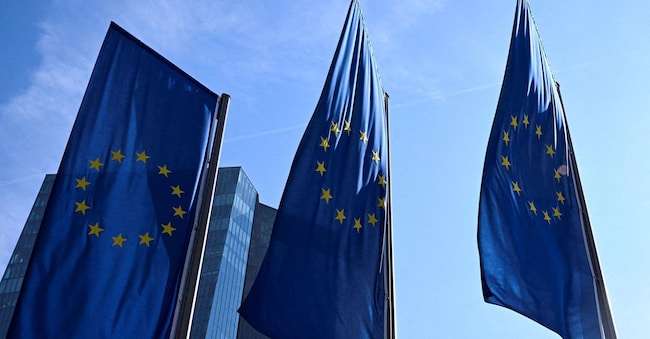
The ECB leaves interest rates unchanged. In line with expectations, the European Central Bank kept the deposit rate at 2.25 per cent, the main refinancing rate at 2.40 per cent and the marginal lending rate (for emergency loans to banks) at 2.65 per cent at its July meeting, following the quarter-point rise decided at its June meeting.
However, a rate rise in September cannot be entirely ruled out. The July decision was unanimous, although – as President Christine Lagarde explained at a press conference – some governors wondered whether another rate rise might be appropriate. A large amount of data is due to be released between now and September, she added: “We will be looking very closely at the data, our policy response, the inflation outlook and the risks.” In particular, the President confirmed, second-round effects will be examined – those that can transform a painful adjustment in relative prices (energy and related sectors versus others) into genuine, widespread inflation: “We do not see them,” she clarified, however. For September, the ECB has asked its staff – tasked with drawing up the new projections – to take a thorough account of trends in oil and gas prices.
The attacks in the Red Sea were not taken into account in the July decision, even though they appear ‘alarming’ and are ‘set to have an impact’. In the brief statement issued following the meeting, the ECB consequently emphasised that ‘the outlook for energy prices, although highly volatile, currently stands at levels close to the baseline scenario of the projections made in June by Eurosystem experts and well above those recorded before the conflict in the Middle East’. It can therefore be inferred that, in the central bank’s view, there is no need to take further action on the cost of credit, in either direction.
However, the situation remains under close scrutiny: ‘Uncertainty remains high,’ the statement continues, ‘and the inflationary impact of the energy shock has yet to become fully apparent. The Governing Council is therefore closely monitoring the intensity and duration of the shock, as well as its indirect and second-round effects.’ In any case, the Governing Council considers that it remains “well placed to deal with the uncertainty caused by the conflict”. Future decisions will continue to be taken “on a meeting-by-meeting basis” with “a data-driven approach”, as has been the case for some time now.
According to Lagarde, economic activity showed “some improvement in the second quarter, although the conflict in the Middle East” remains a drag on growth. In the services sector, too, activity “rebounded” following the recent slowdown. “In May,” she added, “the unemployment rate stood at 6.2 per cent, close to historic lows. At the same time, job vacancies have continued to fall, and both businesses and households expect the labour market to remain weaker than it was before the conflict.” Leading indicators “suggest that economic growth will remain modest in the short term, held back by the energy shock and the resulting uncertainties. However, the fundamental drivers of growth in the medium term remain intact”: consumption, investment in new technologies, and public spending on defence and infrastructure.


