
ECB: Spain to take the presidency; Paris and Berlin to play key roles
The process for a change at the top has begun, with de Cos set to become the new chief executive. Boone from France and Brunnermeier from Germany are set to join the executive committee, replacing Schnabel and Philip Lane

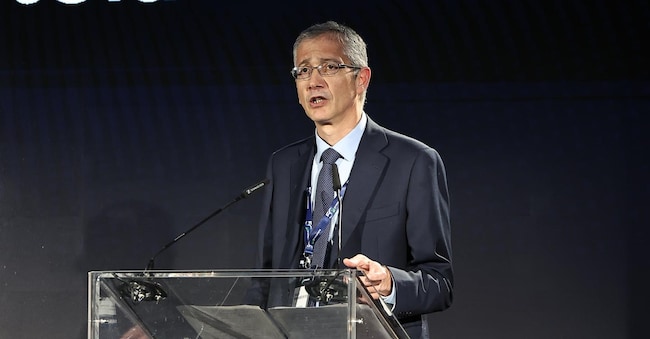
Pablo Hernández de Cos, from Spain, will take over from Christine Lagarde, who is stepping down as President early on 7 February.
Markus K. Brunnermeier, from Germany, will become the new Chief Economist when Philip Lane’s term ends on 31 May as scheduled.
Laurence Boone, a French national, will be the first to join the Executive Board on 3 January, when Isabel Schnabel steps down early.
With the appointment of the two candidates, Brunnermeier and Boone, announced by the President of the Eurogroup, the entire procedure has formally begun which will lead the European Council, by December, to install these three influential and world-renowned economists at the helm of the European Central Bank’s monetary policy.
At a time of great uncertainty, unprecedented macroeconomic and climate challenges, and momentous changes in the geopolitical and technological spheres, the only surprises at the ECB are limited to early resignations.
In terms of expertise in monetary and economic matters, international renown and reputation, personal credibility and standing, and crisis management skills, these three heavyweights represent a solid guarantee of price stability and financial stability in the euro area.
Who are the key figures in the ‘trident’?
De Cos, born in 1971, is the current Managing Director of the Bank for International Settlements (BIS) and a former Governor of the Bank of Spain, where his work was described as ‘outstanding’.
Brunnermeier, born in 1969, is a professor at Princeton and is highly regarded, particularly in academic circles: although the label of ‘hawk’ or ‘dove’ does not quite fit economists of his calibre, he has distinguished himself by recognising the resilience of the inflationary surge, the risk of an inflation-wage spiral, and the need to raise interest rates in 2021–2022.


