Currencies

ECB tightens on digital euro: Almaviva chosen among suppliers

The Eurotower selects suppliers to implement the digital euro services. Involved also Nexi, regulation by the EU Parliament still awaited

by Isabella Bufacchi

(Imagoeconomica)

3' min read

Translated by AI
Versione italiana

Key points

3' min read

Translated by AI
Versione italiana

The European Central Bank has reached another important milestone in the preparation phase of the digital euro, pending the adoption of the regulation by the Europarliament scheduled for mid-2026.

The ECB announced on 2 October the names of the suppliers selected to implement five important components of the digital euro and related services: the app and software kit, risk and fraud management, data tracking to execute payments, offline mode, and secure information exchange for tokenization and detokenization.

Loading...

The details on how to implement these five areas of functionality and services will be determined after the regulation comes into force: but in the meantime, the ECB is moving forward.

The list

.

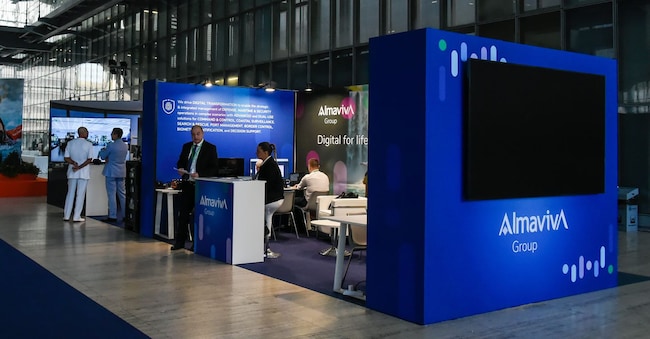
Among the frontline operational suppliers is Italy's Almaviva spa & Fabrick spa, which was awarded a framework agreement between 4 and 10 years to develop 'the digital euro app and in addition the related software development kit (SDK)'.

The kit will have to help PSPs (payment service providers or payment service providers that will exclusively manage the customer relationship) to integrate the digital euro into their Apps and online services, to ensure the functioning of the digital euro application and the provision of online digital euro payment services. Second place in this tender was won by Sapient GmbH & Tremend Software Consulting Srl.

The other contracts were awarded to one or two suppliers (the first one will take care of the service requests while the second one will enter the field if required): Sapient GmbH & Tremend Software Consulting Srl (1) equensWorldline (2) for the alias look up function: identify the details required to forward a payment request to the relevant payee via a data look-up function; Feedzai (1) Capgemini Deutschland (2) for risk and fraud management; Giesecke+Devrient (1) to develop the offline mode (the German group will collaborate with Italy's Nexi and Capgemini, while the second provider will be announced shortly); Senacor FCS (1), equensWorldline (2) to develop a secure system for exchanging payment information in token form.

The Times

.

The ECB has thus completed a process that began on 3 January 2024 with the call for applications and continued with the holding of the call for tenders.

In a statement issued on 2 October, the ECB specified that it "will only decide to issue the digital euro once the digital euro regulation has been adopted. The actual development of the components - or parts of them - will be decided at a later stage, subject to the ECB Governing Council's decision on the next stage of the project, if any."

These framework agreements therefore do not entail any payment at this stage and include guarantees to adapt the scope in line with changes in future legislation.

The preparation phase for the digital euro started on 1 November 2023 and will end on 31 October this year. As of 1 November 2025, the market expects the launch of a new phase that will precede the launch of the digital euro, pending the regulation: the next steps will see the ECB committed from the second half of 2026 for the duration of two years to implement all the features and services promised by the digital euro.

Once the technical implementation is complete, at least six months of testing and field trials - i.e. all eurozone countries - will be needed for the launch, which can currently be expected in early 2029.

The fact that the digital euro will arrive and that it will become a unique form of payment, digital cash that can be used online and offline by anyone in the euro area, was confirmed by the project's wholesale and also retail landing, presented for the first time by the ECB and the Eurosystem at the Sibos Fair held until yesterday in Frankfurt, a maxi-event attended by 12,000 members of the global financial community.

Copyright reserved ©
  • Isabella Bufacchi

    Isabella Bufacchivicecaporedattore corrispondente dalla Germania

    Luogo: Francoforte, Germania

    Lingue parlate: inglese, francese, tedesco, spagnolo

    Argomenti: mercato dei capitali, ECB watcher, fixed income e debito, strumenti derivati, Germania

    Premi: Premio Ischia Internazionale di Giornalismo per l’analisi economica, Premio Q8 per giovani giornalisti economici

Loading...

Brand connect

Loading...

Newsletter

Notizie e approfondimenti sugli avvenimenti politici, economici e finanziari.

Iscriviti