
ECB’s Lagarde: ‘We need leaders who are prepared to fight for Europe’
“Someone has to take responsibility for making decisions in the face of uncertainty,” according to the President of the European Central Bank

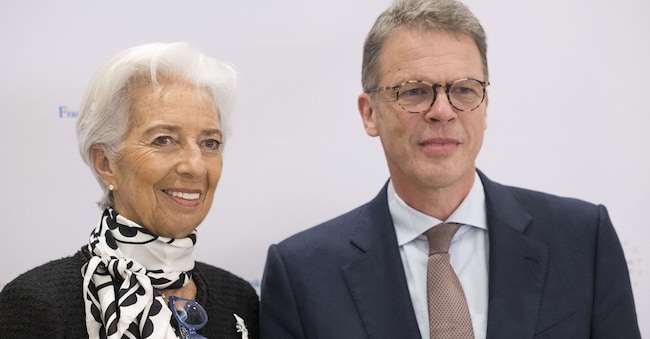
“We should do everything we can to make it easier to act promptly, by strengthening action at European level and devising policies capable of delivering positive results whatever the future scenario may be. But we will also need leaders who believe in Europe and are prepared to fight for it.” This was stated by the President of the ECB, Christine Lagarde, in her keynote speech, entitled ‘Acting in Time’, at the 36th Frankfurt European Banking Congress.
“However carefully we may weigh up our choices, there is always a degree of uncertainty, and someone must take responsibility for making the decision,” he added. “The most difficult judgement is recognising when waiting has become riskier than taking action, even before the evidence is irrefutable. At that point, leaders must find the courage to put forward the case for intervention, before the majority is ready to listen to it.” ‘And those who act in advance must be prepared not to receive any credit,’ he remarked, quoting an observation by Henry Kissinger: ‘It is in the nature of successful policies that posterity forgets how easily things might have turned out differently.’
According to Lagarde, in order to strengthen Europe’s capacity to act in a timely manner, it is first and foremost necessary to strengthen the institutions capable of mounting a unified response in areas where ‘we agree that a challenge requires a European solution’, so as to alleviate the trade-offs – including political ones – associated with certain decisions. Secondly, she explained, ‘we should design our response in such a way that it can bring benefits even if the worst-case scenario never materialises’, citing as examples the digital euro, which puts Europe in a better position even if the Old Continent is never cut off from international circuits, or defence spending, which, thanks to investment in research and development, can support the entire economy.

