Sustainable Landscapes

Eccentric houses as living organisms: organic architecture is back in vogue

Tilting and curving walls, branching structures, roofs resembling waves and animal coats, sculpture floors. In an age of climatic catastrophes, a constructive fusion with nature.

by Edwin Heathcote

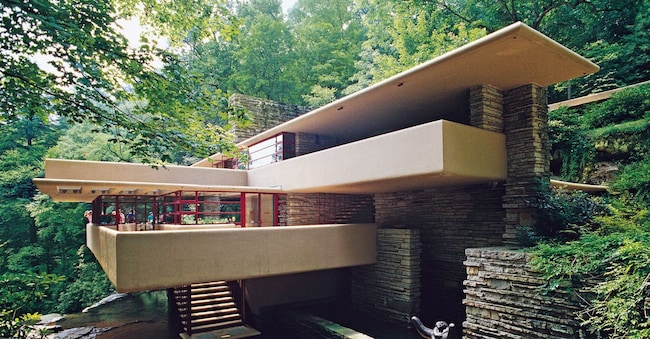
La Casa sulla cascata progettata da Frank Lloyd Wright a Pittsburgh in Pennsylvania, 1935. © NPL – DeA Picture Library/Bridgeman Images

6' min read

Translated by AI
Versione italiana

6' min read

Translated by AI
Versione italiana

There has always been a different Modernism. Not the one of white walls, minimalist and austere, but an organic, warm, eccentric and bizarre architecture, which shows itself as a voice out of the chorus, a playful alter ego.

The Modernism that everyone knows - the Bauhaus, Brutalism, the International Style - emerged towards the end of the First World War. But the same can be said for organic architecture, a parallel Modernism developed from the Expressionism of the time, rather than from the mechanistic obsessions of the more conventional moderns. Its reference models are trees and landscapes, caves and forests rather than machines. Even today, organic architecture appears futuristic and, despite being overshadowed by its more serious cousin, has never disappeared. The expression organic architecture was coined by Frank Lloyd Wright who claimed to be its father. Yet it has always existed, and in even wilder forms than those ventured by Wright. The Bavinger House, now demolished, designed in the 1950s by architect Bruce Goff in Norman, Oklahoma, USA, was a chaotic spiral building, with a twisted roof supported by cables pulled from a tree but extroverted, cuckoo-pole-like, with walls made of rough stone. Nothing compared to what was inside: a landscape of mushrooms suspended upside down above a pool and a floor that looked like the result of an earthquake. Its absurd demolition in 2016 has led to a reappraisal of organic buildings, offbeat, magnetic and crazy architecture.
Loading...

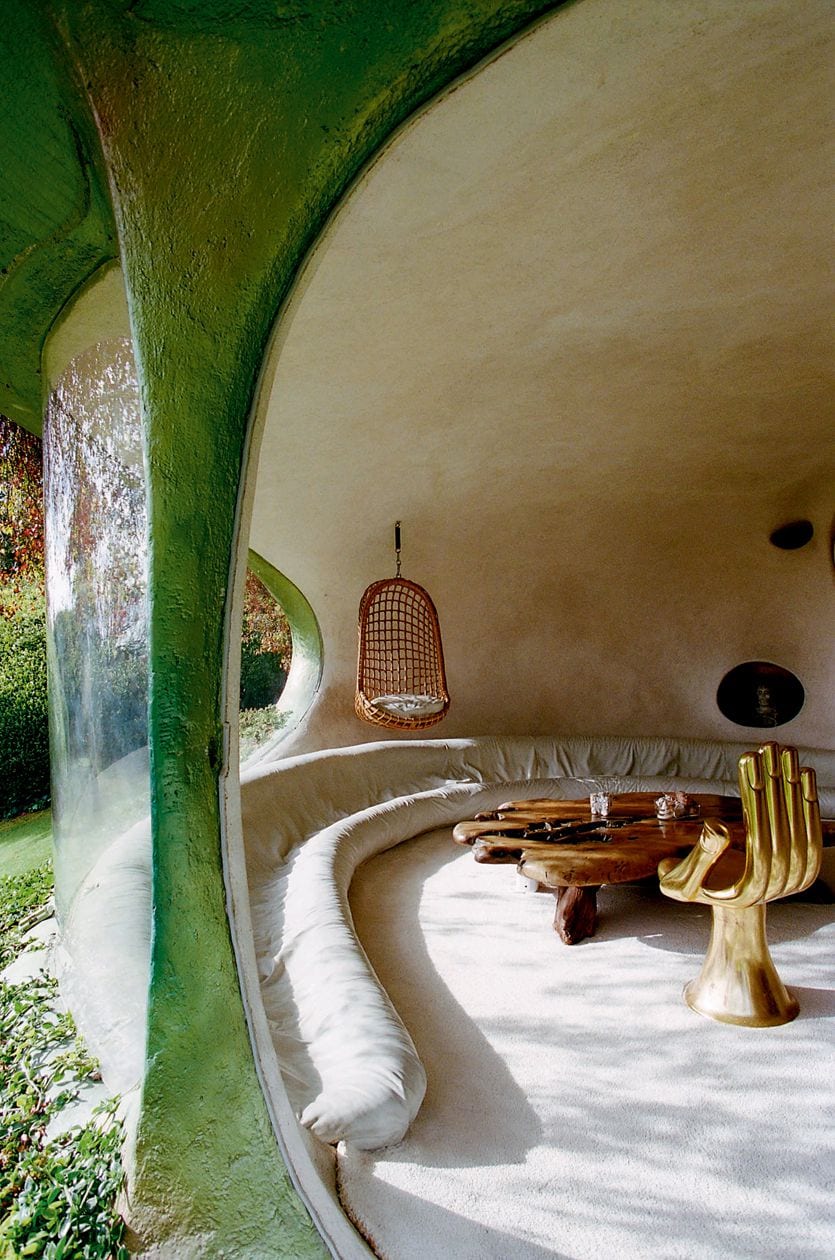
Casa Orgánica di Javier Senosiain, 1984, a Città del Messico. © Anna Dave

The main figures of this movement constitute a heterogeneous group. There was, for example, Rudolf Steiner, born in 1861, Austrian esotericist, occultist and mystic, founder of anthroposophy. He is known for almost everything he designed and conceived - in particular the Waldorf and Steinerian pedagogy he initiated and even the Weleda cosmetics brand - except for his architecture. Yet a visit to the Goetheanum, just a few tram stops from Basel, is a revelation. This huge proto-Brutalist concrete monster expresses the organicist aversion to right angles: a building that looks like it was created with a clay mould, where the capital of each column twists and turns into an unusual plan. Steiner was especially concerned that organic architecture should give the impression of having grown and developed like a plant from its seed. It does not seem possible that this visionary structure was conceived a century ago - its predecessor, a wooden dome, was just as wonderful, but was destroyed by fire in 1922.
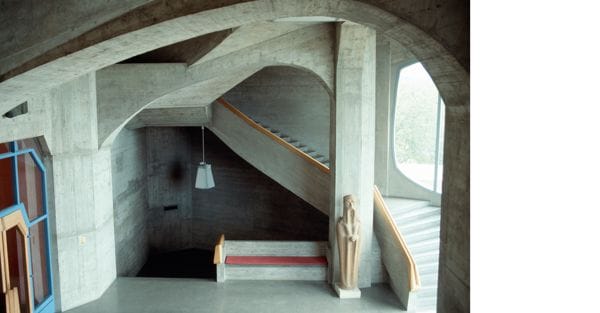
L’interno del Goetheanum, vicino a Basilea, progettato da Rudolf Steiner. © Bildarchiv Monheim GmbH/Alamy Stock Photo

Links with the world of Gaudí can be discerned, buildings like sand castles with stalagmite-like spires and fairy-tale fantasies. At the same time in Germany, however, Erich Mendelsohn was designing the Einstein Tower, a streamlined expressionist observatory, a stationary building yet full of movement, expressing the way the physicist's ideas distorted the then customary notions of space and time; and other architects, including Bruno Taut, Hugo Häring and Hans Poelzig, were constructing a response to the restrictions of Bauhaus Modernism from a certain fluid freedom.
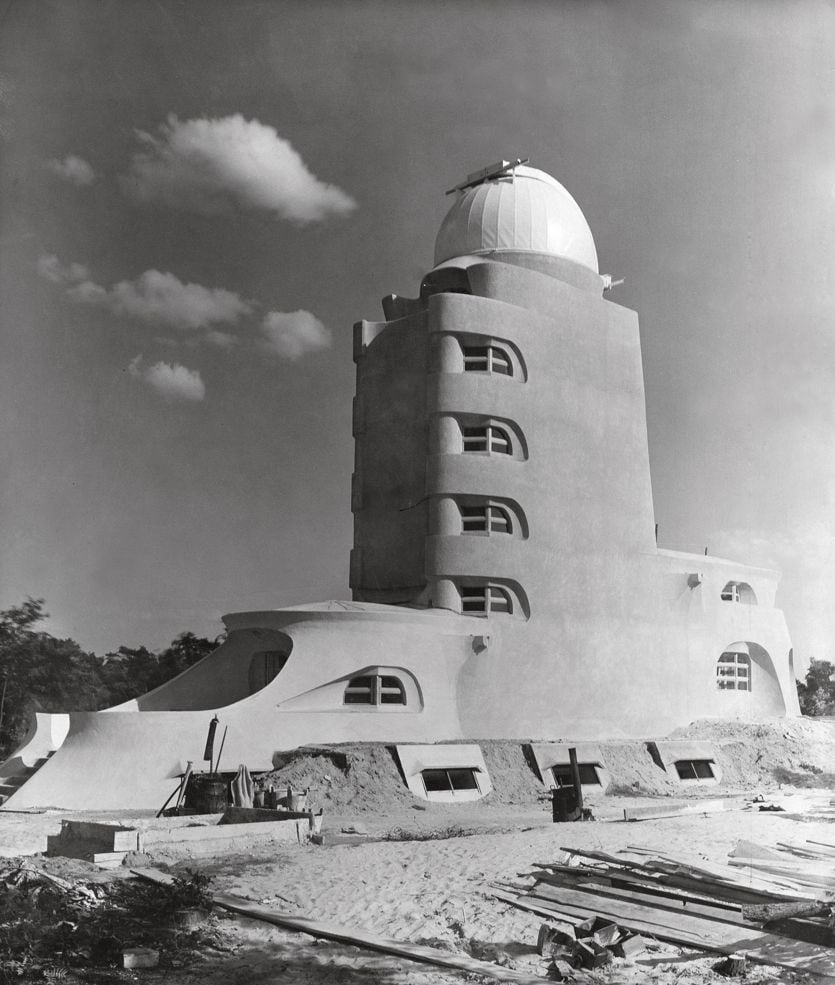
La Torre Einstein a Potsdam, progettata da Erich Mendelsohn . ©Getty Images

Organic architecture really seems to flourish in moments of existential crisis: during the Weimar Republic years and then during the Cold War (and perhaps now again, in the era of the climate crisis). The fear of nuclear annihilation probably drove a generation to look underground, to houses that resembled bunkers or elementary caves that could offer protection. Mexican architect Juan O'Gorman abandoned conventional Modernism in favour of organic architecture in his Casa O'Gorman (1948-1954), a natural lava cave in Mexico City's El Pedregal district, another lost wonder.
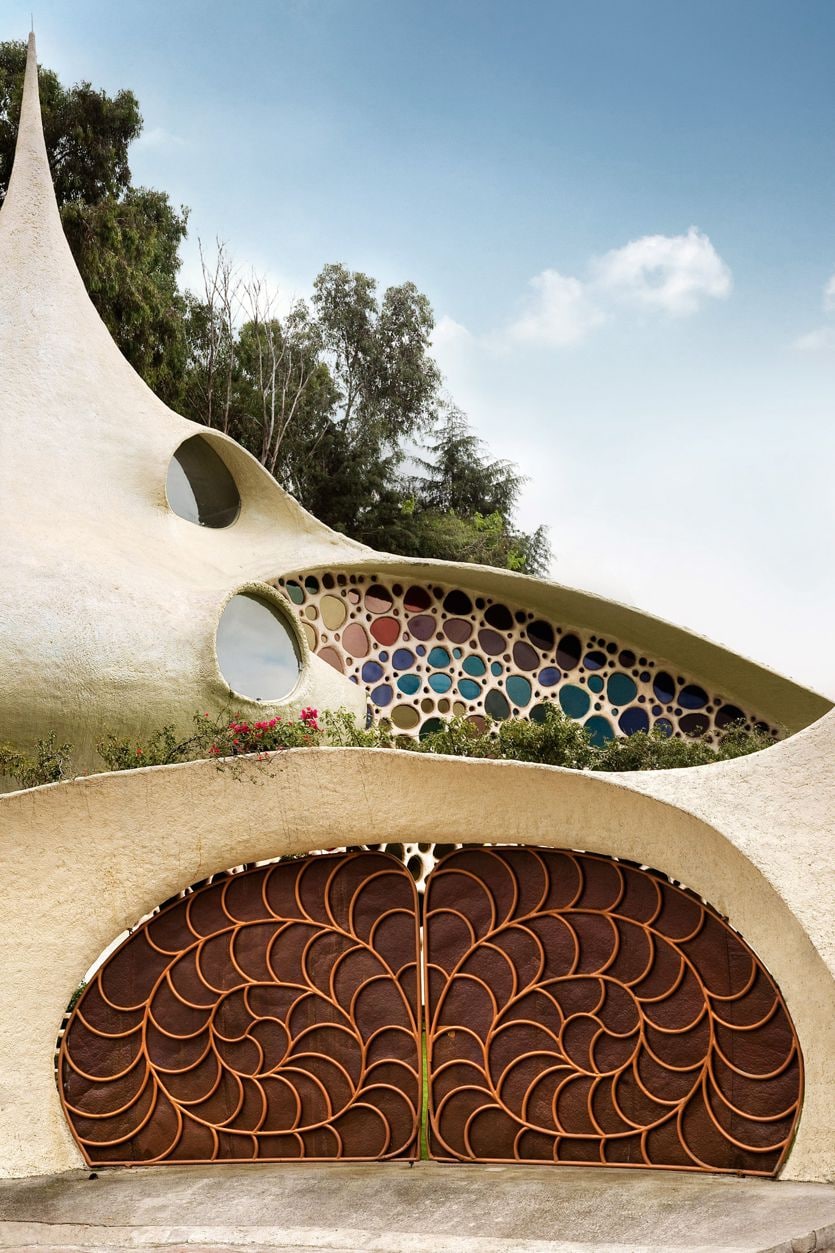
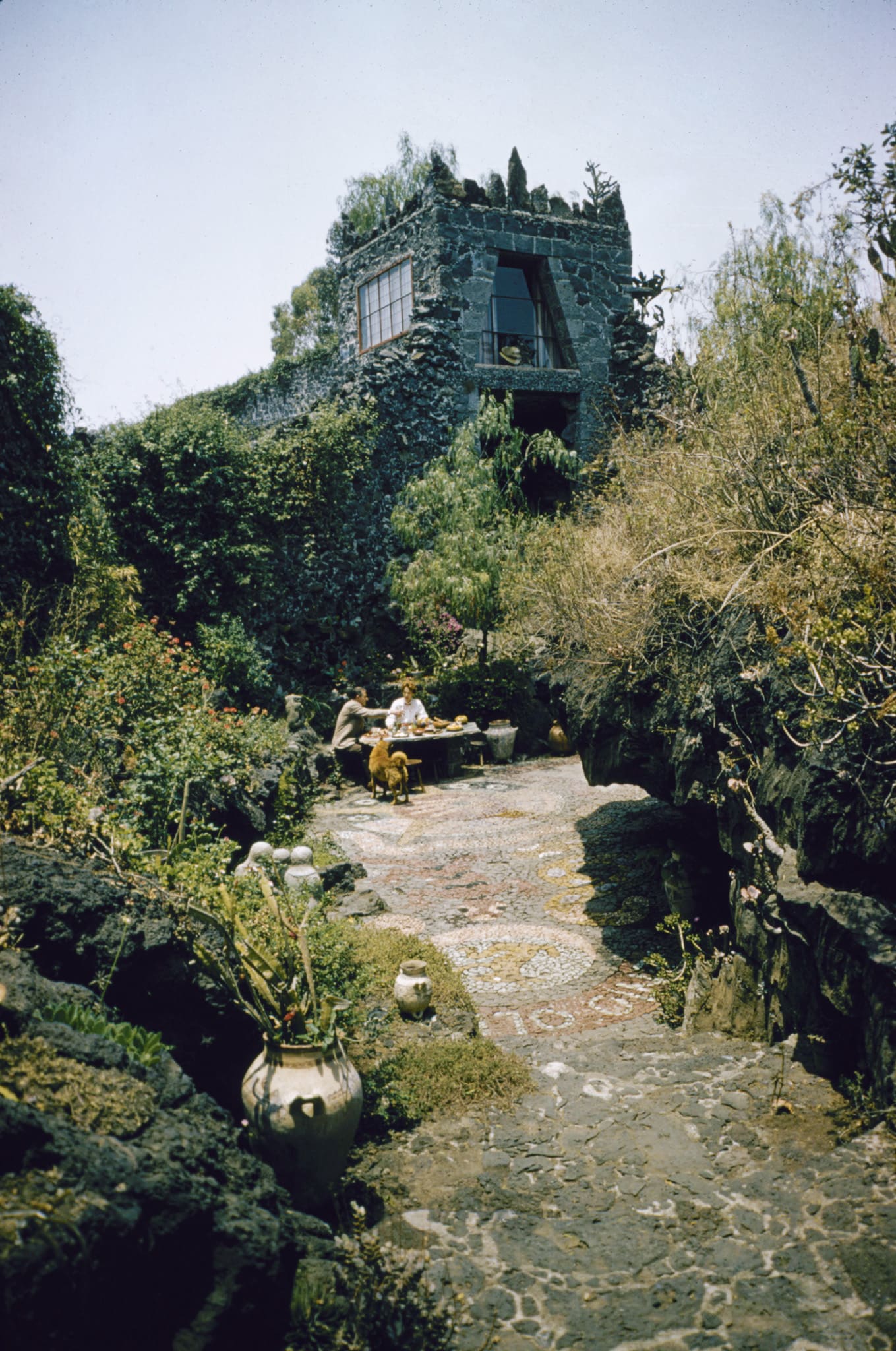
La casa Nautilus a Naucalpan, Messico, progettata da Javier Senosia ©Shutterstock

His fellow countryman Javier Senosiain has created an enduring work of biomorphic houses in psychedelic colours that seems to be an expression of lysergic thoughts and suggestions from 1960s sci-fi films with a disorienting echo. Interiors develop and wrap around, so much so that floors become walls, then turn into tables, shelves and shelves, obviating the need to insert any conventional furniture (difficult in any case to place in an environment without straight walls), and houses nestle in lush gardens and alien landscapes. Senosiain's Nautilus house, also by Senosiain, built in Naucalpan in 2007, is a glimpse into the everyday life of a hermit crab - with multi-coloured glass windows to psychedelic effect - with an earthquake-proof design. While in his earlier Casa Orgánica (1984) in Mexico City, an experiment in bio-architecture, one feels as if trapped inside a giant ear. Eccentric, but extraordinarily beautiful.

L’architetto Juan O’Gorman e sua moglie a Casa O’Gorman in Messico. ©Shutterstock

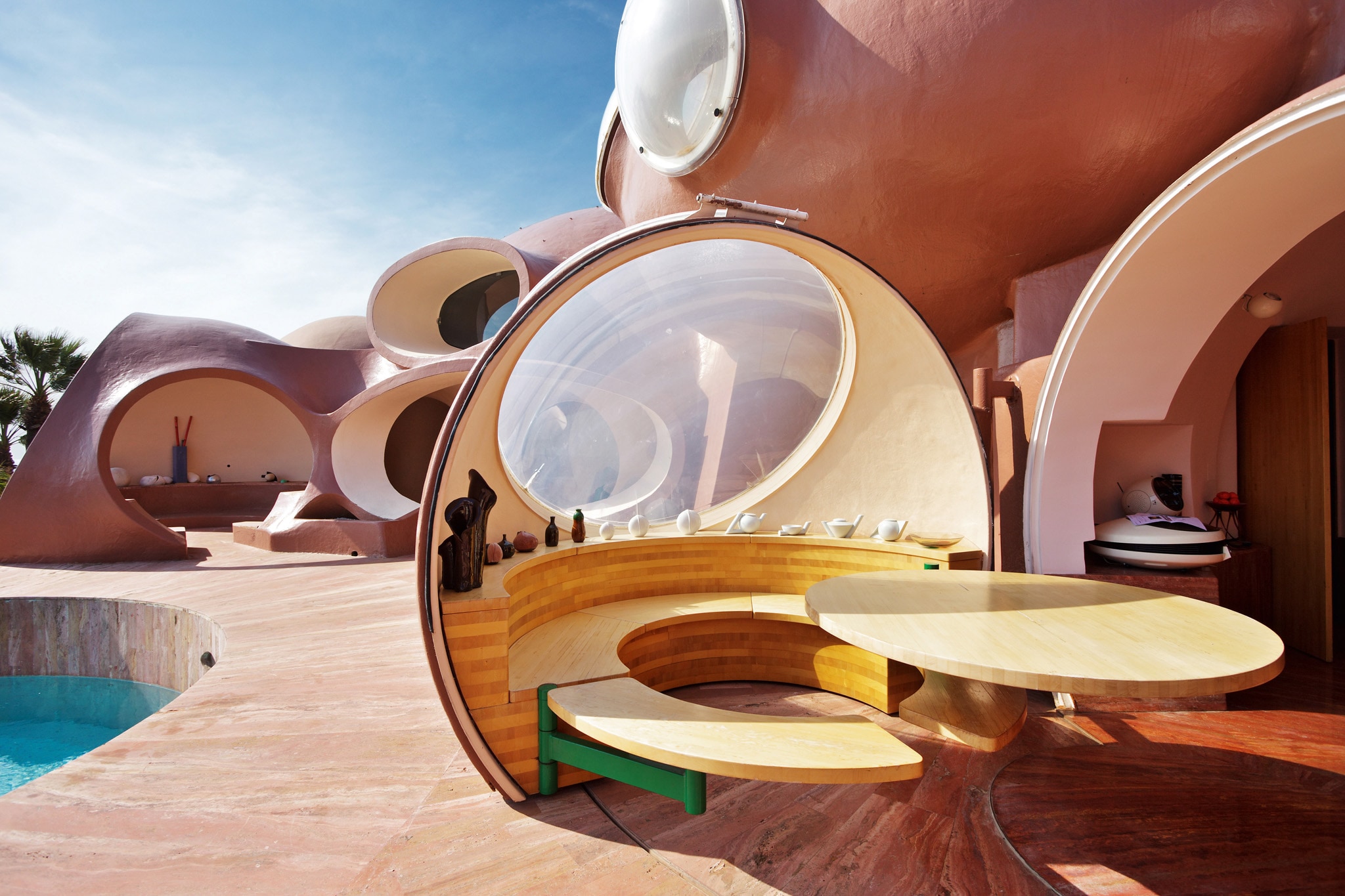
Hungarian architect Antti Lovag sculpted similar alien forms as early as the 1960s, the most famous being the residence he designed for Pierre Bernard, later bought by Pierre Cardin. This is the Palais Bulles, a sculpture house with bubble-shaped modules near Cannes, reminiscent of the Primitivism of the desert in Star Wars and a dreamscape of bizarre shapes merged into something reminiscent of sea creatures, UFOs or fantastic coral reefs, with, of course, a 500-seat auditorium like a Greek theatre with the Mediterranean behind it.

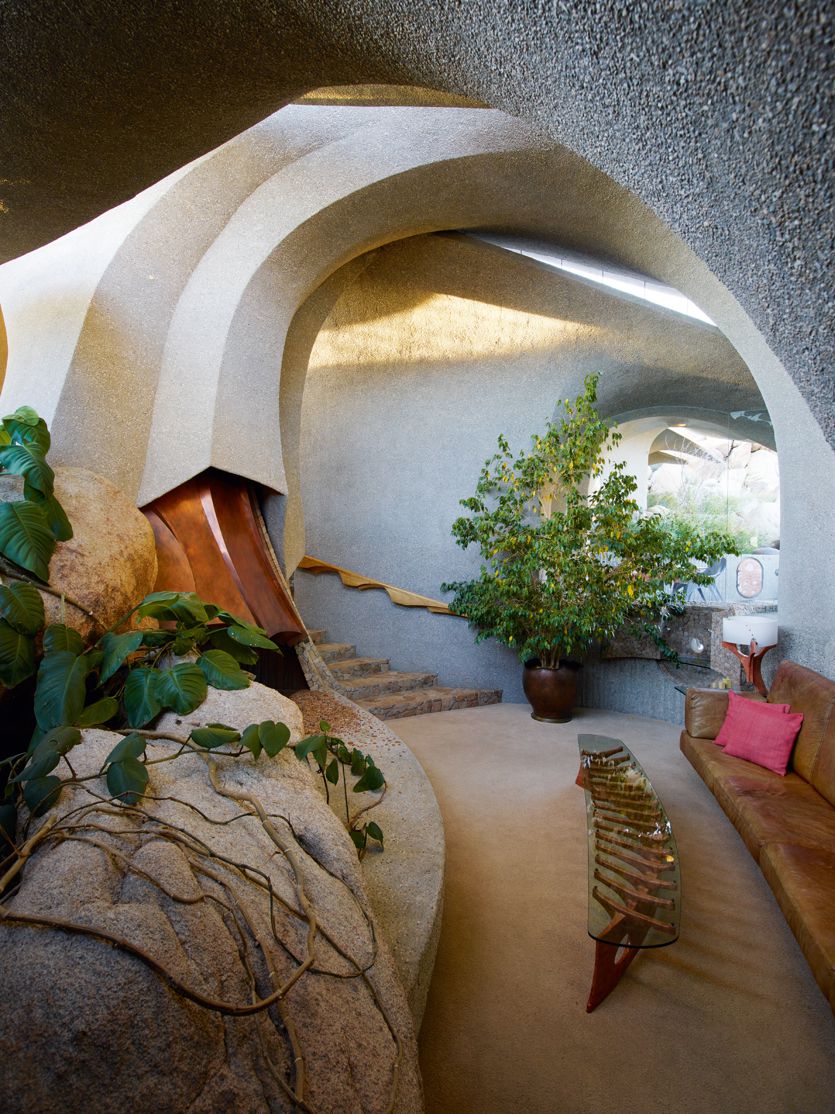
La Kellogg Doolittle House progettata da Ken Kellogg nel Joshua Tree National Park, California. © Richard Powers/Living Inside

Another Hungarian, Imre Makovecz, developed a branch of organic architecture derived from Steiner's philosophical ideas on nature and metamorphosis, with cues from Frank Lloyd Wright and a heavy dose of Hungarian folk carpentry. Makovecz deepened his style by working in the forests near Budapest in the 1980s, where he had in fact been exiled when he became inconvenienced by power. He used wood from the forests to carve a new language, working with the elderly and marginalised craftsmen of Transylvania and using their skills to create something deliberately different from the flat Soviet-style houses that had become the norm in Eastern Bloc architecture. Starting with buildings for campsites and social centres, he worked his way up to create extraordinary churches charged with arcane sacredness and a funeral chapel (at the Farkasrét in Budapest, 1975) reminiscent of the interior of Jonah's whale, with the coffin placed where the heart would be: a true metaphor for resurrection. Of all these architects, Makovecz was one of the greatest representatives of Organicism, as well as of its possible pitfalls, from political drift to its proximity to kitsch. He also inspired a whole school of architects in the country, a new generation of designers working with wood to create distinctly expressionist buildings: he created a strong sense of place, purpose and identity for forgotten villages.

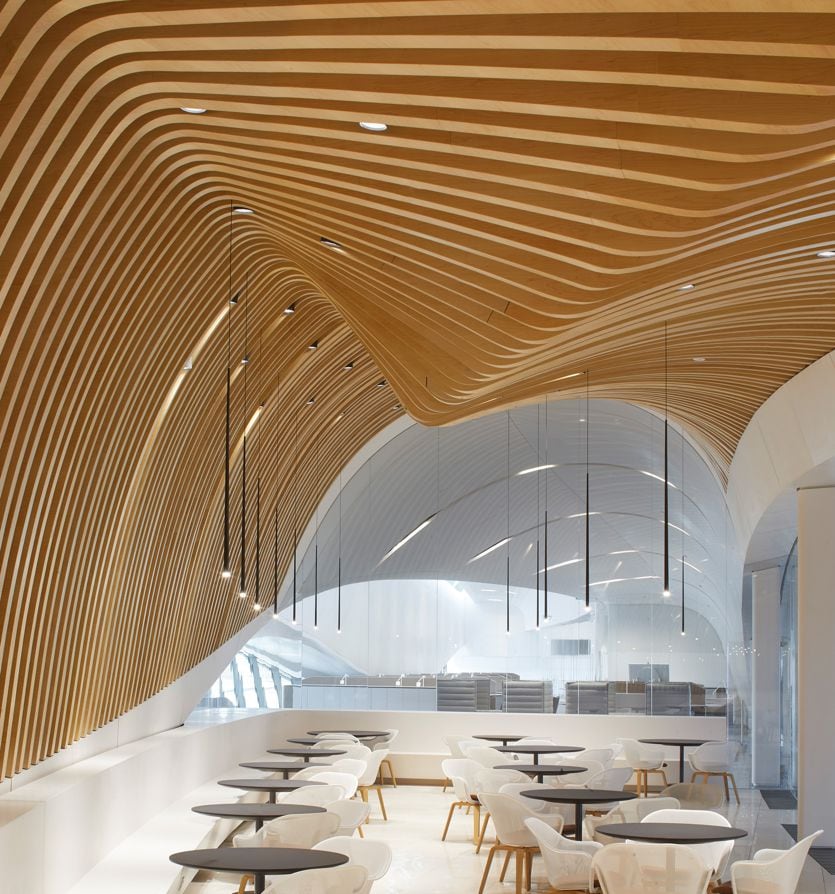
La sede parametrica del gruppo BEEAH negli Emirati Arabi Uniti, ad opera di Zaha Hadid Architects. © Hufton+Crow

Wright may not have been right in thinking it was all his own doing, but it was through his disciples that the movement reached its national apogee. Perhaps it accords with that typical American impulse to stand out, that free prairie spirit that maintains a direct connection with nature. In addition to Bruce Goff there was Herb Greene, with his magical Prairie Chicken House in Norman, Oklahoma (1961), where the wooden shingles look like the ruffled feathers of a monstrous bird about to take flight, or a shaggy buffalo standing alone on the plains. Or Arthur Dyson's undulating Hobbit-style Creek House, without forgetting James Hubbell's work: the Sea Ranch Chapel in California is an exuberant wave with a foam crest made of wooden tiles, stones and patinated copper by an artist architect who conceived his buildings as total works of art for all senses.

La casa di Pierre Cardin, il Palais Bulles, progettato da Antti Lovag. © Camera Press/Laif

Wright's followers also continued to experiment with the organic in design, branching out in all directions - such as John Lautner, whose super contemporary 1950s Modernism with organic hues became a favourite among Hollywood villain hideouts. And Ken Kellogg, whose Kellogg Doolittle House, on the edge of California's Joshua Tree National Park, remains a home for the ages. Moving away from the warmth of wood, this is a much tougher dwelling - it looks like an armadillo squashed into the side of a hill. Inside, the walls tilt and curve, embrace and release: a kind of lightened Brutalism, retaining formal energy but not heaviness. More akin to Jørn Utzon's Sydney Opera House in its segmented deconstruction, it also incorporates topography, with rocks and boulders peeking into interior rooms to create textural accents. Like many organic houses, it seems to emerge from the landscape, not impose itself on it.

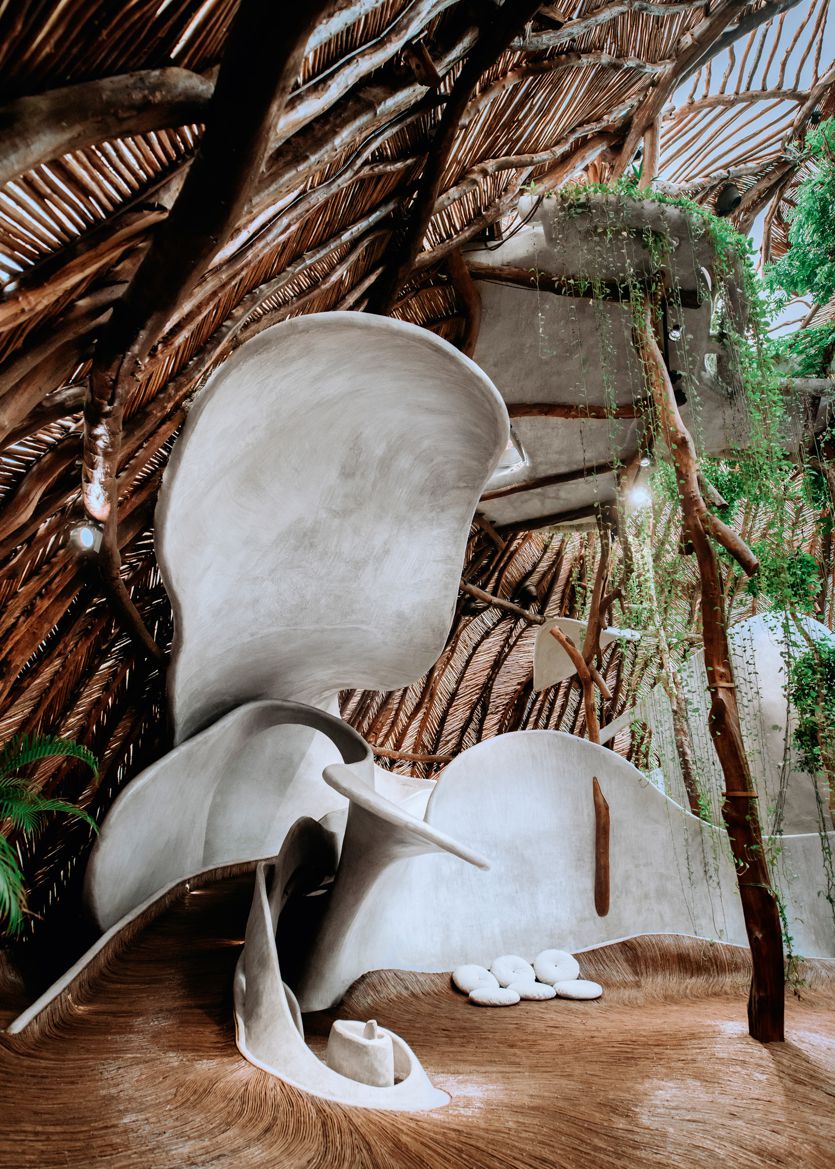
SFER IK Museion a Francisco Uh May, Messico, ideato da Jorge Eduardo Neira Sterkel. © SFER IK Museum and Roth Architecture

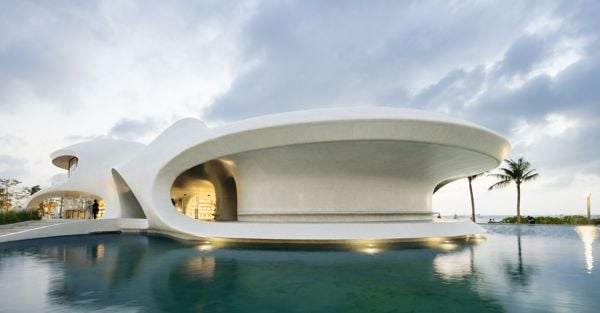
The movement continued with the parametric design of Zaha Hadid Architects and other temporary innovators such as MAD Architects. "Organic buildings have the strength and lightness of a spider's web," Wright wrote. "Characterised by light, generated by native character in relation to the environment, in union with the ground."

Perhaps the current era of climate catastrophes has prompted us to look again at buildings that blend in with the Earth, that recreate forests and waves, that accept the fundamental forces of nature instead of opposing them. These exceptional, expressive and eccentric structures show how one should work with the Earth and not against it.

The Cloudscape di Haikou, in Cina, a opera di MAD Architects. © ArchExist

STRENGTH AND LIGHTNESS Arthur Dyson, arthurdyson.com. Herb Greene, herbgreene.org. James Hubbell, jameshubbell.org; Sea Ranch Chapel, thesearanchchchapel.org. Ken Kellogg, wkkf.org; Kellogg Doolittle House kelloggdoolittlehouse.com. John Lautner, johnlautner.org. Antti Lovag, Palais Bulles, palaisbulles.com. MAD Architects, i-mad.com. Imre Makovecz, makovecz.hu. Erich Mendelsohn, Einstein Tower, aip.de. Juan O'Gorman, fundacionogorman.com. Javier Senosiain, @javiersenosiaina; Casa Orgánica, casaorganica.org. Rudolf Steiner, Goetheanum, goetheanum.ch. Jorge Eduardo Neira Sterkel, SFER IK Museion, sferik.art. Frank Lloyd Wright, franklloydwright.org; House on the Waterfall, fallingwater.org. Zaha Hadid Architects, zaha-hadid.com.

Copyright reserved ©
Loading...
Loading...

Newsletter

Notizie e approfondimenti sugli avvenimenti politici, economici e finanziari.

Iscriviti