
ECHR: limited protection for migrants if migration flows are exploited
If the aim is to destabilise a member state of the Council of Europe, that state may refuse entry to persons who have entered its territory, except for those at risk

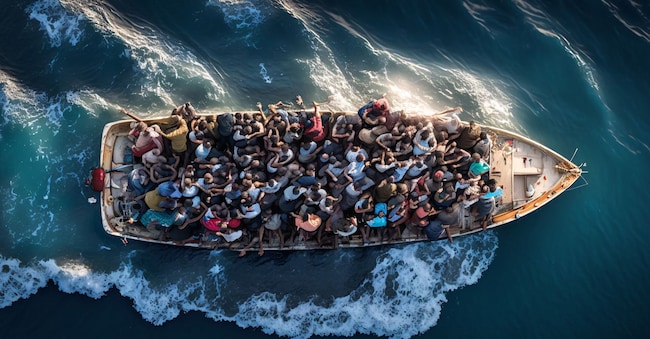
Key points
In cases where it is evident that a third country is exploiting migration flows to destabilise a member state of the Council of Europe, the latter may refuse entry to all persons who have entered its territory. The only obligation that remains is to determine whether any of the migrants are particularly at risk of ill-treatment if returned. This was established by the European Court of Human Rights in three judgments on three separate appeals against Poland, Latvia and Lithuania, relating to attempts by migrants to enter those three states irregularly during the two-year period 2021–2022. These events took place against a backdrop described as “the exploitation of migration” by the Belarusian authorities, which facilitated or forced the movement of migrants towards the borders of European states in order to destabilise them “in retaliation for the sanctions” imposed against Alexander Lukashenko’s regime.
In the case examined by the ECHR, groups of Afghan, Iraqi Kurdish and Cuban migrants had lodged complaints, accusing the states that had turned them away of violating their fundamental rights by sending them back to Belarus without allowing them to apply for asylum.
The exploitation of migration and border control
The Court confirmed the right of States to control their own borders, including by closing them, but strongly reaffirmed the obligation to guarantee the fundamental protection provided for in Article 3 of the European Convention on Human Rights against inhuman and degrading treatment. This obligation must be respected above all in relation to two categories of vulnerable people: those with obvious personal vulnerabilities, such as children, the elderly, the sick or people with disabilities; and those who face a real and immediate risk of serious threats to their lives or inhuman treatment if returned to the country that exploits migration.
Vulnerable migrants
On the basis of this distinction, the Court found violations of Article 3 in relation to certain vulnerable migrants, for example in the case of an asylum seeker subject to an active precautionary measure in Poland, or of minors and their families returned to Belarus from Latvia without adequate protection. Conversely, in the case of adult migrants without specific vulnerabilities, the Court ruled that return or refoulement do not in themselves constitute violations. The Court also emphasised that in contexts of exploitation such as these, it is irrelevant to assess whether the country of return provides an adequate asylum procedure, because the mechanism itself is designed to exploit people rather than to guarantee protection. With regard to deprivation of liberty, the Court recognised that States must be able to adopt restrictive measures against foreign nationals who have entered the country irregularly, particularly if their unrestricted stay would jeopardise security and the Schengen system, but it condemned the treatment of minors deprived of their liberty without adequate safeguards.
Compensation and repercussions
Poland, Latvia and Lithuania have been ordered to compensate migrants for non-pecuniary damage and legal costs, with substantial sums varying from case to case. In particular, the Court highlighted the conditions of inadequate detention for minors and the failure to provide timely information on the reasons for detention.

