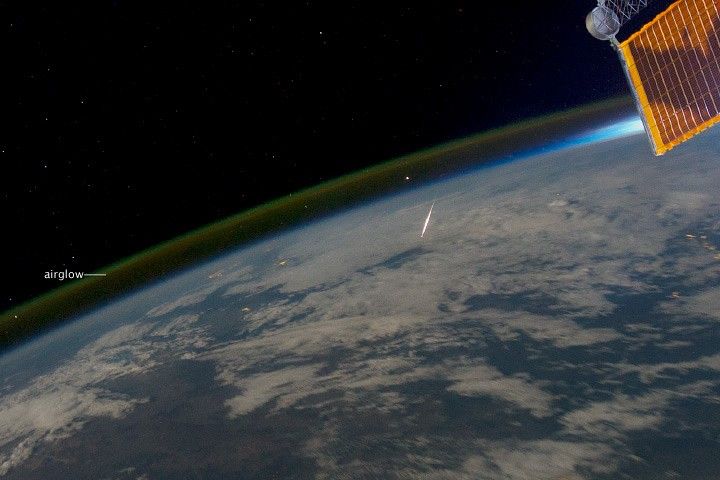
Eclipses and shooting stars: August’s celestial spectacle
The Perseids are this month’s highlight: tiny fragments of a comet which become visible as they pass through the Earth’s atmosphere

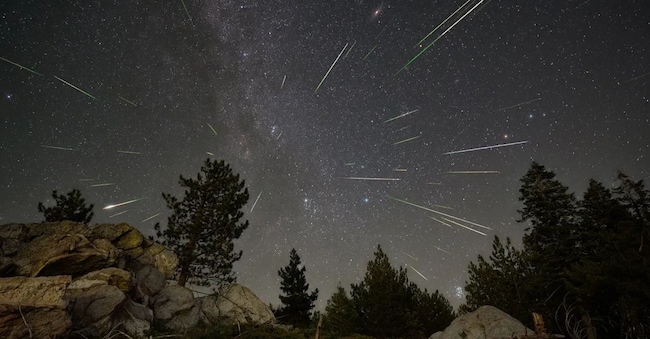
This August promises to be a month full of spectacular celestial events: on the 12th, there will be an eclipse which, in northern Italia, will appear almost total at sunset, followed by plenty of shooting stars. This year, there is a good chance of seeing them clearly, particularly as the Moon will cause very little interference in the sky on the most favourable nights. The most famous are the Perseids, the ‘tears of St Lawrence’, which appear to come from the constellation Perseus and become more frequent as we approach the middle of the month.
You don’t need any special equipment to see them. Simply move as far away as possible from the brightest lights and choose a spot with an unobstructed view of the horizon: a beach, the mountains, the countryside – or even an urban area that isn’t too brightly lit will do.
Tradition has it that you should make a wish when you see your first shooting star. But, beyond this charming old saying, it’s worth pausing to watch them, because behind that trail of light lies a story that is far longer and more fascinating than we realise.
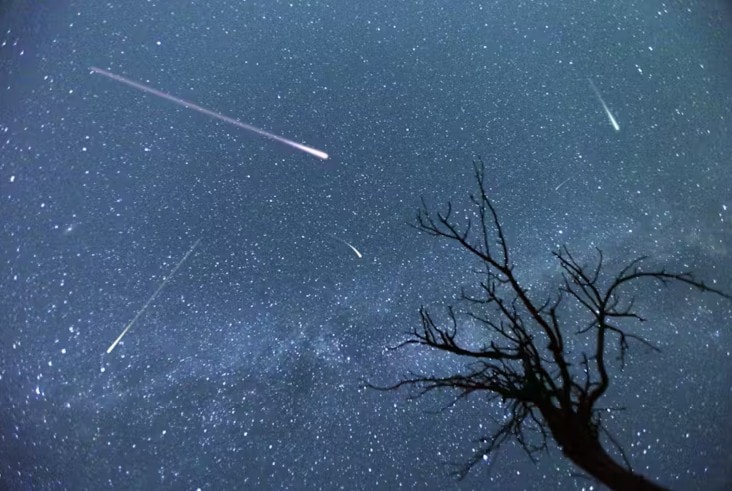
What we call shooting stars are not stars like our Sun, which is thousands and thousands of kilometres across. They are tiny fragments of matter, specks of cosmic dust, which enter the Earth’s atmosphere at extremely high speeds and, as they pass through it, heat up to produce the luminous trail that we can see with the naked eye.
In most cases, these are tiny particles, sometimes no bigger than a grain of sand or just a little larger. Yet their appearance in the night sky is spectacular, because friction with the upper layers of the atmosphere and the intense heating of the surrounding air transform that almost invisible fragment into a fleeting trail of light.