

Leone in Camerun, l’appello contro i «capricci di ricchi» e il nodo della crisi anglofona
dal nostro corrispondente Alberto Magnani

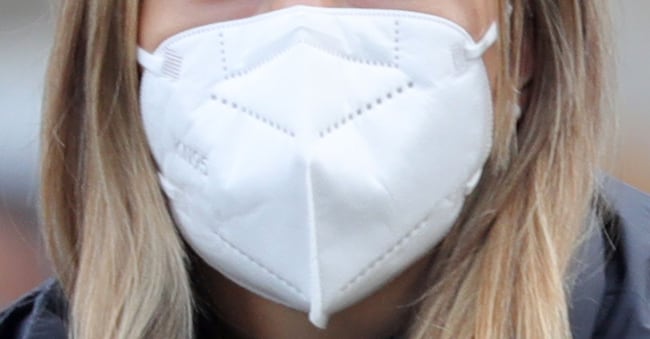
Eco-sustainable and antibacterial masks are made from agro-food waste. This is what researchers from ENEA have developed with the University of Ferrara, the company Kerline srl and the CNR, which took care of the coordination, as part of the Aris project of the Pnrr Ecosister programme;
The new masks are made of silk nanofibres using sustainable practices, which are also able to exert a specific antibacterial action. Compared to the fossil plastic filter materials currently in circulation, the membranes used for the masks 'have the double advantage of being environmentally sustainable and removing even the finest pollutants, such as PM2.5'. The masks are made with a manufacturing technique used to produce extremely thin fibres from polymeric solutions or melted materials, using a high-voltage electric field.
"In collaboration with Kerline srl, we used silkworm cocoons discarded by the textile industry to extract a protein, silk fibroin, which was then electrospun to produce an FFP2-type mask,' explains Valerio Miceli, researcher at the Agri-food Industry Innovation Laboratory and project leader. 'To give it a bactericidal function, it was enriched with polyphenols extracted from waste water from olive oil production;
Enea's work was carried out by the Agro-Food Industry Innovation Laboratory of the Brindisi Research Centre, which investigated the feasibility of applying the electrospinning technique to various polymeric materials. In addition, another objective was to add natural polyphenols extracted from olive oil wastes, which are able to exert a specific antibacterial action, to the electrospun matrices supplied by the CNR. In this way, the filtering device could reduce the spread of air-borne diseases, meeting a need that emerged during the pandemic. The researchers then verified from a microbiological point of view the overall usefulness of the solution, which, as the researcher adds, 'showed an interesting potential: the polyphenols used do not guarantee complete antimicrobial coverage, but we observed positive results on some specific bacterial populations'.
Not an achievement, but a starting point for future developments. The results of the experiment, the researchers emphasise, 'confirm how the combination of the valorisation of agro-industrial waste and the electrospinning technique can enable the development of biomaterials for functional packaging with high added value, in line with the principles of the circular economy and with potential applications not only for the food sector but also in other areas such as the biomedical sector'.

