
Ecological transition: coordination is the real reform

Today, the ecological transition in Italia represents the evolution of environmental policy from the old set of measures focused on individual issues of specific interest to a modern, systemic vision of an integrated development strategy. Economic and fiscal policy is therefore inextricably intertwined with industrial dynamics, with the availability of clean and secure energy playing a crucial role. This evolution is discussed in the book published by Carocci, *The Italian Economy and the Ecological Transition*, which highlights the barriers and bottlenecks that have, to some extent, slowed this process over the last twenty years, and which can be addressed to facilitate the transformation and acceleration of the Italian economy. The overarching message of this analysis is, in fact, a vision of the Italian system as one that is strongly committed to the green transition, but which is progressing at an uneven pace and, above all, with a coordination framework that still needs refining.
The main point highlighted by the numerous academic contributions brought together in this volume is that Italia has a good range of tools at its disposal, including the Integrated National Energy and Climate Plan (Pniec) and the National Recovery and Resilience Plan (Pnrr) itself. The problem lies in their ability to produce synergistic effects, without overlapping regulations and the inefficient use of public and private financial resources. The transition is therefore slowing down due to a lack of coordination: the economic and environmental policy framework requires, in fact, a set of coherent instruments, with clearly defined responsibilities, interoperable data and assessments of the economic, environmental and distributional impacts.
The first point concerns climate risk. Italia is one of the European countries most exposed to extreme events: between 1980 and 2023, economic losses resulting from atmospheric and climatic phenomena exceeded 133 billion euros, with just 4 per cent covered by private insurance. Floods, droughts, landslides, heatwaves and wildfires are no longer exceptional shocks, but routine sources of instability for businesses, infrastructure and public finances. It is therefore more important than ever to foster a culture of prevention and to bring about a substantial paradigm shift in the design of response strategies, moving away from post-disaster reconstruction towards integrated risk management, combining spatial planning, insurance cover and predictive data (Marin et al., 2021).
The same need is evident when it comes to protecting biodiversity. Italia boasts one of the richest natural heritages in Europe, yet 43 per cent of its flora and significant proportions of its amphibians, freshwater fish, birds and mammals are under threat. To date, conservation has relied primarily on protected areas and administrative restrictions – measures that are certainly necessary, but insufficient. The loss of natural capital reduces ecosystem services that are essential for agriculture, tourism, water quality and climate resilience. Economic instruments, nature finance and payments for ecosystem services are needed – an issue that is now also central to businesses and financial markets (Flammer et al., 2025). The valuation of natural capital remains an open debate, as economic theory has yet to establish universally recognised valuation methodologies. At the same time, Italia’s natural capital could serve as a significant economic driver if effectively integrated into long-term development strategies.
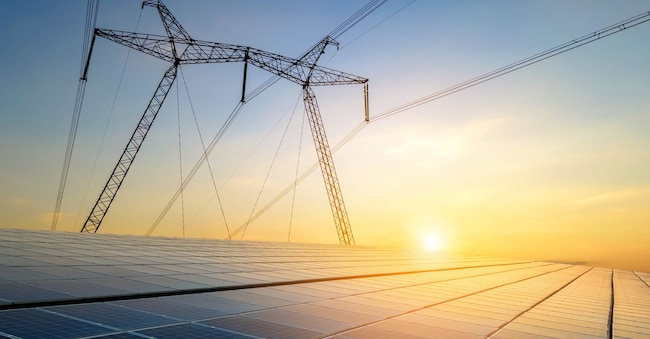
Energy and industry highlight the most ambivalent aspect of Italia’s progress. Between 2005 and 2023, energy intensity fell significantly, emissions dropped and renewable sources gained ground in electricity generation. However, dependence on imports remains high, and the growth of clean energy sources is held back by lengthy authorisation processes, grid constraints, insufficient storage capacity and regulatory fragmentation. In this regard, the tax issue is equally crucial. Environmental taxation accounts for a significant proportion of tax revenue, but remains concentrated on fuels and transport and is often geared more towards the public budget than towards correcting negative externalities. Incentives too, from the Superbonus to energy efficiency schemes, have had significant effects but have not always been progressive or effective. The aim of green public finance should therefore be to realign revenue, expenditure and objectives: credible carbon pricing determined by trends in the European Emissions Trading Scheme (ETS), the definitive overhaul of harmful subsidies, and a substantial increase in public-private partnership investment in electricity grids, water, climate adaptation and urban regeneration, circular innovation, and the reduction of production and consumption waste.

