
Ecomondo raises the bar in terms of technology and investment
From 3 to 6 November, 1,800 exhibiting brands are expected in Rimini, with a 10 per cent increase in international participation. The common thread is sustainability that generates tangible economic returns

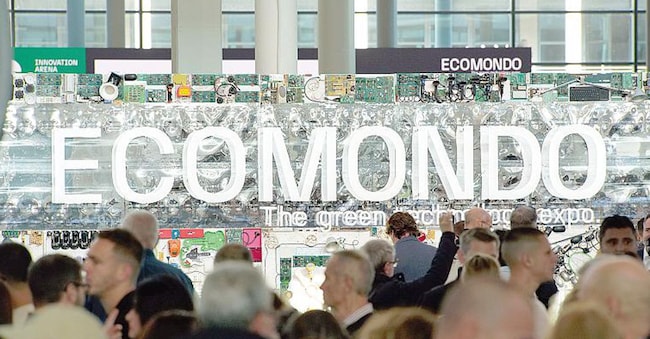
Ecomondo raises the bar: more companies, more international buyers and a challenge that goes beyond recycling – transforming sustainability into a competitive advantage for the industry. From 3 to 6 November, the Rimini Exhibition Centre will host the 29th edition of the Italian Exhibition Group’s event, featuring over 1,800 exhibiting brands, a 10 per cent increase in international participation compared to 2025, and more than a thousand hosted buyers expected from around the world. Across the 30 halls, covering approximately 169,000 square metres, technology, research and investment will come together. The aim is to build on the success of the last edition, which attracted 108,000 visitors from 122 countries, and to expand its international reach. For the first time, there will also be a guest country: Mexico. But the main innovation lies in the industrial message. “Sustainability must now generate more tangible economic returns: security of supply and greater competitiveness,” observes Fabio Fava, chair of Ecomondo’s International Technical and Scientific Committee. “It is no longer enough to show that a company is greener: it must produce, export and compete more effectively.”
The argument begins with the challenges faced by those operating in the circular economy: high energy costs for treatment plants and international competition, starting with low-cost plastics imported from China. Yet Italia still holds a significant record. According to figures cited by Fava, in 2024 it reintroduced 21.6 per cent of the materials consumed back into the economy, compared with an EU average of 12.2 per cent. ‘We are among the leaders in Europe, but we must move from material recovery to the production of higher-value products,’ warns the professor. In 2023, in fact, Italian investment in the circular economy accounted for 0.5 per cent of GDP, compared with 0.8 per cent in Europe. And the sector generated added value equivalent to 1.6 per cent of GDP, below the EU average of 1.8 per cent. Furthermore, the country imports 46 per cent of the resources it uses: recovering strategic metals from electronic waste also means reducing dependence on foreign sources.
This is the key theme of the more than 70 events organised by the scientific committee, alongside those organised by partners and exhibitors. The focus is on critical raw materials recoverable from batteries and WEEE, plastics recycling, circular construction and eco-design, with a view to designing products that are more durable, repairable and easy to reuse. Artificial intelligence, sensor technology and traceability will cut across the various sectors. Fava also refers to ‘industrial symbiosis’: one company’s waste becoming raw material for another. The spotlight is also on the future with the European Circular Economy Act, which is the focus of two discussions with Conai and Utilitalia. The aim is to foster an integrated market for secondary raw materials, with uniform rules governing their classification and marketing. “If there is greater certainty regarding demand, businesses are more willing to invest,” explains Fava, whilst also highlighting the need to certify the quality of recycled materials.
Among the new features of the exhibition, the pavilion dedicated to textiles stands out, with sessions on eco-design, repair and digital product passports. There is a strong focus on water, ranging from reducing leaks in distribution networks to industrial reuse and coastal resilience; and also on the bioeconomy, biogas, soil health and satellite monitoring. International cooperation is also a key focus: the sixth edition of the Africa Green Growth Forum, linked to the Mattei Plan, will bring together institutions and businesses to discuss water and agriculture. “The delegations not only take part in the events, but also establish contacts and forge partnerships with our industrial organisations,” says the chair of the exhibition’s technical and scientific committee. Rounding off the programme are the Innovation District, dedicated to start-ups and investors, and the Green Economy Summit on 3 and 4 November. Rimini is thus striving to be not merely a green showcase, but a place where the transition finds markets and partnerships.

