High-potential SMEs

Egm X-rayed: CleanBnb (short-term rentals) reached 3,111 properties under management

This is the figure as at 30 June 2025, up 10% compared to the same period in 2024. Last year, it posted an ebitda growth of 36%.

by Valeria Novellini

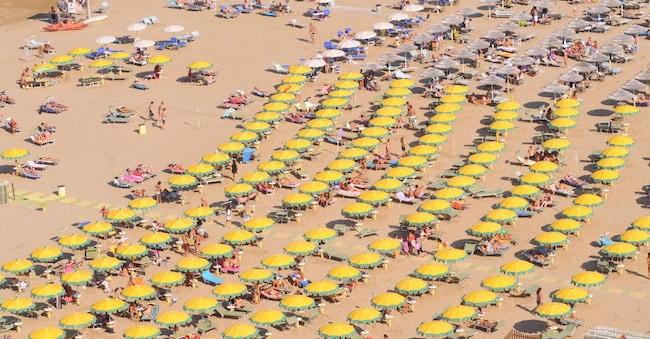
 Emilia Romagna, Rimini

5' min read

5' min read

Doubling the net profit for a small company may not be news. But in the case of CleanBnB the news is there, since the company operates in the market for short-term rentals and, also due to Covid restrictions, had only managed to achieve its first positive net result since listing in 2023.

The numbers

.

2024 was brilliant and CleanBnB is set to replicate in 2025. Last year, revenues rose by 25% to 18.6 million, ebitda by 36% to 1.01 million, ebit by 87.2% to EUR 595,500 and, indeed, net profit more than doubled from EUR 266,000 to EUR 536,300. This was after depreciation and amortisation fell slightly from €425,500 to €418,400, the positive balance of financial management rose from €1,800 to €18,700, and the tax rate dropped from 16.8% to 12.7% (thus to very low levels).

Loading...

CleanBnB had net cash and cash equivalents of €4.4 million at 31 December 2024, compared with €3.1 million at the end of 2023, thanks to operating cash flow and the repayment of some short-term financing lines. It should be recalled that for the company, given the peculiar seasonality of the reference sector, the greater number of tourist stays managed in the summer months naturally generates a greater volume of receipts received from guests, and therefore a higher liquidity referring to the portion of these receipts not yet paid to the owners of the properties managed, generally according to the "Full" mode of complete and exclusive management. Subsequently, after the peak of receipts, liquidity contracts in the low season months (between December and February). In any case, CleanBnB prudently did not distribute any dividends to shareholders even for the financial years 2023 and 2024.

Increases in properties under management, stays and duration

Obviously, the leap in revenues (and the more than proportional one in profit margins) was achieved thanks to the growth of the property portfolio under management, the number of stays and the occupancy rates and average length of stays. At the end of 2024, CleanBnB managed 2,943 properties in over 100 Italian locations (2,422 properties as of 31/12/2023), with 125,263 stays in the year (99,426 in 2023). This resulted in a Gross Booking (takings from guests net of Ota fees, i.e. commissions charged by online travel agencies such as Expedia or Booking.com) up 23% to 49.2 million.

At 30/6/2025 CleanBnB reached 3,111 properties under management (+10% compared to 2,817 at the same date in 2024), but above all, managed stays increased by 14% (62,994 in the first half of 2025), while Gross Booking rose less than proportionally (+8% to 23.19 million). Here, however, it should be remembered that these are still non-peak seasonal periods, although in Q2, compared to Q1, stays jumped 82% (to 40,653) and gross receipts more than doubled from 7.44 to 15.75 million.

CleanBnB has decided not only to expand the number of locations in which it is present, but also to raise the quality of its property portfolio by offering stays in flats and luxury properties (thus also competing directly with Emma Villas) and multi-unit facilities to meet the demands of groups of tourists or large families. As required by the most recent national regulations, the company has equipped all the properties under management with the National Identification Code (Cin) required for inclusion in the National Database managed by the Ministry of the Interior, and has fitted them with the safety devices required by law (fire extinguishers and gas detectors).

The company focuses on diversifying the tourism offer

.

At this point, it should be emphasised that CleanBnB, given its presence in numerous locations, even 'minor' ones in Italy, is aiming precisely at the opposite of the 'overtourism' that still plagues Italy's best-known destinations. Recently, the research institute Demoskopika calculated the second 'overall tourist overcrowding index' for Italian resorts, according to which the most overcrowded tourist systems as of 2024 are Rimini, Venice, Bolzano, Livorno, Naples, Trento and Verona, joined in 2025 by those of Milan, Rome and Trieste: all characterised by a 'very high' level of overcrowding. But on a 'high' level are also the provincial tourism systems of Aosta, Florence and Siena.

The problem, however, is that these are very attractive destinations for tourists and therefore it does not seem very easy to direct their influx towards areas with a very low tourist overcrowding index, such as Rieti, Benevento, Reggio Calabria, Isernia, Avellino and Campobasso (in these cases, in addition to the lesser notoriety of the localities in question, it should be noted that accessibility in terms of transport also has an impact). For example, Bolzano has 69 tourists for every resident, Venice 47, Rimini 44, Trento 36, going down to 1/1 ratios (one tourist for every resident) for areas such as Caltanissetta and Isernia, and even ratios of less than one for Avellino, Benevento, Enna, Lodi and even Pavia.

Even at the University of Genoa a master's degree course in 'Valorisation of Territories and Sustainable Tourism' has been set up to combat the phenomenon of overtourism. While waiting for these new experts, many of the most popular resorts have introduced pay-access passes (Venice, some mountain resorts) as well as severe restrictions on the buildings that can be used for short-term rentals (also to reduce the phenomenon of a shortage of flats for medium- to long-term rentals). At the moment, however, these regulations have not produced great results, although according to the Rescasa - Confcommercio Observatory, in June 2025 there were around 500,000 active short rental flats in Italy (-2.7% compared to June 2024), but with the number of nights managed increasing by 1.3% to over 3 million.

Destabilising the tourist phenomenon

.

In the meantime, CleanBnB is in the same vein as Xenia Hotellerie Solution in its strategy to enhance the so-called 'minor' resorts (Xenia in the medium-sized hotel context and CleanBnB in the non-hotel context, which today attracts 40% of international tourists), as well as to deseasonalise the tourist phenomenon as far as possible. Will they succeed? Perhaps so, given that the purchase of a holiday home in Italy, according to the Immobiliare.it Insights study office, has reached prohibitive prices for the best-known destinations (Forte dei Marmi, Capri, Cortina d'Ampezzo, Ortisei), even exceeding one million euro by far. In order to find bargains at affordable prices, it is necessary to head for country resorts or in any case areas far from the sea and mountains (Orvieto, Capodimonte, Viterbo, Casale Monferrato); consequently, the choice of a stay in a hotel or non-hotel structure appears almost obligatory for the average Italian family.

In the meantime, it is worth emphasising that CleanBnB presents a very rare characteristic in the context of Euronext Growth Milan: it can in fact be defined almost as a 'public company' in that the free float is around 71% of the share capital. But as is often the case, trade in the stock is still latent. One can only hope that this situation does not turn CleanBnB, now that it seems to have returned to stable profitability, into a tasty morsel for some international tour operator.

Copyright reserved ©
Loading...

Brand connect

Loading...

Newsletter

Notizie e approfondimenti sugli avvenimenti politici, economici e finanziari.

Iscriviti