High-potential SMEs

EGM under the microscope: ErreDue’s revenue and margins have doubled thanks to the NRRP

In the first half of 2026, the Livorno-based company’s revenue rose by 96.7 per cent to 14.2 million. EBITDA also doubled, rising from 1.8 to 4.1 million

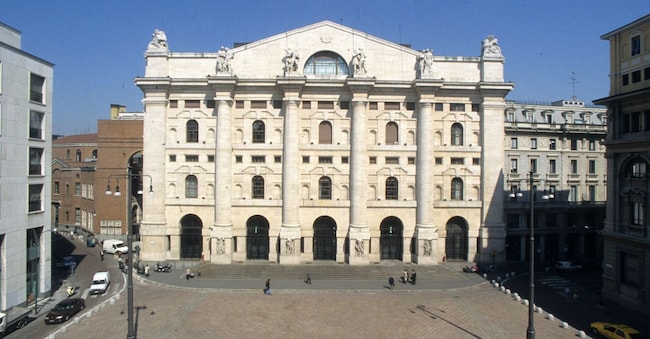
Piazza Affari, Milano (Imagoeconomica)

6' min read

Translated by AI
Versione italiana

6' min read

Translated by AI
Versione italiana

It is said that the NRRP has not delivered all the spectacular results that were hoped for in the area of the energy transition. However, progress has been made, and we can see this, amongst other things, in ErreDue’s results for the first half of 2026. The Livorno-based company has in fact seen its revenue almost double (+96.7% to 14.2 million), and the trend in profit margins has been even more striking: EBITDA rose from 1.8 to 4.1 million, EBIT from 870,000 euros to 3.16 million, and net profit from 979,000 euros to 2.4 million.

This was all thanks to revenue from the sale of generators and other products, which jumped from 4.06 to 10.7 million, and, in particular, revenue from hydrogen generators, which rose from 3.2 to almost 10 million (whilst sales of other gas-fuelled generators fell by 15.5 per cent to 745,000 euros). Revenue from servicing and spare parts also rose by 10.5 per cent to 2.1 million, whilst revenue from generator hire increased by 11.3 per cent to 1.39 million. Naturally, the larger the fleet of generators installed at ErreDue’s customers’ premises, the more recurring the revenue from maintenance and spare parts becomes; generator hire is also largely of a recurring nature.

Loading...

It is, of course, plain to see that the majority of turnover in the first half of 2026 came from the sale of hydrogen generators, mostly in Italia (revenue from this rose from 4.1 to 11.5 million), whilst in the EU there was a 72.2 per cent decline to just 570,000 euros (though in this case, a backlog of 4.5 million has already been secured for the second half of the year) and in the rest of the world, revenue doubled from 1.08 to 2.12 million.

Five electrolysers delivered for the energy transition and Hydrogen Valley

In the first half of 2026, five new megawatt-scale hydrogen plants were commissioned, utilising PEM (Proton Exchange Membrane) and alkaline (potassium hydroxide electrolysers for the production of green hydrogen) technology. Three of these plants have a ‘name’: they were delivered to Res (Recupero Etico Sostenibile, which will soon leave Euronext Growth Milan as it has announced a translisting to Euronext Milan, possibly the STAR segment, and the relevant shareholders’ meeting has been convened for 18 November), to Pacella Luxury Real Estate and to JMG Cranes (in all three cases, these are PEM electrolysers).

The Res plant, worth 1.4 million, forms part of the Res-H2 project aimed at producing hydrogen from solar power at the Pettoranello del Molise industrial site (included in the National Recovery and Resilience Plan (PNRR) and receiving funding of approximately 5 million from the Molise Region), which is due to become operational by the end of 2026; it has a capacity of 1,008 kWp and is capable of producing 210 Nm³/h of hydrogen with a purity of 99.9 per cent.

Pacella Luxury Real Estate is a property company specialising in the acquisition and regeneration of disused residential and industrial properties, and the electrolyser supplied by ErreDue, valued at 1.5 million, has in fact been installed at the former Silston (a brickworks) in Torrenieri, a hamlet in the municipality of Montalcino (Siena), as part of the ‘Hydrogen Valley’ call for proposals, which is supported by the National Recovery and Resilience Plan (PNRR). The plant has a production capacity of 1 MW and is capable of producing hydrogen with a purity of 99.9999 per cent, which will be sold and distributed by filling tanker lorries at a pressure of 200 bar, with a view to establishing a future refuelling station for light and heavy vehicles and buses.

The system supplied to Jmg Cranes (a world leader in the design and manufacture of battery-powered electric mobile cranes), installed at the production site in Sarmato (Piacenza), has the same specifications as the one at Pacella Luxury Real Estate and is valued at 1.6 million; here too, the hydrogen produced will be sold via tanker lorries but, above all, used to power the Mc250.09Fl crane truck, a new concept in heavy industrial handling machinery. This crane is powered by a fuel cell system using PEFC (Polymer Electrolyte Fuel Cell) technology, combined with a 6 kg tank of hydrogen compressed to 350 bar. And this is where the need for hydrogen with a purity level of almost 100 per cent comes into play, as only then can it be used in fuel cell applications. Jmg Cranes is involved in the “Green Hydrogen Powered Industrial Trucks” project, which aims to create a genuine “Hydrogen Valley” for industrial vehicles powered by green hydrogen.

The backlog also extends into the first part of 2027

But let’s get back to ErreDue. The order book as at 30 June 2026 stood at approximately 27 million (of which 13 million related to 2026, specifically 10.5 million from generator sales, 5 systems, comprising both PEM and alkaline units, and 3 relating to leases and maintenance, and 14 relating to 2027), providing good visibility on revenue for the whole of the current financial year and the first part of the next.

Obviously, given that the group operates on a project basis, the cost structure should not undergo any significant changes. This order book includes an order worth 800,000 euros for the delivery of an alkaline electrolyser to a leading industrial group in the Czech Republic (deliveries in July and October 2026), as well as a €900,000 order for two alkaline electrolysers in Uganda for an international player in the steel sector (delivery in September 2026). Subsequently, the US giant Cargill placed an order for an alkaline electrolyser (delivery by the first half of 2027) worth €900,000, which will be destined for the Balikesir plant in Turkey to power the fat hydrogenation process (which transforms liquid vegetable oils into solid or semi-solid fats). Meanwhile, at the end of August, a 1 MW alkaline electrolyser was delivered to Iris Ceramica for the ‘H2 Factory’ in Castellarano (Reggio Emilia).

Furthermore, at the end of October 2026, an order worth 500,000 euros was secured, with delivery scheduled for the first quarter of 2027, for two PEM modules for the generation of hydrogen and oxygen, intended for a renowned high-end jewellery house. The new systems will ensure the brilliance of the finished pieces, and there is also a reverse osmosis water purification system for the production of the distilled water required for the electrolytic cycle (used in rhodium plating, gold plating and silver plating processes, electropolishing, electroforming, feeding micro-welding nozzles and refining metals recovered from manufacturing processes).

Loading...

Solid financial position despite ongoing investments

And what about the financial situation? As at 30 June 2026, ErreDue had net cash of 10.85 million, down from the 14.67 million at the end of 2025 but, more importantly, (in addition to the payment of dividends totalling 1.25 million from retained earnings of previous financial years, which took place on 20 May) due to net investments of 3.7 million, mostly allocated to the new industrial site with 10,000 square metres of production space known as the ‘Giga Factory’ (total cost 15 million, financed by loans of 8 million, Simest and Mase funding of 3.6 million – of which 1.4 million is a grant – and 1 million from the sale of the building in Lavaiano in the province of Pisa); the move to the new site is scheduled for by the end of 2026. At the end of July, the historic “Piel” brand in the brazing and soldering machinery sector was also acquired from McPhy Energy, though for just 100,000 euros. It is worth noting here that, in 2022, Iris Ceramica had launched a pilot production of green hydrogen in Castellarano using Piel-branded generators.

Finally, the ESG aspect, which is important given ErreDue’s sector of activity. The company holds numerous environmental certifications and is currently undergoing the procedures to obtain the Environmental Product Declaration (EPD under the Environdec scheme) for its electrolysers, with certification expected by mid-2027. On the social front, it is worth noting that ErreDue, through the ‘Art Bonus’ scheme (a 65 per cent tax credit for those making charitable donations to support public cultural heritage), enabled Livorno City Council to acquire Giovanni Fattori’s painting ‘The Massacres of Livorno’, inspired by the revolutionary clashes of 1849, which has been exhibited at the civic museum named after the famous local painter, a leading exponent of the Macchiaioli movement.

As is generally the case with companies listed on Euronext Growth Milan, ErreDue unfortunately has a low free float (18.26 per cent of the share capital, although a further 16 per cent is held by individual shareholders, most of whom are internal to the company); the shareholder base is particularly high-profile, with Axon Partners Group, Arca Fondi Sgr and First Sicaf holding 5.33 per cent and 3.2 per cent respectively of the share capital. The market, however, could not fail to recognise the group’s potential even beyond the impetus provided by the NRRP, and indeed, over the past year, the share price has risen by more than 50 per cent; the company has also been included in the Intermonte Valore Italia index.

Copyright reserved ©
Loading...

Brand connect

Loading...

Newsletter

Notizie e approfondimenti sugli avvenimenti politici, economici e finanziari.

Iscriviti