
Ejf study: 'We need sustainable fishing in the Pacific, against the exploitation of natural resources'
This is according to the latest survey by the Environmental Justice Foundation (Ejf)

Key points
Monitoring actions, science-based catch limits, and control over fishing to prevent overfishing of natural resources are urged. Calling for these measures is the Environmental Justice Foundation (Ejf), which in its latest survey raised the issue of the very practice that "endangers a species that is fundamental to the food chain and exploits labour". According to the study, one of the activities that needs to be kept under control is squid fishing, which is "plunging towards an 'ecological and social crisis'" because "fleets of Chinese fishing vessels exploit weak governance, poor transparency and regulatory gaps in the southeast Pacific".
The risks
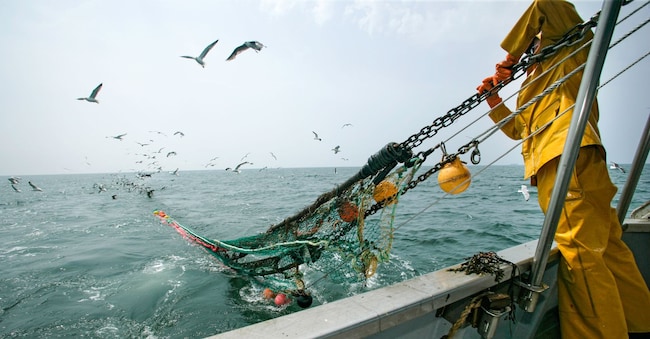
According to the report, a Chinese deep-sea squid fishing fleet is operating on an 'extraordinary' scale in the southeast Pacific. It targets Hunboldt squid, known commercially as giant Pacific squid, a key species that supports marine food chains and regional fisheries.
The organisation's investigation highlights 'chronic deficiencies' in terms of transparency within the fleet. As a result, there is a risk of jeopardising the restocking that would occur with a measured catch.
Activities that, as pointed out by Steve Trent, CEO and founder of the Environmental Justice Foundation, would cause damage and even put human lives at risk.
Serve transparency
"Transparency in industrial fishing can no longer be optional," the organisation stresses. It is the foundation of a safe and sustainable ocean. Then there are other elements indicated by the report, such as 'bycatch and the impact on ecosystems, including the disruption of oceanic food webs due to intensive fishing'. This is a scenario in which squid, which are very sensitive to environmental changes and are key players in the regulation of marine ecosystems, come into play. "Their overexploitation," the organisation stresses, "risks having cascading impacts on the entire Pacific Ocean.

