Film and Media

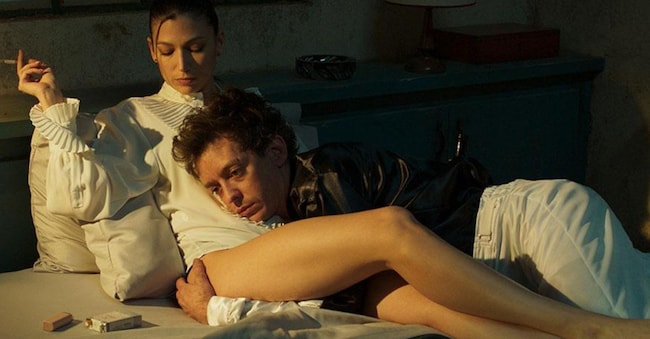
'El jockey', the Argentine black comedy in competition in Venice disappoints

The new feature film by Luis Ortega, the director who made his name with 'Angel of Crime', was presented on the Lido
by Andrea Chimento

3' min read

3' min read

Great expectations were not repaid: there were high expectations for 'El jockey', an Argentinean film presented in competition at the Venice Film Festival and directed by Luis Ortega, a director who made his name with 'The Angel of Crime'.

Six years have passed since the release of that film, centred on the exploits of the serial killer Robledo Puch and a domestic box-office hit. Chosen by Argentina as its representative at the Oscars that year, 'The Angel of Crime' - a good film, though not without flaws - had shown the talent of a director in whose veins runs the blood of an artist, being the son of the famous singer-songwriter Palito Ortega, one of the most popular South American rock musicians of the 1960s and 1970s.

Loading...

There was every reason to expect the same level of performance in 'El Jockey', but the results were not as expected.

The basis of this new feature film is the story of a jockey who is going through a very difficult time after the glories of the past. His fiancée wins many more races than he does, and things get even more complicated after a serious accident forces the boy into hospital.

He still manages to start a new life, but his identity will be completely different.
Luis Ortega starts from undoubtedly ambitious premises, with this film that mixes the tones of a black comedy with a journey of formation undertaken by its protagonist to find his true self.

If initially 'El jockey' also manages to involve, after the incident the narrative falls apart on excessively surreal and almost never incisive tracks that make the viewing unfulfilling and even less able to leave really interesting points to think about at the end of the credits.

The soundtrack is among the few merits

.

The good editing rhythm that characterised 'The Angel of Crime' is only to be found here in the remarkable sequence preceding the incident, while for the rest of the narrative we witness a product that is directionally scholastic, putting too much meat on the fire without managing to find the right balance between the parts.

Among the few merits is a beautiful soundtrack that manages to enhance certain passages, although it is not enough to raise the overall level of the operation.

Nor does it help a cast of performers who are not in good shape, including the usually good Nahuel Pérez Biscayart, who became famous for good performances in '120 Beats a Minute' and 'One Year, One Night'. Other familiar faces include Mariana Di Girólamo, the unforgettable star of Pablo Larraín's 'Ema'.

Super Happy Forever

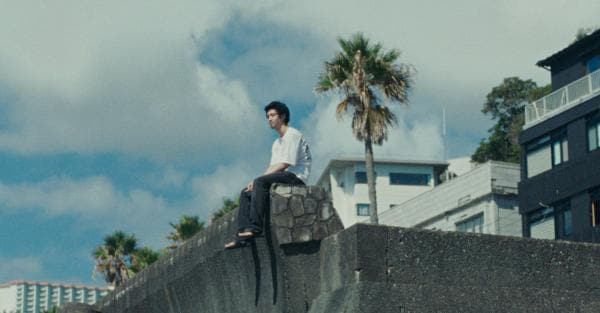
From a disappointment we turn instead to a nice surprise: it convinces 'Super Happy Forever', the film that opened Venice Days.

Directed by Japanese director Kohei Igarashi, the film is about Sano, a man who asked his friend Miyata to accompany him to Izu, a seaside resort in Japan where he had fallen in love with his wife Nagi five years earlier.

Not too much can be revealed about a plot that speaks of life and death in a strongly poetic key: Igarashi's is a film that is delicate in form and powerful in content, capable of astonishing the viewer with its ability to shake him with choices that are as simple as they are incisive.

Some passages may be predictable and already seen, but the film succeeds in engaging from start to finish also thanks to the excellent writing of all the characters on stage.

Copyright reserved ©
Loading...

Brand connect

Loading...

Newsletter

Notizie e approfondimenti sugli avvenimenti politici, economici e finanziari.

Iscriviti