
Electoral law and signature collection: from Onorato’s centrists to former League members, here are those who risk being left out

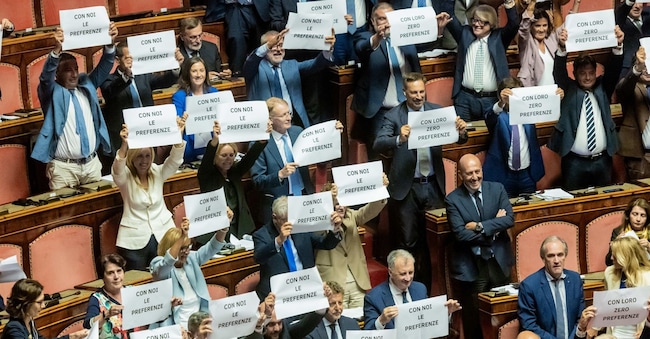
The reform of the Electoral Act is gathering pace in the Senate and introduces a decisive tightening of the rules on signature collection for the submission of candidate lists for the forthcoming general election. A new amendment approved by the majority raises the number of signatures required for each constituency to 6,000, effectively imposing a technical barrier of hundreds of thousands of paper signatures on parties not currently represented in Parliament, to be collected within a very tight timeframe. Whilst the centre-right defends the measure as a necessary tool to discourage so-called ‘decoy lists’, extra-parliamentary forces denounce it as a structural barrier to entry designed to protect parties already elected. Below is an analysis and the reactions of the main political movements that now risk being excluded from the electoral race.
Onorato’s civic project
Among the organisations involved is Progetto Civico Italia, led by Alessandro Onorato, Councillor for Major Events, Sport, Tourism and Fashion for the City of Rome, which is led by the PD mayor Roberto Gualtieri. It is a civic and centrist group within the centre-left coalition (close to the leader of the Five Star Movement Giuseppe Conte). Onorato describes the legislation as ‘yet another blow to the Constitution and democracy’, emphasising that ‘forcing new political parties to collect 378,000 signatures in just 15 days amounts to deliberately creating obstacles’. The civic leader highlights the case of Valle d’Aosta, where ‘the required signatures amount to 11 per cent of the votes’. Onorato has announced street protests and appealed to the Head of State.
Italia Domani by Marco Rizzo
On the anti-establishment front, however, stands Italia Domani, led by Marco Rizzo, a politician with a communist background who has embraced a sovereignist stance. Rizzo analyses the bill, describing it as ‘a rigged electoral law designed to cement the system’, calculating that the burden amounts to ‘442,000 signatures just to have the right to appear on the ballot paper’. The paradox, according to Rizzo, lies in the fact that ‘on the one hand, there are plans to lower the threshold for representation to 1 per cent; on the other, a preventive barrier is being erected that is so enormous that a new political force would have to collect more signatures than the votes needed to clear that very same threshold’.
Communist Refoundation
The legislation also has a significant impact on the traditional left. The Communist Refoundation Party, positioned on the far left, through Maurizio Acerbo and Gianluca Schiavon, highlights ‘an unattainable threshold’, describing the measure as an ‘attack on constitutional democracy’ and a ‘favour to the establishment’, as it exempts those already sitting in Parliament. Within the centre-left, Avanti Psi, through its national president Luigi Incarnato, has labelled the requirement ‘shameful’, describing it as a ‘liberty-destroying law’ and placing its hopes in the Quirinale’s intervention to highlight its unconstitutionality.
Former Northern League members of the ‘Patto per il Nord’
Finally, within the sphere of regional and autonomist movements, the Pact for the North (founded in late 2025 by former members of the Lega) strongly objects to the operational restrictions: ‘Not only has the governing majority refused to accept digital signature collection, but it has now also quadrupled the required number of signatures.’ The movement describes this as an act ‘against democracy’ which amounts to an effective ‘call for abstention’.


