
Electoral law: the final stage of the reform gets underway in the Chamber of Deputies today
It returns to the House of Commons with a watertight bill, on which Prime Minister Giorgia Meloni herself has announced – for reasons of ‘clarity’ – that she will call for a vote of confidence

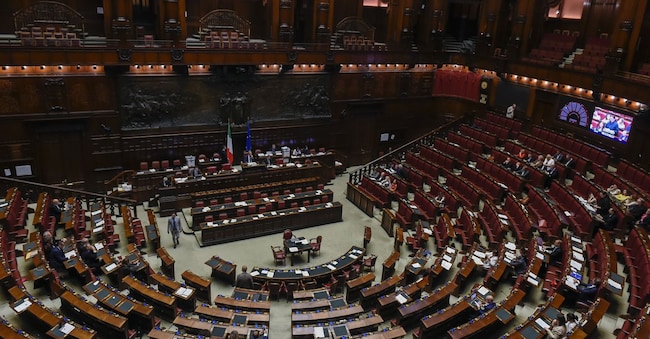
The electoral reform bill returns to the Chamber of Deputies for its final leg before the vote in early October. It does so in the form of a watertight bill, on which Prime Minister Giorgia Meloni herself has announced – for reasons of ‘clarity’ – that she will call for a vote of confidence. However, it is not immune to the final vote, as the first reading of the ‘Stabilicum’ bill in the Chamber of Deputies demonstrated, when it was shot down by maverick MPs.
Audition dates
Today, Monday 21 September, we’re starting again. And we’re doing so as if we were starting from scratch, complete with hearings – which, incidentally, have already taken place in both the Chamber of Deputies and the Senate – and which will see, from 11.00 am, Michele Ainis, professor emeritus of public law institutions at Roma Tre University, Gaetano Azzariti, professor of constitutional law at Sapienza University of Rome, and Mario Staderini, coordinator of the appeal before the European Court of Human Rights concerning electoral law.
At 12 noon, the floor will go to Giuseppe Benedetto, president of the Luigi Einaudi Foundation; Andrea Pertici, professor of constitutional law at the University of Pisa; and Francesco Clementi, professor of comparative public law at Sapienza University of Rome.
What does the new electoral law entail?
The law introduces a proportional system adjusted by a fixed majority bonus for the party that secures the highest number of votes, provided it has exceeded the 42 per cent threshold. The mechanism for selecting elected representatives is a mix of preferential voting and fixed-list candidates.
In addition to the proportional representation system with a bonus and preferential voting, the reform provides for the nomination of the Prime Minister at the time of registering the party symbol, a cap on the number of majority seats (220 Members of Parliament and 113 Senators), and the retention of the Rosatellum’s electoral thresholds (10 per cent for coalitions and 3 per cent for lists). However, no threshold is set for inclusion in the calculation of the national electoral total and, consequently, the majority bonus.

