
Electoral law, three voting systems in 26 years. And still changing
Italia has already changed its electoral system several times since 2000, with frequent changes and Constitutional Court rulings affecting parliamentary representation.

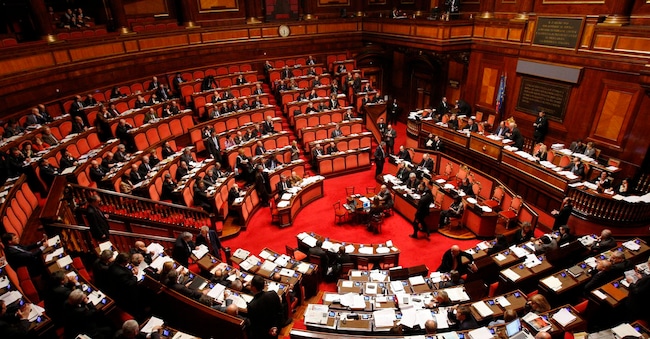
The national electoral law seems destined to change again, just over a year before the next general election in 2027. It would be a record for Italia, which has already voted six times in its parliamentary elections since 2000 with three different systems: should the new text proposed by the majority reach the checkers, next year the Italians could therefore find themselves electing a new parliament with the fourth different voting system in just under 27 years and seven general elections. A trend that has no precedent in any European country.
The Mattarella Law
After almost 50 years of proportional electoral law (with the parenthesis of the law with a majority prize, which was only voted in the 1953 elections), in 1993, with the fall of the first republic, the Mattarella law was approved, named after its main rapporteur Sergio Mattarella (current Head of State), which provided for 75 per cent of the seats in the Chamber of Deputies and Senate to be allocated through a majority system with a single round in single-nominal constituencies, while the remaining 25 per cent were allocated through a proportional mechanism.
The Calderoli Law
The Mattarella law lasted until the 2001 consultations, the last election in which this system was used. It was repealed in 2005 with the approval of the Calderoli law, passed with the votes of the centre-right, which introduced a proportional system with a majority prize and without the possibility of expressing preferences. The Calderoli law provided that in the Chamber of Deputies the coalition with the majority of votes on a national basis would automatically have 340 seats out of 600, while in the Senate in each region 55 per cent of the seats in that region would be attributed to the first list or coalition of lists. With the risk of different majorities between the House and the Senate. This system was used in the elections of 2006, 2008 and 2013.
The Italicum (the system we never voted with)
In 2013, the Constitutional Court declared the Calderoli law unconstitutional, putting the majority prize, among other things, under the microscope because it was independent of reaching a minimum percentage threshold of votes. In 2015, Prime Minister Matteo Renzi had a new voting system approved, the Italicum, a proportional with a 3 per cent barrier and a majority prize of 340 seats to the list able to obtain 40 per cent of the votes. But in 2017, the Consulta rejected this law as well because of the ballot between the two most voted lists and the system by which the multi-candidate candidates could choose the constituency in case of election in several constituencies.
The Rosato Law
Thus we come to the law still in force, the Rosato law, which provides that one third of Parliament is elected by a majority system and two thirds by a proportional system, with a 3% barrier on a national basis. This is the system used to vote in 2018 and 2022. Now even this law seems destined to go by the wayside, again not too far away from the next elections, which should be held in the spring of next year.


