
Electoral law: amendment tabled by Fdi, Nm and Udc on preferential votes
Monday 13 July is the deadline for amendments. The possibility of a vote of confidence remains

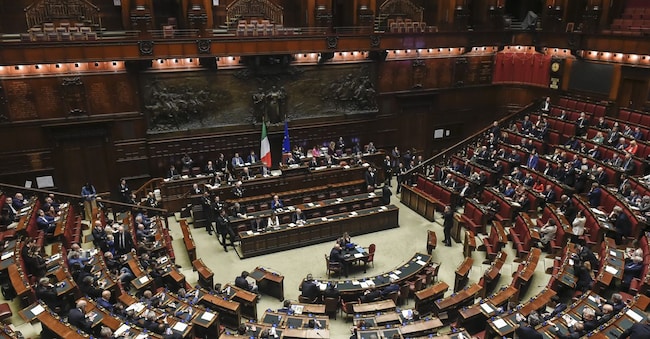
If an agreement is reached on the electoral law (a proportional system with a majority bonus), it will be a photo finish. Within the centre-right, the negotiators are working to find common ground on the issue of preferences, which could lead to a single majority amendment to be taken directly to the Chamber. Time is running out: the deadline is Monday 13 July, at lunchtime.
At present, however, the only proposed amendment is coming from Fdi, Nm and Udc: it provides for fixed-list candidates and preferential votes. This amendment would not be endorsed by Fi and the Lega, despite having been discussed in advance and submitted to all the coalition partners for further consideration. Pending internal meetings of the coalition parties, the rapporteur will be temporarily asked to recommend that the matter be referred back to the Chamber.
This issue will have an impact on the composition of the next Parliament, so it is by no means a minor matter. The ‘Stabilicum’ or ‘Melonellum’ is expected to be passed between Thursday and Friday. The Prime Minister has staked a great deal on electoral reform. It is no coincidence that, at the instigation of FdI’s leadership, MPs have been asked to turn out in force for the votes, which begin on Tuesday in the Chamber of Deputies. The reform (which awards a majority bonus of 55–57 per cent to the party that secures more than 42 per cent of the vote) is due to be debated in the Chamber under a tight timetable. As things stand, the government would like to avoid a vote of confidence.
And yet, the parties – which start from different positions (FdI and Nm in favour of preferential voting, Lega and FI generally against) – are expressing optimism. “We are ready to discuss. The important thing is to defend the overall framework” of the proposal, which aims for “stability”; “the centre-right has always reached agreement and will do so in this situation too,” said Deputy Prime Minister and Forza Italia secretary Antonio Tajani on Saturday. This point was also reiterated by Lega member Igor Iezzi, who highlighted the unity achieved on the “complex” framework of the bill: “There remains this difference over preferential votes, which in my view is not fundamental.”
Speculation about a last-minute deal
It cannot be ruled out that, following the technical discussions, the actual solution – if one is found – may be reached this morning, just before the deadline for tabling amendments, which is set for lunchtime. Whilst Roberto Vannacci is stepping up the pressure (“We are the only ones who want to restore sovereignty to the people”), the opposition is, for now, sitting on the fence. The opposition’s parliamentary strategy will also depend on whether there is agreement or disagreement within the centre-right. This political tactic will inevitably also take into account the possibility of a secret ballot, which – according to parliamentary rules – may be requested by twenty MPs or by one or more group leaders who, separately or jointly, represent the same number of MPs.

