
All the key issues: from party preferences to the candidate for Prime Minister
Debate on the new electoral law begins today in the Chamber of Deputies. Amid disagreements within the ruling coalition and criticism from the opposition, there are still many issues to be resolved

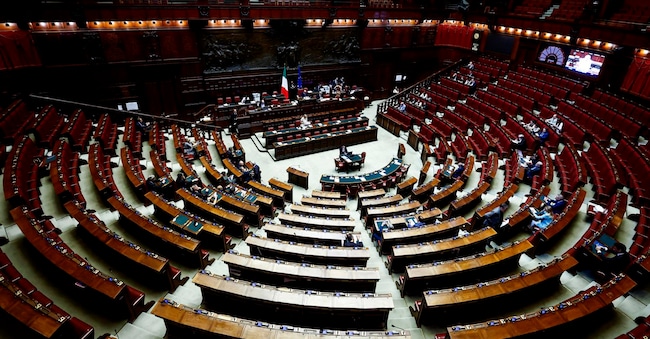
Key points
From voting preferences and the nomination of the Prime Minister to the reduction in the geographical areas covered by the overseas constituency, there are still many unresolved issues regarding the electoral law. The bill, on which voting begins today in the Chamber of Deputies, provides for a proportional representation system with a majority bonus of 70 seats in the Chamber of Deputies and 35 in the Senate – up to a maximum of 220 elected members in the former and 113 in the latter – for the coalition that secures at least 42 per cent of the vote. If no coalition reaches this threshold, or if the Chamber of Deputies and the Senate produce different election results, a purely proportional system will be applied. The system provides for closed lists in multi-member constituencies. The majority bonus, however, is divided among constituency lists.
This is the framework of the text agreed by the centre-right, which, however, holds differing views on whether to introduce a preferential voting system in place of closed lists – an issue that has long been a point of contention for Fratelli d’Italia, amidst the reservations of its allies.
The amendment tabled by Fdl, Nm and Udc
An amendment tabled solely by FdI, Noi Moderati and Udc, proposes replacing the closed lists in the multi-member constituencies with a list of seven names, allowing voters to tick the box next to their preferred name or names – alternating between genders – from the second name onwards (as the first is fixed) – these names are already printed on the ballot paper.
Under the proposed system, anyone standing as a candidate on a constituency list must also stand as a candidate in at least one of the constituency’s electoral districts, as the lead candidate. For those who win the majority bonus, however, the seat is allocated via the bonus list, effectively making the mechanism partly preference-based.
The current mechanism set out in the text, which provides for two closed lists (one for the multi-member system and one for the constituency system), could, according to some interpretations, give rise to objections from the Constitutional Court.

