Electric cars: largest magnet factory outside China opens in Estonia
Developed by the Canadian group Neo Performance Materials and co-financed by European funds, it has an initial target of one million units per year. Bosch has optioned a significant share
3' min read
3' min read
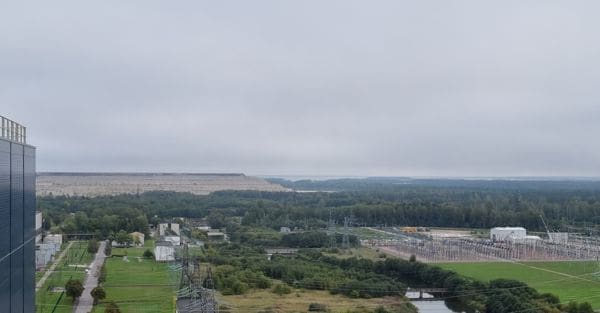
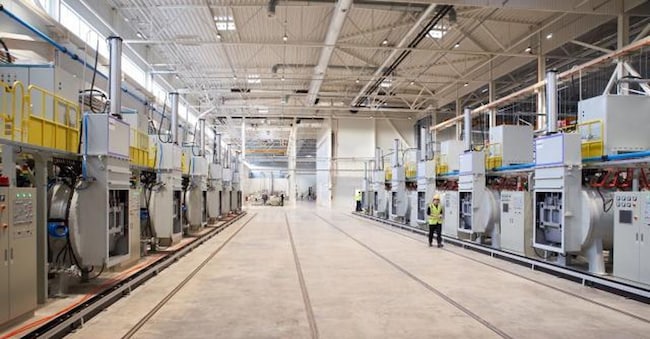
A handful of kilometres from the Russian border, in the same hours that Migs from Moscow violated Estonian airspace on Friday 19 September, the largest rare earth magnet factory in Europe, the largest outside of China, was inaugurated in Narva - the EU's northeasternmost border. Built in just over two years by the Canadian group Neo Performance Materials and co-financed by European structural funds, it will produce rare earth permanent magnets, essential components for electric cars, wind turbines and microelectronics. The initial target is around one million electric vehicle components per year. The automotive components giant Bosch, writes Bloomberg, has already optioned 'a significant share'.
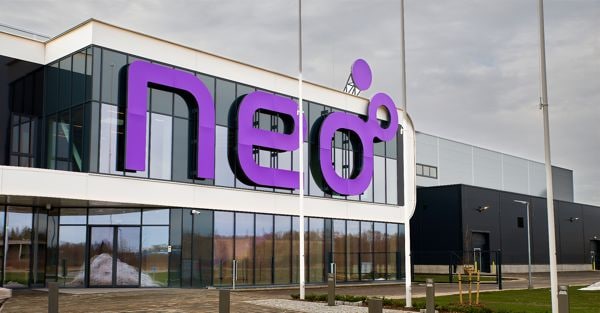
The new plant is expected to reduce the European industry's dependence on Chinese imports, especially after Beijing's recent export restrictions.
To make the magnets, the Narva plant will use rare earths processed in Sillamäe, a few dozen kilometres to the west, a legacy of the Soviet era. A closed city, not shown on maps, it was a centre for the production of uranium for military use. Today, this is the only industrial-scale rare earth separation plant in operation in Europe.
"Neo has signed several five- to seven-year supply contracts in the range of $50-100 million," said Neo CEO Rahim Suleman, adding that major deliveries will start in 2026. "This is the most important critical materials project going on in Europe today," he recalled.
The Jtf and projects in Italy
In September 2023, foundations were being dug for the new Narva plant, which today goes into production, albeit a few months later than planned. The total investment is around EUR 65 million, lower than initially identified, to which the EU contributed EUR 14.5 million from the Jtf, Just Transition Fund. The Jtf, 'just transition fund', is used by the EU to stem the social effects of the green transition in the most polluted industrial areas where it is most necessary to switch to less environmentally impactful production. In Italy, the Sulcis region of Sardinia, where projects are already underway, and Taranto, where the first notices were published last July, are benefiting from it to the tune of over one billion euro. It will be a race against time not to lose the European resources that must be spent by 2026 because 70% of them come from Next Generation Eu.