
Electricity grows in city buses, Iveco presents the Italian eDaily minibus
The Group's bus division - in the process of being acquired by Tata - has increased its weight in revenues and presents an electric version for intercity
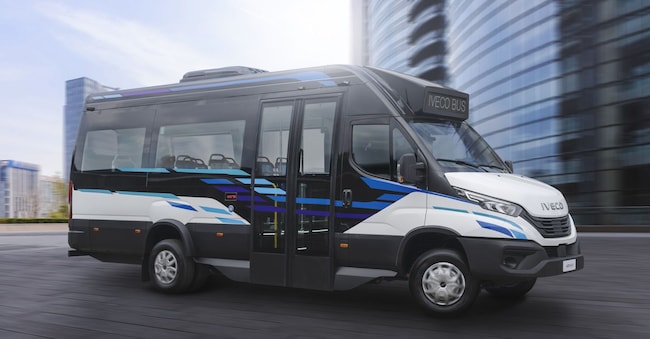
Iveco Bus pushes the accelerator and presents two new electric-powered models for city and suburban traffic. In the midst of the deal involving the Indians of Tata Motors for the acquisition of the industrial asset controlled by Exor, the Group's Bus division is working on zero-impact engines, presented at Busworld Europe 2025 currently underway in Brussels, and is betting on future synergy with the Indian manufacturer, which is not directly present on the European market.
"The bus market is less tied to diesel fuels than commercial vehicles," emphasises Claudio Passerini, at the head of the Group's Bus Division since January, "and if we take the European bus and coach market, it has grown by 16% in 2024 over 2023 and by 4% this year. One of the main drivers is the boom we are seeing in the electric city bus segment. Last year it grew by 22% and this year by 53%."
A year ago, for example, 45 per cent of city bus registrations were in Europe (without UK), and this figure has risen to 59 per cent by 2025, as of August. "There is a major acceleration of the city electric segment that is helping the bus industry to grow and in the sector is the one furthest ahead in the electrification process. If one considers the entire bus segment, i.e. also tourist and long-distance buses, the share of electrics is 25%, above the car market, which stands at 17% in Europe, and above the single-digit percentages of the commercial vehicle market.
Two years ago, also in the wake of the NRP and the renewal of the bus fleet in Italy, Iveco set up an assembly site in Foggia - here Iveco has a major engine factory - where around 2,000 buses were integrated over the entire period, all zero or low-emission models with a focus on the City and Intercity segments.
The Bus Business Unit contributed 15% to Iveco Group revenues in 2024. More significant still for clarifying how the LPT and collective mobility business unit has grown is the fact that the percentage has increased by 17% in 2022, 22% in 2023 and 13% in 2024. In the market, Iveco is the second largest operator in Europe with a 20% share of registered vehicles, while in the intercity sector it exceeds 50%.


