
Renault Twingo electric, we tested it for the first time: how it went
The new model offers city range (around 260 km), a go-kart style drive and many refinements that make it glamorous and chic (even though it is cheap for an electric car). Low fuel consumption and agility. Google and Gemini AI on board

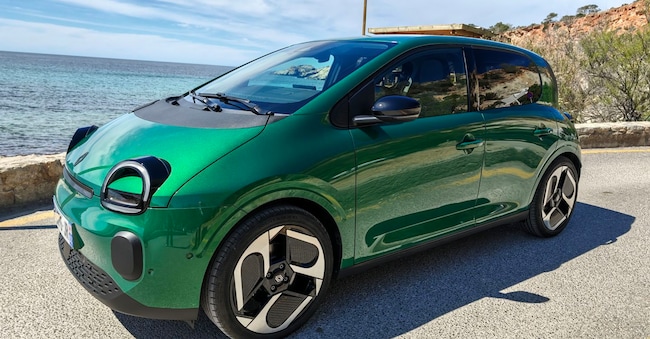
Agile, friendly and electric. Renault Twingo is reborn and returns in a retro operation, in line with the philosophy of former CEO Luca de Meo, which recovers stylistic features and solutions from the original 1992 model. After a series of reveals between concept and definitive versions, the time has come to touch this model, which is, it should be remembered, an economical car, developed in less than 20 months thanks to the group's research centres and the cooperation of Chinese partner Geely. It is cheap but not cheap (apart from a few details). The car, with its cheerful 'face' and mischievous look that makes it instantly recognisable, is very well cared for with clever and very 'thought-out' styling details. Such as the logos printed on the black body mouldings that make it look glamorous and jaunty. There are little pearls of style that are a tribute to design culture. One example? The reloading compartment door which, when opened and viewed from the front, has exactly the shape of the Twingo's iconic frog headlights which now offer daytime running lights with full LED technology.
Renault Twingo E-Tech, the mechanics and the battery
Some technical data: the new French electric boasts an 80 hp engine, autonomy of up to 263 km thanks to a 27.5 kWh Lithium-Ferro-Phosphate (LFP) battery, a solution Renault is adopting for the first time to reduce costs and guarantee an autonomy of up to 263 km in the WLTP cycle. Prices start at around EUR 20,000.
The car, christened Twingo E-tech, is based on the AmpR Small platform, derived from that of its big sisters Renault 5 and Renault 4 and renamed RGEV small, where RG stands for Renault Gruup as the French company has decided to end the activities of the Ampere division.
The dimensions are compact, with a length of only 3,789 mm. The generous wheelbase of 2,493 mm, combined with a front overhang of 743 mm and a rear overhang reduced to just 553 mm, allows for larger diameter wheels that give the car an incisive road presence. A key detail is the two rear doors, integrated so cleanly that they do not detract from the MPV profile that made the first series famous. The aerodynamic care is evident in the sloping bonnet and pure lines, designed to reduce fuel consumption without sacrificing a jaunty appearance. The semi-fixed rear windows that open like a pantograph are a real pleasure, while praise, as in other Renaults, goes to the OpenR Link multimedia system with Android operating system and integrated Google apps (including maps and Gemini). In front of the driver is a 7-inch display, and in the centre of the dashboard a 10-inch one. And here we finally appreciate the fact that the designers and software developers have adopted themes graphically aligned with the model's styling identity. Of course, there is Android auto and Car Play for smartphone integration.
Renault Twingo E-Tech, prices and equipment
The range has two levels with fairly comprehensive equipment. The Evolution trim, priced at €19,500, offers 16-inch wheels, cruise control, parking sensors, manual climate control and always an autonomy of 263 km, a city-friendly value that makes the Twingo a candidate to be a second car or a one-off for those who don't travel. It is indeed a glamorous chic object and does nothing to hide it, if you want a cheaper citycar there are good but not as stylish Chinese proposals. And the Twingo also boasts a fun driving feel beyond the claimed figures: only 130 km/h top speed (on the motorway you are 'capped') and a zero hundred of 12.1 seconds. Its size is city of course and it is a car to consider if you have a garage, perhaps with a DC charging station.


