
Electrical engineering and electronics drive, but the international crisis remains the unknown factor
For Anie companies, domestic demand is boosting, but exports are under pressure amid geopolitical crises and rising costs.

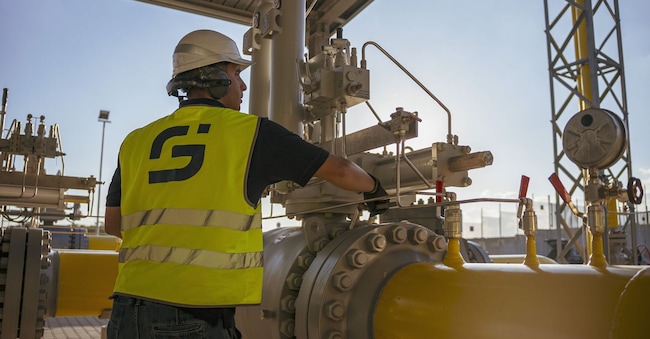
In an Italian industry proceeding with the brakes on, electrical engineering and electronics remain among the few sectors capable of marching at a higher speed, bucking the trend. While manufacturing closes 2025 in negative territory (-0.5% production), the Anie sectors are up by +1.8%. And it is not an episodic rebound: in the first months of 2026 growth accelerates to +2.4%.
The explanation, rather than global markets, lies within the borders. It is domestic demand that is keeping pace, with +3.1% offsetting the weakness of exports. Businesses are investing where they can control the risk, while the unknowns are gathering outside. Electronics runs faster (+2.7%), electrical engineering follows (+1.5%), both hooked on the major industrial transformation sites.
But it is a balanced race. Federazione Anie represents 1,100 companies, about 480,000 employees, 112 billion in aggregate turnover and 27 billion in exports in electrotechnical and electronic technologies. Numbers that explain why the sector's resilience is not just sectoral, but industrial. Even if the horizon remains short: for more than half of the companies, business continuity does not exceed six months without an improvement in the global scenario.
The world weighs. The flip side of the coin is, precisely, the international scenario. 71% of the companies in the Anie sample operate on foreign markets and over half also export to the Middle East area involved in the current tensions. The first effects are being felt in costs: 62% of companies report increases in transport, 54% in raw materials, 42% in energy. For 35%, uncertainty about investments is also growing
Logistics thus becomes one of the most critical points, indicated by almost 40% of companies as a factor in the operational slowdown. And the continuation of the crisis changes expectations: whereas a solution within a month would have produced no or limited impact for 73% of companies, now more than 80% expect at least moderate effects and 39% fear major repercussions on business.


