
Kia Sportage, the restyling arrives: everything you need to know about engines, dimensions and technology
After the preview for the Korean market, the update of Kia's fifth-generation SUV also arrives in Europe. It will go on sale in the third quarter of 2025.

2' min read
Key points
2' min read
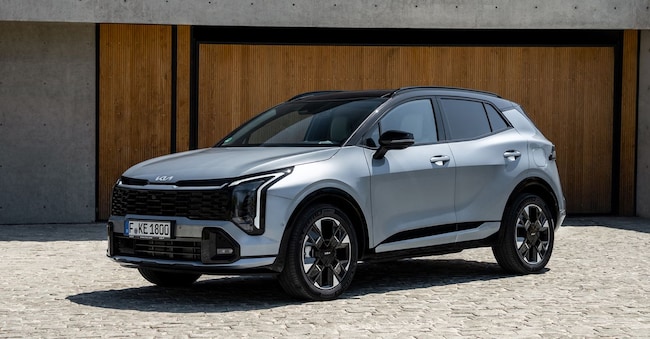
Kia has announced the restyling of the Sportage, a best seller with over 7 million units sold. The SUV, which will go on sale at the end of 2025, increases by a couple of centimetres in length (up to 454 cm), but above all it changes its styling at the front and rear. The front end changes the design of the LED headlights and bumper, while the grille becomes wider. The same treatment also applies to the rear, where both the light signature of the taillights and the bumper have been retouched.
Kia Sportage restyling 2025, what's new
Less obvious are the changes inside the cabin, where the most substantial modifications concern the new steering wheel, which is now two-spoke instead of three, and also the air vents are now arranged in a horizontal format. Confirmed, on the other hand, are the two 12.3-inch curved panoramic screens for the instrument cluster and multimedia system, to which must be added the new 10-inch head-up display.
Kia Sportage restyling 2025, the engines
The restyling of the new Sportage means that the SUV will no longer be available with petrol and diesel engines. Instead, light and full hybrids are planned immediately, while a plug-in version will be offered at a later stage. Under the bonnet of the entry version is a 1,600 cc mild hybrid 4-cylinder engine with 150 hp mated to a 6-speed manual gearbox or alternatively a 7-speed dual clutch.
Kia Sportage restyling 2025, there's always diesel but in Italy maybe LPG arrives
The full hybrid variant, on the other hand, is based on the 1,600 cc turbo petrol engine with a system output of up to 239 hp, which is designed to be paired only with a 6-speed automatic transmission and is available with either front or all-wheel drive. Also still on the list is the diesel engine that is based on the 1,600 cc CRDi with a maximum power output of 136 hp. However, Kia's Italian branch is considering the introduction of an LPG variant, perhaps with the trifuel system.
Kia Sportage restyling 2025, driver assistants
The new Sportage is equipped with a package of driver assistance systems that includes automatic emergency braking with recognition of cars, pedestrians and cyclists, using sensors and a camera to look for hazards. The Highway Driving Assist 2 system, on the other hand, uses the camera, radar sensors and navigation data to maintain pre-determined speeds.

