Sustainable development

Electrifying the economy can save 250 billion a year

Schneider Electric highlights the benefits for Europe in particular of clean energy and sees itself as an enabler of the ecological transition

by Laura La Posta

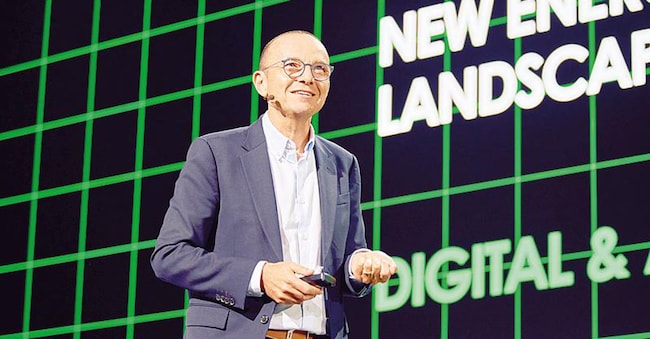
Il Ceo d Schneider Electric Olivier Blum

4' min read

Translated by AI
Versione italiana

Key points

  • The Group
  • Circular economy
  • The role of software
  • In Italy

4' min read

Translated by AI
Versione italiana

Europe could save EUR 250 billion a year until 2040 by accelerating electrification, which, combined with the success of renewables, could help reduce fossil fuel consumption (largely imported into the EU) by two-thirds by 2040, leading to the estimated savings. With other beneficial effects such as reducing climate impact, lowering energy costs and reducing dependence on foreign sources of supply. But the rate of industrial electrification is stuck at 21%, yet the stated goal is to increase it to 35% by 2030. Efforts and investments must therefore be multiplied to reap the benefits of the most efficient energy source.

These are the main findings of a study by Schneider Electric's Sustainability research institute, presented by the leading group in the digital transformation of energy management and automation, at its Innovation summit in Copenhagen. Nearly five thousand people from all over the world - analysts, managers, operators and institutional representatives - attended the event, which took stock of innovations to enable the dual ecological and digital transition in companies.

Loading...

Certainly, the study warns, those who want to regain competitiveness in a sustainable manner should accelerate electrification, act to reduce the cost difference between electricity and natural gas (by abandoning fossil subsidies), increase targeted funding and incentives (especially for SMEs), and direct revenues from emissions trading programmes and innovation funds towards electrification projects.

The Group

Against this backdrop, Schneider Electric, with its broad customer base (one million partners in more than one hundred countries) and its skilled workforce (160,000 employees) promotes efficiency and sustainability through electrification, automation and digitisation of industries, businesses and residential homes. 'We invent the technology that makes the energy transition possible,' explained Schneider Electric CEO Olivier Blum in Copenhagen. 'Our commitment is based on almost two centuries of innovation and impact.

"We are concerned about climate change," added the CEO of the group founded in France in 1836 by the Schneider brothers, "and sincerely committed to helping our customers reduce waste, optimise resources and use clean energy." Blum emphasised the urgency of acting now to make the global ecosystem more resilient and green. He noted that the world's energy needs will grow by 60 per cent over the next 15 years, intensifying pressure on infrastructure, and that renewable energies will triple their share by 2030, requiring smarter and more resilient grids and installations. "The challenges ahead are greater than any company or industry can tackle," he said. "Only through collaboration can we open up the full range of possibilities available to us.

How is this strategy being realised in practice? "Our technologies, developed in 150 production sites around the world, enable buildings, data centres, industrial plants and energy networks to operate as open and interconnected ecosystems, with better performance and more sustainability," said Gwenaelle Avice Houet, executive vice president industrial automation at Schneider Electric (formerly chief strategy and sustainability officer). "Our strategy integrates intelligent automation, robotics and control components with software-centric architectures, artificial intelligence-based systems, digital services and advanced consulting. We are therefore enablers of the energy and digital transition, advanced automation for manufacturing and the circular economy.

Circular Economy

Schneider Electric, in fact, is also working on the circularity frontier. "Industry, and the whole economy in general, should learn to use products better, for longer and to reuse them more (through maintenance and repair)," explained the manager. "We must start from ecodesign: designing goods that can be easily disassembled with a view to recycling and repair, using less impactful raw materials and working to extend the life of goods. We have helped several customers on this front, such as the giant Glencore (for copper recycling) and the company GR3N, which chose our open automation systems for its plastic recycling plants with high final yields.

The role of software

In this scenario, therefore, software plays an increasingly important role in the continuous innovation process of companies. And thus central to the Schneider Electric universe is the role of Aveva, the global leader in industrial software (whose acquisition was completed in 2023). Caspar Herzberg, CEO of Aveva, spoke at the Innovation summit, emphasising how digitisation and industrial intelligence are key drivers of the energy transition and sustainable innovation. 'Schneider Electric and Aveva help companies achieve industrial excellence and advance the sustainability journey through open technologies and ecosystems in heterogeneous systems,' said Herzberg. 'We combine automation, electrification and digitisation, unlocking industrial intelligence and energy management to increase efficiency, productivity and sustainability. Aveva will hold its 2026 international conference in Milan in May.

Gwenaelle Avice Houet, Executive vicepresident Industrial automation di Schneider Electric

In Italy

After all, Italy is central to Schneider Electric's strategies. The group, which had a turnover of no less than EUR 38 billion in 2024, is present in Italy with five plants (one in the Stezzano headquarters, near Bergamo), eight sales offices, two innovation hubs, and an integrated logistics centre, in which some three thousand people work. "Eighty per cent of our systems sold in Europe are produced in Italy, and I am not just talking about assembly," said Gwenaelle Avice Houet proudly in Copenhagen, who was present at the re-inauguration last June of the Italian headquarters, whose buildings have been upgraded in terms of energy and digital, to crown the path undertaken to make all the sites in Italy efficient and decarbonised.

Sustainability is also at the heart of Schneider Electric's key products. "The Stezzano plant also produces the new SM AirSeT air-insulated medium-voltage sustainable switchboards, which avoid the use of SF6 gas (one of the most harmful greenhouse gases): this product range represents a concentration of innovations covered by 57 patents," Italian president and CEO Davide Zardo proudly told his guests in Copenhagen, pointing to the display cases containing the made-in-Italy innovations in the huge Schneider Electric solutions exhibition area (which occupied two halls of the gigantic Bella centre at the Innovation summit).

Copyright reserved ©
Loading...

Brand connect

Loading...

Newsletter

Notizie e approfondimenti sugli avvenimenti politici, economici e finanziari.

Iscriviti