
Electrolux: negotiations entering the final stages – the meetings on 2 and 3 November will be decisive
The number of redundancies has fallen to 1,190 from 1,250, following a further 60 voluntary departures. Various measures are being considered, including expansion contracts. In Cerreto d’Esi, the trade unions are calling for production to be maintained until a new investor comes on board

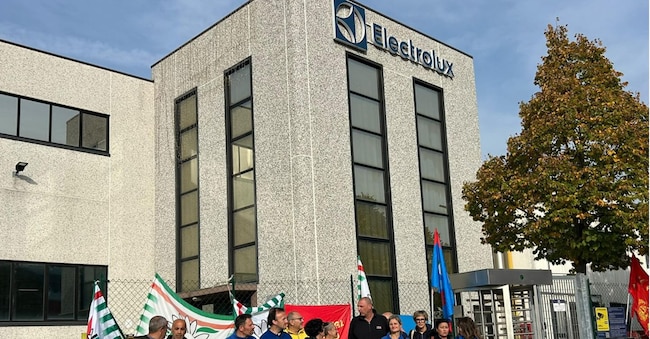
At the meeting between Electrolux and the trade unions at the Ministry of Enterprise and Made in Italy, the first step forward was taken on the issue of redundancies: thanks to 60 incentivised voluntary redundancies, the figure has fallen from 1,250 to 1,190, including the 150 workers at Cerreto d’Esi. However, this is not enough for the trade unions, who are calling for a further reduction, as well as other measures to reach an agreement that has proved very complicated: among these, Fiom, Fim and Uilm point to the ‘expansion contracts’, for which they are asking the Government to provide refinancing, as well as to support the social safety nets that may prove useful in tackling the final stretch of the negotiations. For the trade unions, the voluntary nature of the redundancies is the decisive factor in all cases. The next meetings have been scheduled for 2 and 3 November and, for Fiom, Fim and Uilm, they will be decisive in determining whether an overall agreement can be reached. This is the stage the negotiations had reached by the evening.
The most sensitive situation is that of the Cerreto d’Esi site, which the multinational had announced it would close. The trade unions have called for a binding commitment to maintain current production levels until an investor comes forward. They have also called for a cap to be placed on the use of social safety nets.
With regard to the Porcia plant, the multinational was asked to make a further commitment to maintaining the production of washer-dryers; however, Electrolux has only agreed to increase the proportion of production it could maintain from the 30 per cent proposed at the previous meeting to 50 per cent.
Following voluntary and incentivised redundancies, Electrolux has revised the number of redundancies to 1,190, including the 150 workers at the Cerreto site. The redundancies affected only manual workers, whilst there remain 600 surplus white-collar staff. The trade unions, however, believe the numbers should be reduced further. It is precisely for this reason that they have put forward the idea of expansion contracts to facilitate workforce renewal. Fiom, Fim and Uilm are calling on the Government to refinance the expansion contracts and to support measures to reach an agreement. In any case, they have asked Electrolux to commit to not reducing the workforce below an agreed threshold, beyond which the company will have to replace staff, giving priority to those who have previously worked on temporary contracts.
If a general framework is agreed at the meeting on 2 November, the trade unions are ready to sit down at the negotiating table to work towards a compromise, bearing in mind that Electrolux’s commitment to applying the ‘no-opposition’ principle in the management of redundancy procedures – formally ruling out compulsory redundancies – will be decisive, provisions for the rotation of workers on short-time working schemes, the definition of early retirement incentives, and the need to maintain sufficient posts for workers with reduced working capacity.

